Submersible Sewage Pump for Wastewater Handling
News Details
Submersible Sewage Pump for Wastewater Handling
A submersible sewage pump moves sewage and wastewater that may contain solids, fibers, and other debris. The pump works under the liquid level. So, it can push wastewater directly through a discharge pipe.
Compared with many surface pumps, sewage pumps are easy to install in pits and tanks. They also work well in systems that need regular or automatic drainage.
Today, sewage pumps are used in homes, factories, commercial buildings, farms, construction sites, and wastewater plants.
Choosing the right pump is important. Flow, head, solids, liquid type, motor power, and installation depth all affect pump performance.
What Is a Submersible Pump?
A submersible pump works while fully or partly underwater.
The motor turns the impeller. The impeller moves water through the pump and into the discharge pipe.
For sewage systems, the pump sits in a collection pit or tank. A float switch or level sensor can start and stop the pump as the liquid level changes.
Main benefits include:
-
Easy installation
-
No surface priming
-
Compact design
-
Automatic operation
-
Good drainage performance
-
Suitable for solids-containing liquids
For this reason, submersible sewage pumps are common in both small and large wastewater systems.
How Does a Submersible Sewage Pump Work?
The working process is simple.
First, install the pump below the normal wastewater level.
Next, a float switch or sensor checks the liquid level. When the level rises, the control system starts the motor.
The motor turns the impeller. The impeller draws wastewater into the pump and pushes it into the discharge pipe.
The wastewater then moves to a sewer, treatment plant, storage tank, or drainage point.
When the liquid reaches the stop level, the pump shuts down.
Because the pump works underwater, it does not need traditional priming.
Electric Trash Pump
An electric trash pump moves water that contains solid debris.
It can be used for drainage, construction, agriculture, and some wastewater applications. Compared with clean-water pumps, trash pumps usually allow larger solids to pass through the hydraulic system.
However, not every electric trash pump is suitable for sewage.
Before choosing a pump, check:
-
Solid size
-
Fiber content
-
Flow rate
-
Head
-
Liquid temperature
-
Operating time
For heavy sewage, a dedicated sewage pump is usually a better choice.
Industrial Wastewater Pumps
Industrial wastewater pumps handle wastewater from factories and processing plants.
Industrial wastewater may contain solids, fibers, grease, chemicals, or abrasive particles. Therefore, sewage pumps for industrial use need suitable materials and hydraulic designs.
Common applications include:
-
Chemical plants
-
Food factories
-
Textile plants
-
Metal processing
-
Mining
-
Manufacturing
-
Wastewater treatment
The pump should match the liquid. For example, corrosive wastewater may require stainless steel or other corrosion-resistant materials.
The pump should also match the required flow and head. This helps reduce energy use and unnecessary wear.
Submersible Wastewater Pump
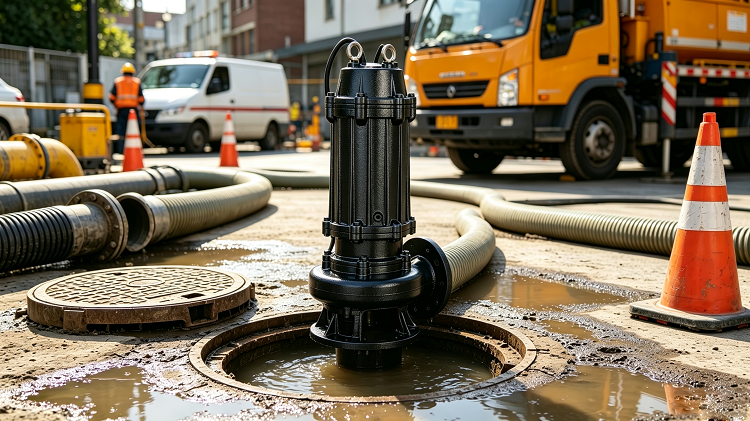
A submersible wastewater pump is built to move wastewater below the liquid level.
Its main parts include:
-
Motor
-
Impeller
-
Pump casing
-
Shaft
-
Mechanical seal
-
Power cable
The impeller is especially important. Its design affects flow, head, and solids handling.
Common designs include vortex, non-clog, and cutter impellers.
A vortex impeller can reduce contact between solids and the impeller. A non-clog design provides a larger flow path. A cutter design can cut some soft fibers before they pass through the pump.
The right design depends on the wastewater.
Wastewater Pumps for Different Applications
Wastewater pumps are used in many systems.
Municipal Wastewater
Municipal sewage systems use sewage pumps to move wastewater from collection points to treatment facilities.
Commercial Buildings
Hotels, restaurants, offices, and shopping centers may need sewage pumps when gravity drainage is not possible.
Industrial Plants
Factories use wastewater pumps to transfer process water and sewage to treatment systems.
Construction Sites
Submersible pumps can remove wastewater and accumulated water from low areas.
Agricultural Facilities
Farms may use sewage pumps for drainage, wastewater collection, and livestock waste systems.
Residential Systems
Homes can use sewage pumps when the wastewater outlet is below the main sewer line.
Each application needs a suitable pump size and design.
Submersible Trash Pump for Solid Handling
A submersible trash pump can move water with solid debris.
For sewage systems, the solids passage is very important. If the passage is too small, the pump may clog.
Common problems include:
-
Rags
-
Long fibers
-
Plastic waste
-
Grease
-
Large solid particles
A suitable pump design can reduce these problems.
Vortex impellers work well in some solids-heavy applications. Non-clog impellers allow larger particles to pass. Cutter pumps can reduce certain fibrous materials.
Therefore, buyers should provide the maximum solid size before choosing sewage pumps.
Sewage Pump Materials
The right material can improve pump life.
Common materials include:
Cast iron: Suitable for many general sewage applications and offers good strength.
Stainless steel: Provides better corrosion resistance for suitable applications.
Engineering plastics: Used in selected pump components where chemical resistance is needed.
Material selection depends on the wastewater.
Before ordering, check the liquid's:
-
pH
-
Temperature
-
Chemical content
-
Chloride level
-
Solid content
This information helps the manufacturer select suitable pump materials.
How to Choose the Right Sewage Pumps
The right sewage pumps should match the actual system.
Start with the required flow rate.
Then calculate the total head. This includes the vertical lift and losses from pipes, valves, and fittings.
Also check the wastewater.
Important data includes:
-
Flow rate
-
Total head
-
Solid size
-
Fiber content
-
Temperature
-
Chemical properties
-
Installation depth
-
Motor power
-
Operating hours
A pump that is too small may not provide enough flow.
A pump that is too large may use more power and cause unnecessary cycling.
Therefore, correct sizing is important for both performance and pump life.
Flow, Head, and Motor Power
Three basic factors guide pump selection.
Flow Rate
Flow shows how much wastewater the pump can move.
It may be measured in m³/h, L/min, or GPM.
Head
Head shows how much pressure the pump needs to move wastewater through the system.
It includes:
-
Vertical lift
-
Pipe friction
-
Valve losses
-
Fitting losses
-
Required outlet pressure
Motor Power
Motor power must match the pump's working point.
More power does not always mean better performance.
A matched motor and pump can provide more stable operation.
Submersible Sewage Pump Installation
Good installation helps sewage pumps work properly.
Place the pump securely inside the sump or tank.
Do not place it directly on the bottom if sediment may build up around the inlet.
Use the correct discharge pipe size. A check valve can also help prevent wastewater from flowing back when the pump stops.
For larger systems, guide rails or auto-coupling systems can make pump removal easier.
Electrical protection is also important.
Depending on the system, protection may include:
-
Overload protection
-
Over-temperature protection
-
Dry-run protection
-
Leakage detection
-
Phase-loss protection
-
Water-level control
Sewage Pump Maintenance
Regular checks can help prevent unexpected failure.
Inspect:
-
Flow
-
Pressure
-
Motor current
-
Cable
-
Impeller
-
Mechanical seal
-
Float switch
-
Control panel
A sudden drop in flow may indicate a clogged impeller, blocked inlet, worn parts, pipe leakage, or a change in wastewater conditions.
If the pump starts too often, check the float switch, liquid level, control settings, and system demand.
Simple checks can help extend the service life of sewage pumps.
Common Sewage Pump Applications
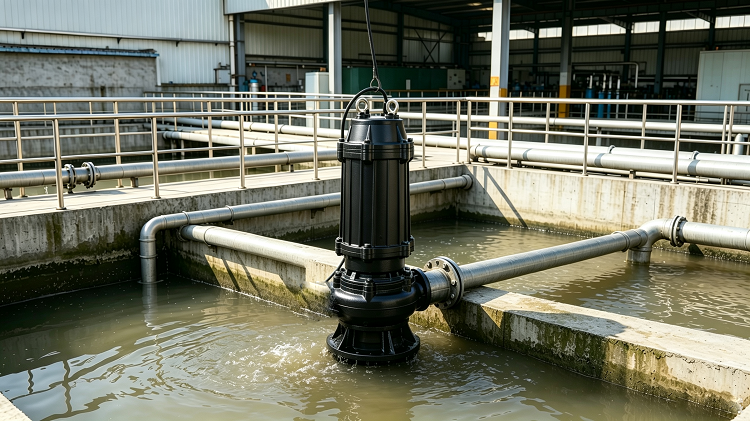
Submersible sewage pumps are used in:
-
Municipal wastewater
-
Industrial wastewater
-
Commercial drainage
-
Residential sewage
-
Construction drainage
-
Agricultural wastewater
-
Mining drainage
-
Food processing
-
Manufacturing plants
-
Wastewater collection stations
Each application has different needs. Therefore, the pump should be selected based on the actual liquid and system conditions.
Why Work With a Sewage Pump Manufacturer?
For B


