Submersible Well Pump: A Practical Guide for Water Supply
News Details
Submersible Well Pump: A Practical Guide for Water Supply
A submersible well pump is designed to move groundwater from a well to a home, farm, storage tank, irrigation system, or industrial facility.
Unlike a surface pump, it works below the water level. Therefore, it pushes water upward instead of pulling it from the surface. This makes it a practical choice for deep wells and long-term water supply.
However, the right pump should not be selected by motor power alone. Well depth, water level, flow rate, head, pipe size, voltage, and water quality all affect performance.
This guide explains the main types of submersible well pumps, how they work, and how to choose a suitable model.
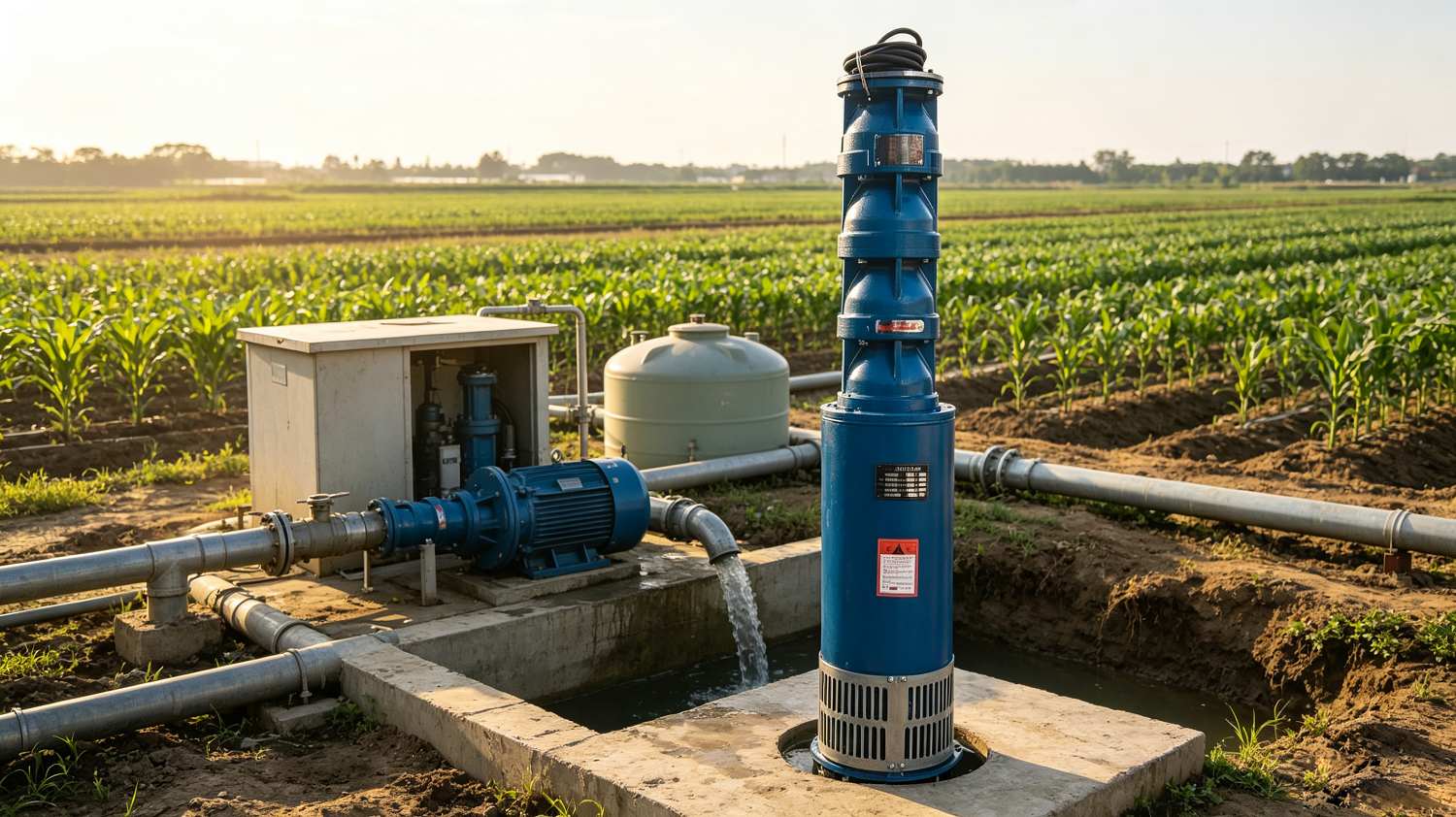
Submersible Pumps
Submersible pumps operate while submerged in water. A typical well pump includes a sealed motor, shaft, impellers, diffusers, inlet screen, and discharge connection.
The motor drives the impellers, which increase water pressure and move the water through the discharge pipe.
Main advantages include:
-
No surface priming
-
Quiet operation
-
Stable water pressure
-
Compact installation
-
Good efficiency
-
Suitable for deep wells
-
Reliable continuous water transfer
They are widely used in residential, agricultural, commercial, and industrial water systems.
Deep Well Pumps for Sale
When comparing deep well pumps for sale, buyers should look beyond price.
The pump needs to match the actual well and system conditions. Important information includes:
-
Well depth
-
Well casing diameter
-
Static water level
-
Dynamic water level
-
Required flow rate
-
Required pressure
-
Pipe length and diameter
-
Power supply
-
Daily operating hours
-
Water quality
For example, two wells with the same depth may need different pumps if their water levels, flow demands, or pipe systems are different.
Therefore, technical selection should come before price comparison.
Deep Well Submersible Pump
A deep well submersible pump is commonly used where groundwater must be lifted from significant depths.
Most deep well pumps use a multistage centrifugal structure. Water passes through several impellers and diffusers, and each stage increases pressure.
Common pump diameters include:
-
3 inch
-
4 inch
-
6 inch
-
8 inch
The correct size depends mainly on the well casing and required flow.
Typical applications include:
-
Agricultural irrigation
-
Residential water supply
-
Livestock watering
-
Industrial water supply
-
Groundwater extraction
-
Storage tank filling
-
Municipal projects
The best model is the one that operates efficiently at the required flow and head.
Submersible Well Water Pump
A submersible well water pump is normally installed below the dynamic water level.
Water enters through the inlet, passes through the pump stages, and is pushed upward through the discharge pipe.
Two values are especially important during selection:
Flow rate shows how much water the pump can deliver.
Head shows how much pressure the pump can produce to move water through the system.
Total required head may include:
-
Vertical lift
-
Outlet pressure
-
Pipe friction
-
Valve losses
-
Fitting losses
For this reason, total well depth should not be used as the only basis for pump selection.
Best Submersible Well Pump
The best submersible well pump is not simply the pump with the highest power.
A good pump should match the well's water supply and the user's water demand.
Key factors include:
Correct Flow
The pump should not remove water faster than the well can recover.
Suitable Head
The pump must provide enough pressure without creating unnecessary pressure or energy use.
Reliable Motor
The motor should match the local voltage and expected operating hours.
Suitable Materials
Stainless steel, cast iron, and engineering plastics are commonly used depending on water conditions.
Easy Maintenance
Spare parts, cables, motors, and other service parts should be available when needed.
A properly matched pump often provides better long-term value than an oversized model.
Well Water Pump System
A well water pump system usually includes more than the pump itself.
A complete system may contain:
-
Submersible pump
-
Motor
-
Power cable
-
Riser pipe
-
Check valve
-
Pressure tank
-
Pressure switch
-
Control box
-
Water storage tank
-
Level sensor
-
Protection device
These components work together to maintain water pressure and protect the pump.
For example, a pressure tank reduces frequent pump starts, while dry-run protection can stop the motor when the water level becomes too low.
A properly designed system can improve reliability and reduce maintenance.
Submersible Water Pump
The term submersible water pump can describe several types of pumps.
Common examples include:
-
Deep well pumps
-
Drainage pumps
-
Sewage pumps
-
Dewatering pumps
-
Fountain pumps
A well pump is different because it is designed for narrow boreholes and high lifting heights.
Therefore, buyers should confirm the application before ordering a pump.
For groundwater applications, the required flow, head, well diameter, water level, and operating depth should always be provided.
Best Submersible Water Well Pump
The best submersible water well pump should provide stable performance while keeping operating and maintenance costs under control.
Important points include:
Efficiency: A pump working close to its recommended duty point usually uses energy more effectively.
Duty cycle: Pumps used for irrigation or industrial systems may need to operate for many hours.
Cooling: The motor must remain surrounded by enough water for effective cooling.
Water quality: Excess sand or minerals may increase wear.
Supplier support: Performance curves, technical data, manuals, and spare parts can be important for long-term projects.
For B2B buyers, stable product specifications and technical support are also valuable when pumps are purchased in batches or used in engineering projects.
How Does a Submersible Pump Work?
Many buyers ask, how does a submersible pump work?
The process is simple.
First, the pump is installed below the water level.
Then, the electric motor drives the pump shaft and impellers.
Water enters the pump through the inlet screen.
As it passes through each impeller and diffuser, the pressure increases.
Finally, the pump pushes the water upward through the discharge pipe.
Because the pump is already underwater, it does not need traditional priming.
This is one of the main reasons submersible pumps perform well in deep wells.
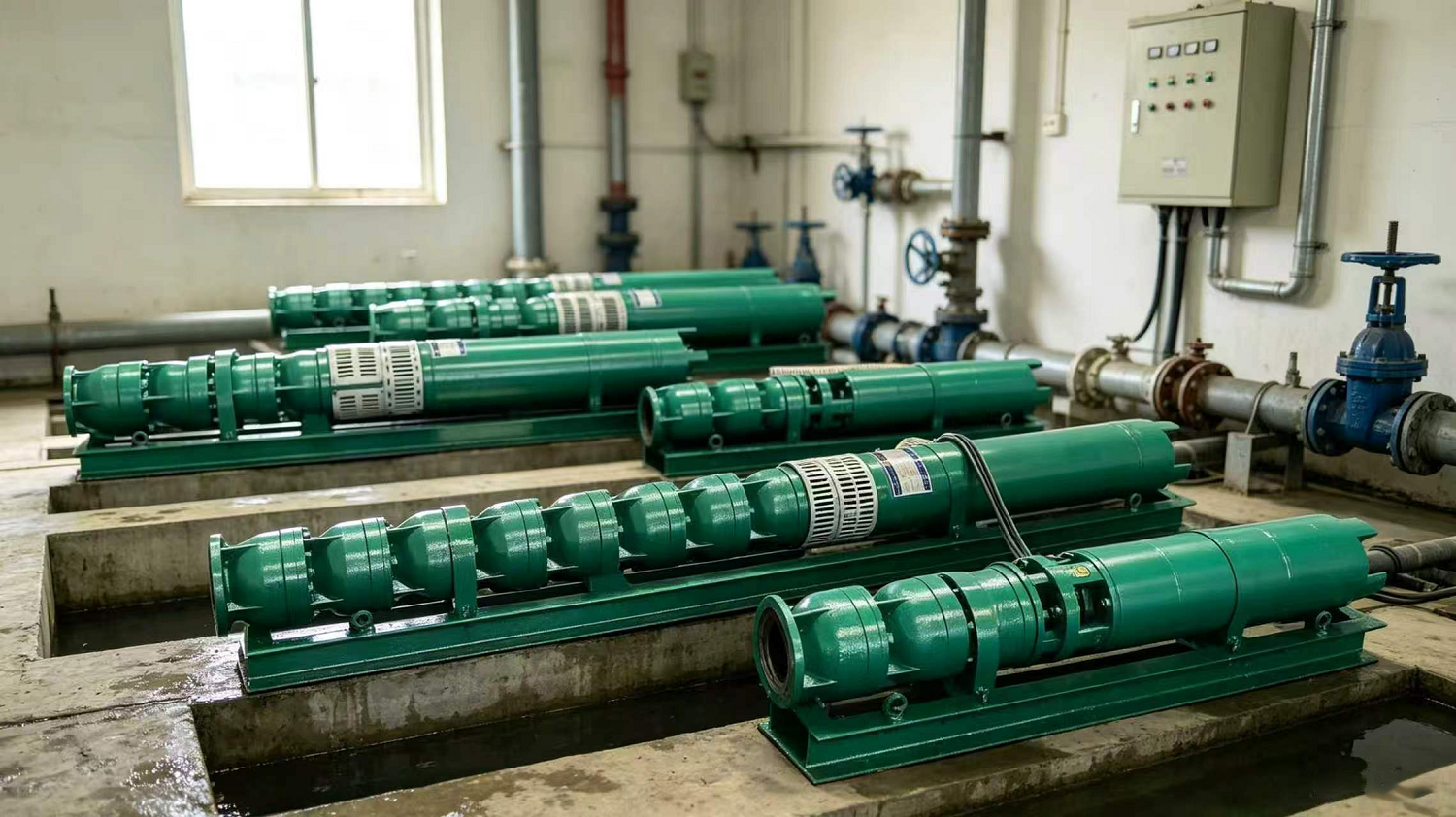
How to Choose the Right Pump Size
Correct sizing helps improve performance and pump life.
Start by confirming the required flow rate.
For homes, this depends on water use. For farms, it may depend on irrigation demand. For industrial projects, it usually depends on process requirements.
Next, calculate total dynamic head.
A simple formula is:
Total Dynamic Head = Vertical Lift + Required Pressure + Friction Loss
The selected pump should then be checked against its performance curve.
A pump that is too small may not provide enough water.
However, an oversized pump may cause high pressure, excessive cycling, or rapid well drawdown.
Static and Dynamic Water Levels
The static water level is the water level when the pump is off.
The dynamic water level is the water level while the pump is running.
During operation, the water level normally drops.
The pump should remain below the expected dynamic water level to prevent dry running.
At the same time, it should not be installed too close to the bottom of the well, where sand and sediment may enter more easily.
Single-Phase and Three-Phase Pumps
Single-phase pumps are commonly used for homes, small farms, and light commercial applications.
Three-phase pumps are more common in higher-power agricultural, commercial, and industrial systems.
Before ordering, buyers should confirm:
-
Voltage
-
Frequency
-
Phase
-
Motor power
Electrical specifications may vary by country and project.
Pump Materials
Pump material should match the water conditions.
Common materials include:
Stainless steel for good corrosion resistance and durability.
Cast iron for strength and cost-effective use in suitable water conditions.
Engineering plastics for selected pump stages and hydraulic components.
If the water contains high levels of minerals, chloride, or other aggressive substances, material compatibility should be reviewed carefully.
Installation and Protection
Correct installation is essential for reliable operation.
The pump should remain submerged and should not sit directly on the bottom of the well.
The cable should be secured to the discharge pipe, and pipe connections should be checked for leaks.
Useful protection devices may include:
-
Dry-run protection
-
Overload protection
-
Voltage protection
-
Phase-loss protection
-
Water-level controls
These devices can help reduce damage caused by abnormal operating conditions.
Maintenance of a Submersible Well Pump
Submersible pumps normally require limited routine maintenance, but the complete system should still be inspected.
Check:
-
Water pressure
-
Flow rate


