HW Horizontal Mixed Flow Centrifugal Pump
Product Information
Flow capacity:
70–8,460 cubic meters per hour
Head:
3.5–22 m
Motor power:
4–450 kW
Hydraulic efficiency:
73%–88%
Required Net Positive Suction Head:
2.7–6.5 m
Maximum liquid temperature:
50°C


HW Horizontal Mixed Flow Centrifugal Pump
The HW centrifugal pump is a horizontal, single-stage, single-suction volute mixed-flow pump. It combines the high-flow performance of an axial flow pump with the pressure capability of a centrifugal pump. Therefore, it is ideal for moving large volumes of water at low or medium heads.
Its simple structure supports reliable operation in irrigation, drainage, raw water transfer, cooling-water circulation, and municipal water systems. In addition, the horizontal layout provides convenient access for inspection and maintenance.
Jingjiang Xiangsu Pump Industry Co., Ltd. can configure the pump according to the required flow, head, installation conditions, motor specifications, and pipeline layout.
HW Centrifugal Pump Performance Range
The HW series includes several inlet sizes, impeller diameters, speeds, and hydraulic configurations.
| Parameter | Typical Series Range |
| Flow capacity | 70–8,460 m³/h |
| Head | 3.5–22 m |
| Motor power | 4–450 kW |
| Hydraulic efficiency | 73%–88% |
| Required NPSH | 2.7–6.5 m |
| Maximum liquid temperature | 50°C |
| Pump structure | Horizontal, single-stage, single-suction |
| Hydraulic type | Volute mixed-flow pump |
| Drive options | Direct coupling or variable-speed drive |
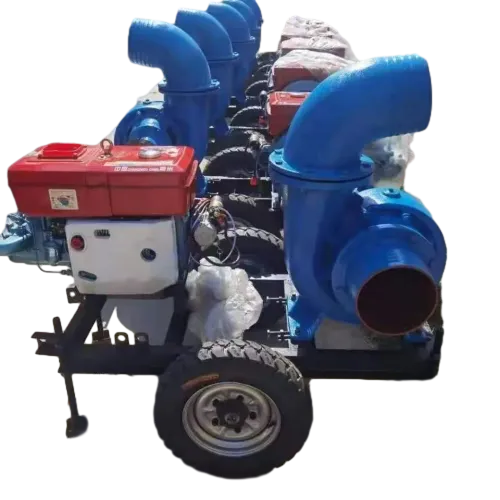
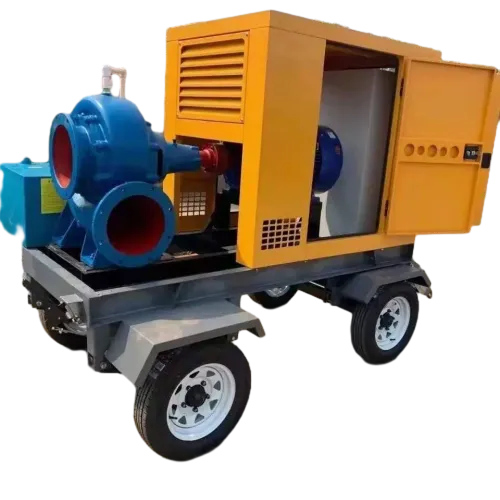
| Prime mover | Electric motor or diesel engine |
These figures describe the general HW product range. The exact flow, head, efficiency, speed, motor power, and suction performance depend on the selected model and operating point.
High Flow with Moderate Head
The mixed-flow impeller moves water in both axial and radial directions. As a result, the HW pump can deliver a much higher flow than many standard end-suction centrifugal pumps while maintaining more head than a typical axial flow pump.
This hydraulic design makes the pump suitable for systems that need continuous high-volume transfer. It can also reduce the number of smaller pumps required in a large pumping station.
Key operating benefits include:
- High water-transfer capacity
- Broad efficient operating range
- Stable low-head performance
- Compact horizontal arrangement
- Straightforward installation
- Easy access to internal components
Horizontal Volute Pump Structure
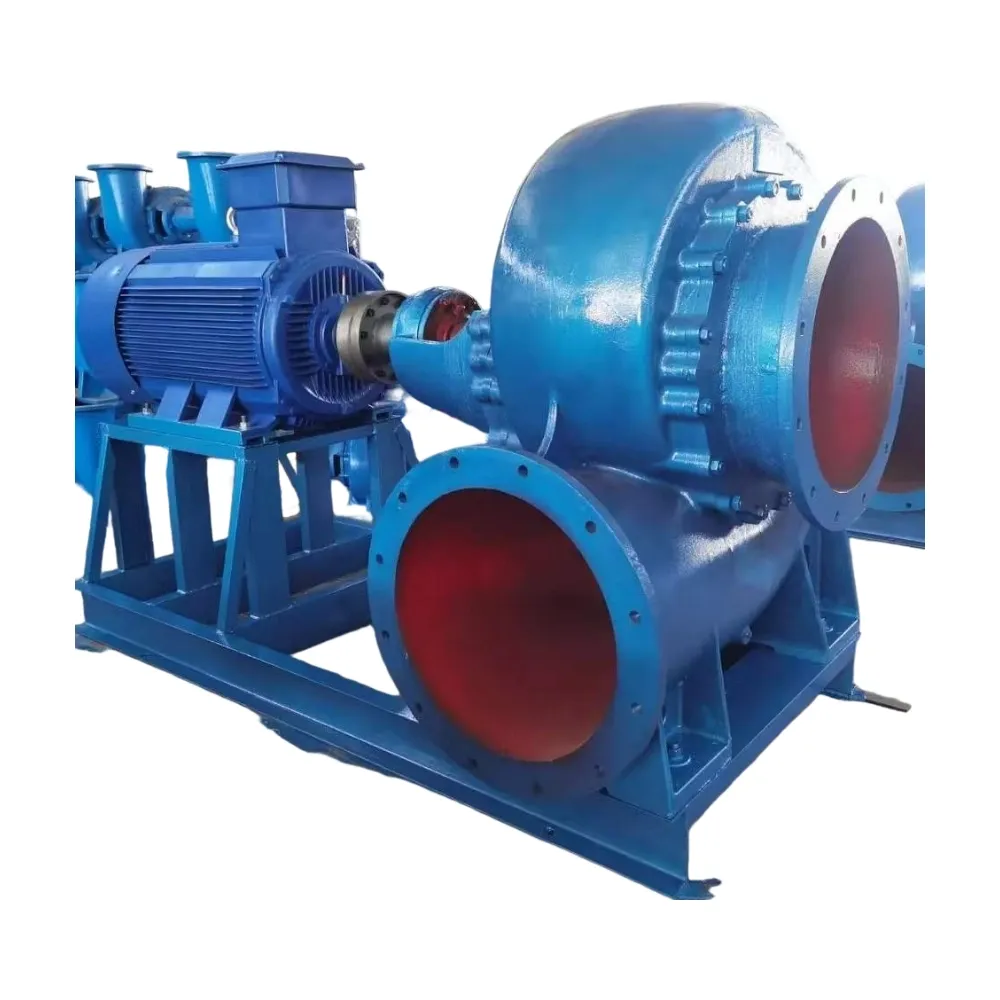
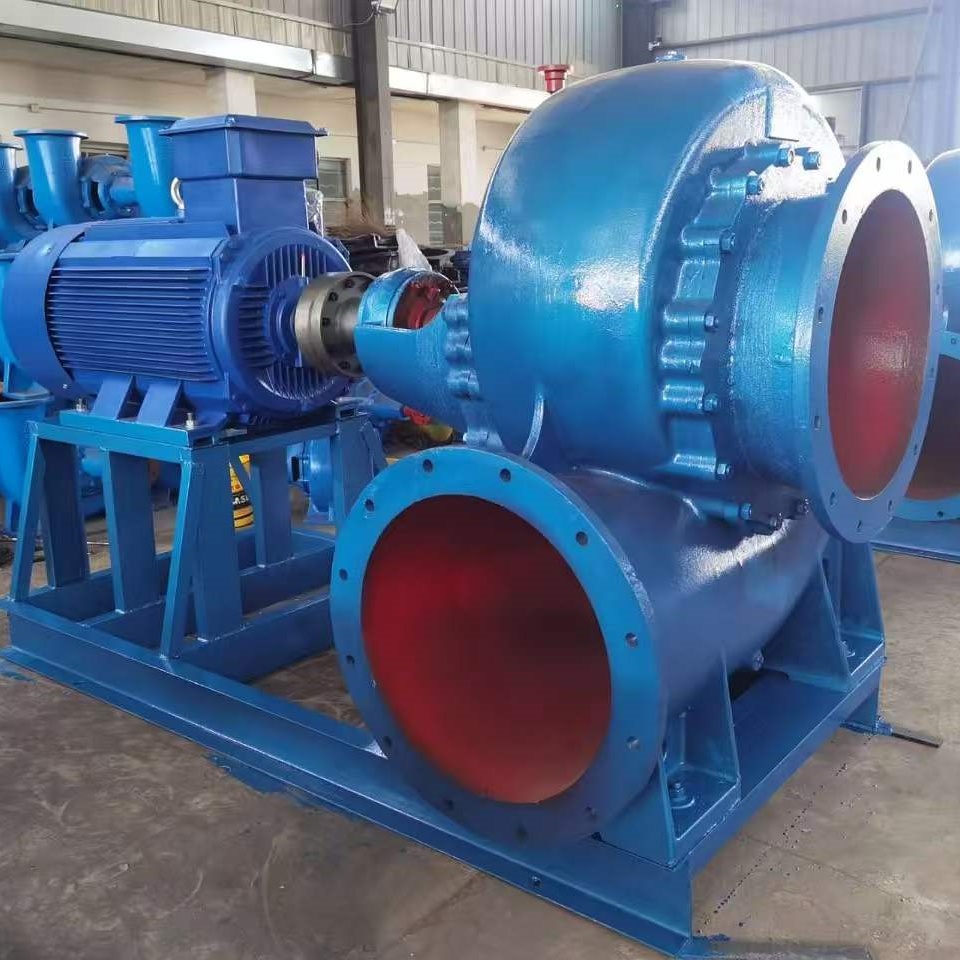
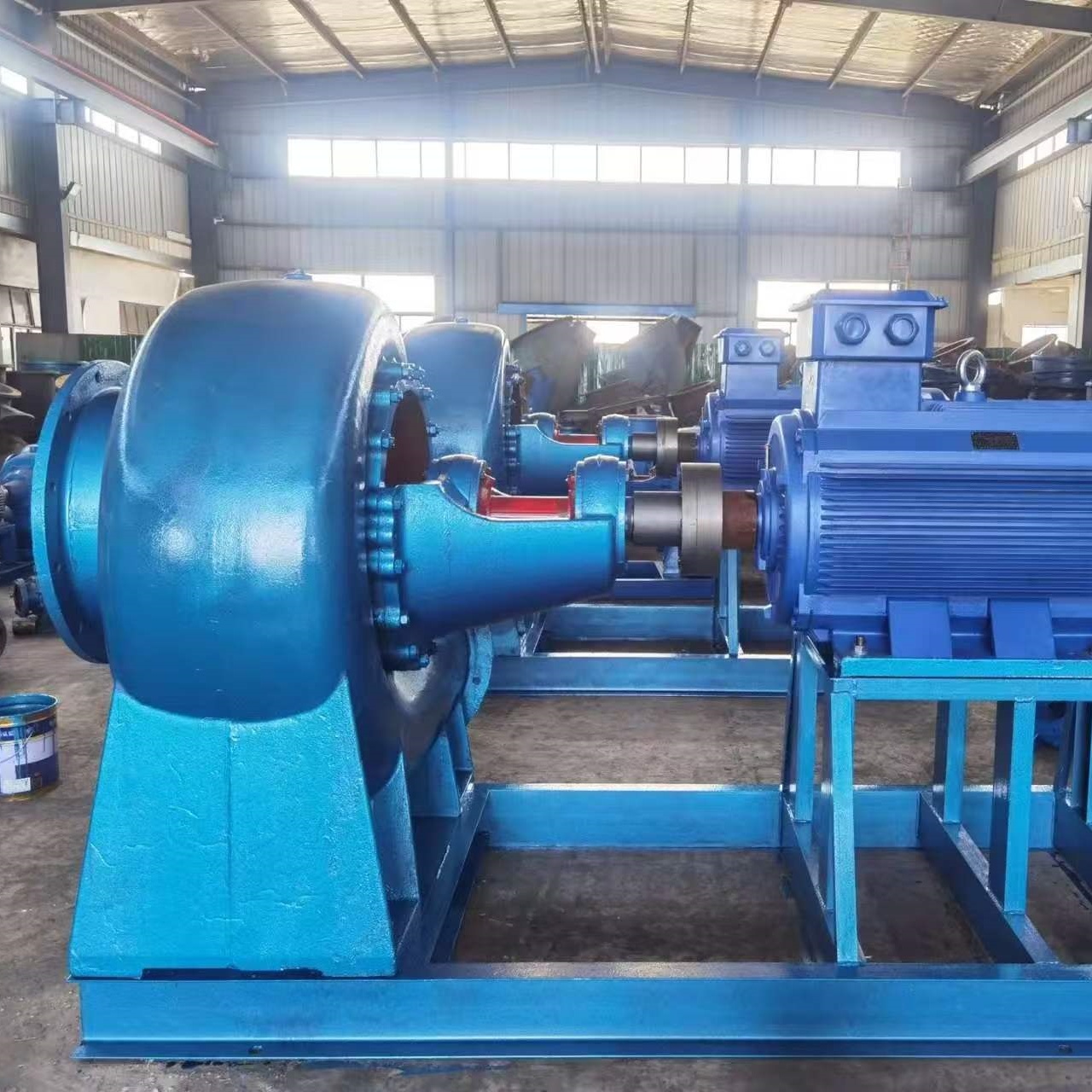
The main components include the volute casing, pump cover, mixed-flow impeller, shaft, replaceable shaft sleeve, bearing housing, shaft seal, coupling, motor, and base frame.
Water enters the pump along the shaft direction. The rotating impeller then adds energy to the water and directs it into the volute casing. Finally, the casing collects the flow and guides it toward the discharge connection.
The large suction and discharge openings shown in the product images support high-volume water movement. Meanwhile, the reinforced casing and base structure help maintain alignment under continuous-duty conditions.
Adjustable Hydraulic Performance
Different projects may require different flow and head combinations. Therefore, the manufacturer can adjust the pump performance through:
- Impeller diameter trimming
- Alternative impeller designs
- Pump-speed selection
- Motor-speed selection
- Variable-speed transmission
- Different pulley ratios
- Custom motor matching
An adjusted impeller may be identified by a suffix such as “A.” However, every change to impeller diameter or speed also affects efficiency, shaft power, and NPSH. Final selection should therefore be based on the full pump curve.
Direct or Variable-Speed Drive
The HW horizontal mixed-flow pump can be connected directly to an electric motor through a coupling. This arrangement offers stable power transmission and a compact equipment layout.
A variable-speed or belt-driven configuration may also be used. Moreover, diesel-engine drive can be considered for remote irrigation, flood control, or emergency drainage systems where grid power is unavailable.
The prime mover should be selected according to the required pump speed, absorbed power, starting method, voltage, frequency, and site conditions.

Shaft Seal and Bearing Options
A packing seal is commonly used to control air entry and water leakage around the shaft. Mechanical seals may also be considered when the project requires tighter leakage control.
The replaceable shaft sleeve protects the main shaft from wear in the sealing area. Therefore, maintenance teams can replace the sleeve instead of changing the complete shaft.
Depending on the pump size, the shaft may be supported by a bearing housing or a larger bearing bracket. Bearings can use oil or grease lubrication according to the selected configuration.
Materials for Water Transfer Duties
Standard HW pumps are commonly supplied with cast iron or ductile iron casings. Different impeller and shaft materials can be selected according to water quality and service conditions.
Available configurations may include:
- Cast iron pump casing
- Ductile iron pump casing
- Cast iron or ductile iron impeller
- Bronze impeller
- Stainless steel impeller
- Stainless steel shaft
- Replaceable shaft sleeve
- Packing or mechanical seal
For mildly corrosive water, seawater, or industrial process water, the complete material combination must be reviewed. The casing, impeller, shaft, sleeve, fasteners, and seal should all be compatible with the liquid.
Applications of HW Mixed Flow Pumps
The HW centrifugal pump is suitable for many high-volume water systems, including:
- Agricultural irrigation
- Farmland and river drainage
- Municipal flood control
- Stormwater pumping stations
- Raw water intake
- Industrial water supply
- Cooling-water circulation
- Urban water transfer
- Reservoir and canal projects
- Emergency drainage
- Aquaculture water circulation
- Waterworks intake systems
The standard pump is designed mainly for clean water or liquids with similar physical and chemical properties. Water containing large solids, abrasive particles, fibers, or heavy sludge requires a separate technical review.
Installation Requirements
The pump should be installed on a level and rigid foundation. In addition, the pump and motor shafts must be aligned carefully after the base frame is fixed and the piping is connected.
The inlet and discharge pipes should have independent supports. Pipeline weight must not be transferred to the pump casing.
Before startup:
- Fill the pump casing and suction pipe with water.
- Remove trapped air from the inlet line.
- Confirm the correct rotation direction.
- Check the coupling alignment.
- Open the required inlet valves.
- Confirm that the bearings have enough lubricant.
- Turn the shaft manually to check for rubbing.
The pump must not run dry. Operators should also monitor flow, discharge pressure, vibration, bearing temperature, and seal leakage during operation.
Selecting the Correct HW Pump
Pump selection should start with the required duty point rather than the pipe diameter alone. An oversized pump may operate far from its best-efficiency point, while an undersized pump may not meet the required flow.
Please provide the following information when requesting a quotation:
- Required flow and head
- Static water level
- Suction and discharge pipe lengths
- Pipe diameter and fittings
- Water temperature
- Water quality and solids content
- Required motor voltage and frequency
- Electric or diesel drive
- Indoor or outdoor installation
- Continuous or intermittent operation
With complete system data, the manufacturer can select the pump size, impeller, speed, motor, materials, base, and coupling more accurately.
Manufacturer Configuration Support
Jingjiang Xiangsu Pump Industry Co., Ltd. can provide hydraulic selection, pump-curve matching, motor configuration, material selection, base fabrication, coupling arrangement, and installation-drawing support.
Custom flange standards, motor voltages, coating systems, coupling guards, and monitoring accessories can also be reviewed for industrial and infrastructure projects.
Frequently Asked Questions
Is an HW pump a centrifugal pump or an axial flow pump?
It is a mixed-flow pump. Its impeller produces both radial and axial flow, placing its performance between centrifugal and axial flow pumps.
Can it handle sewage?
The standard version is intended for clean water or similar liquids. Sewage containing solids or fibers requires technical evaluation or a different pump type.
Can it use a diesel engine?
Yes. Electric motor, diesel engine, direct-coupling, and variable-speed drive arrangements can be considered.
What is the maximum flow?
The referenced HW series extends to approximately 8,460 m³/h. Actual limits depend on the available model range and project configuration.
How is the correct model selected?
Selection should be based on flow, head, NPSH, pipeline resistance, water quality, motor data, and installation conditions.