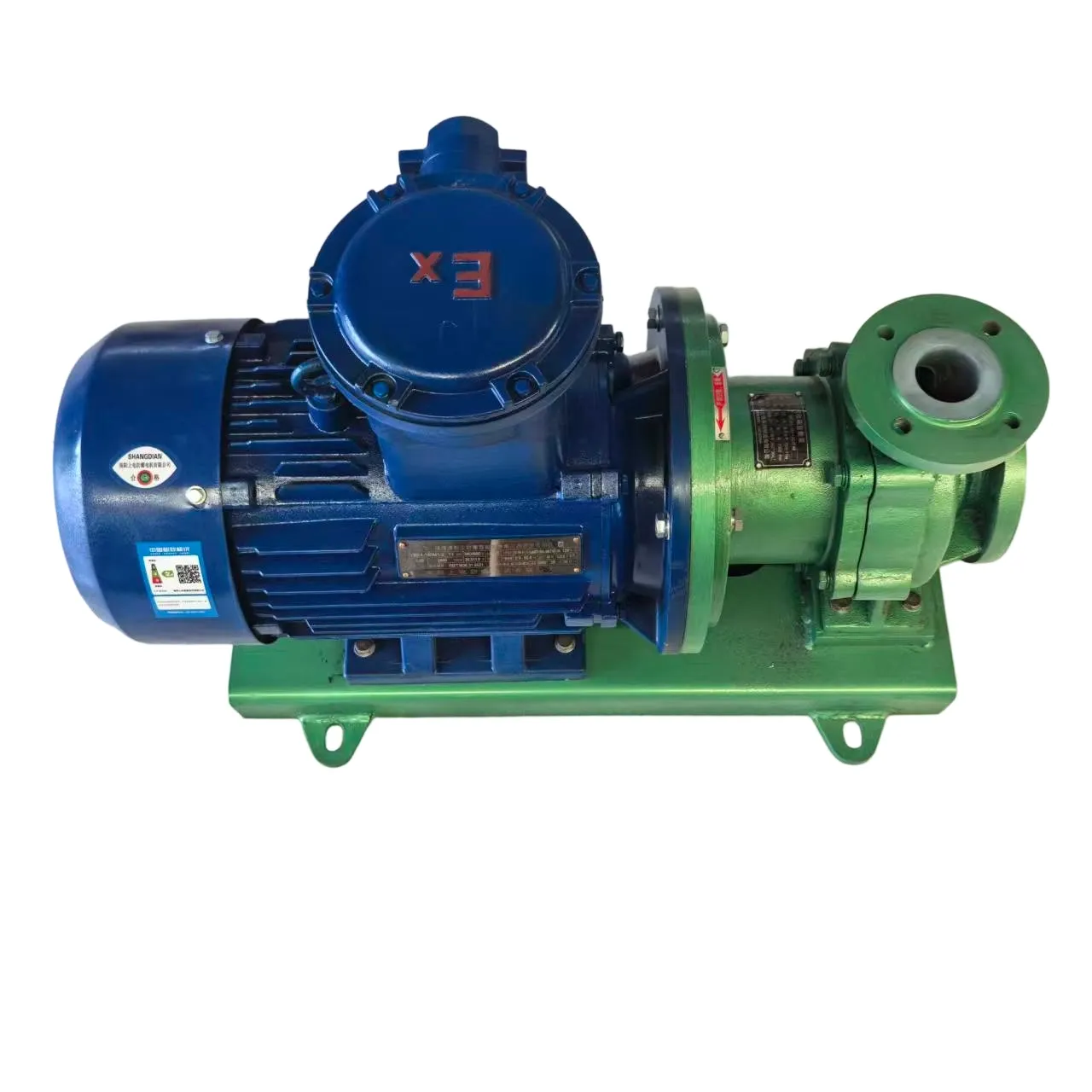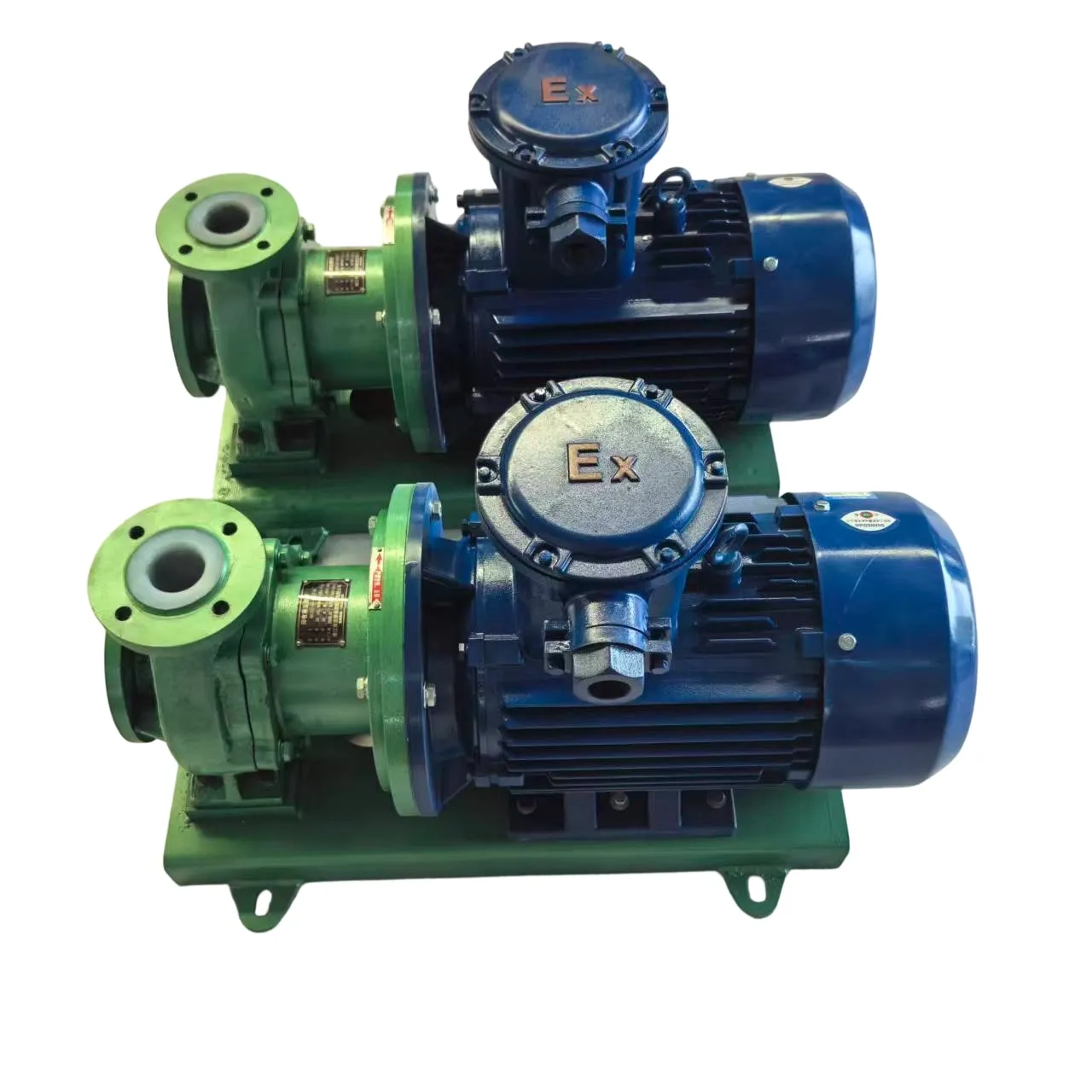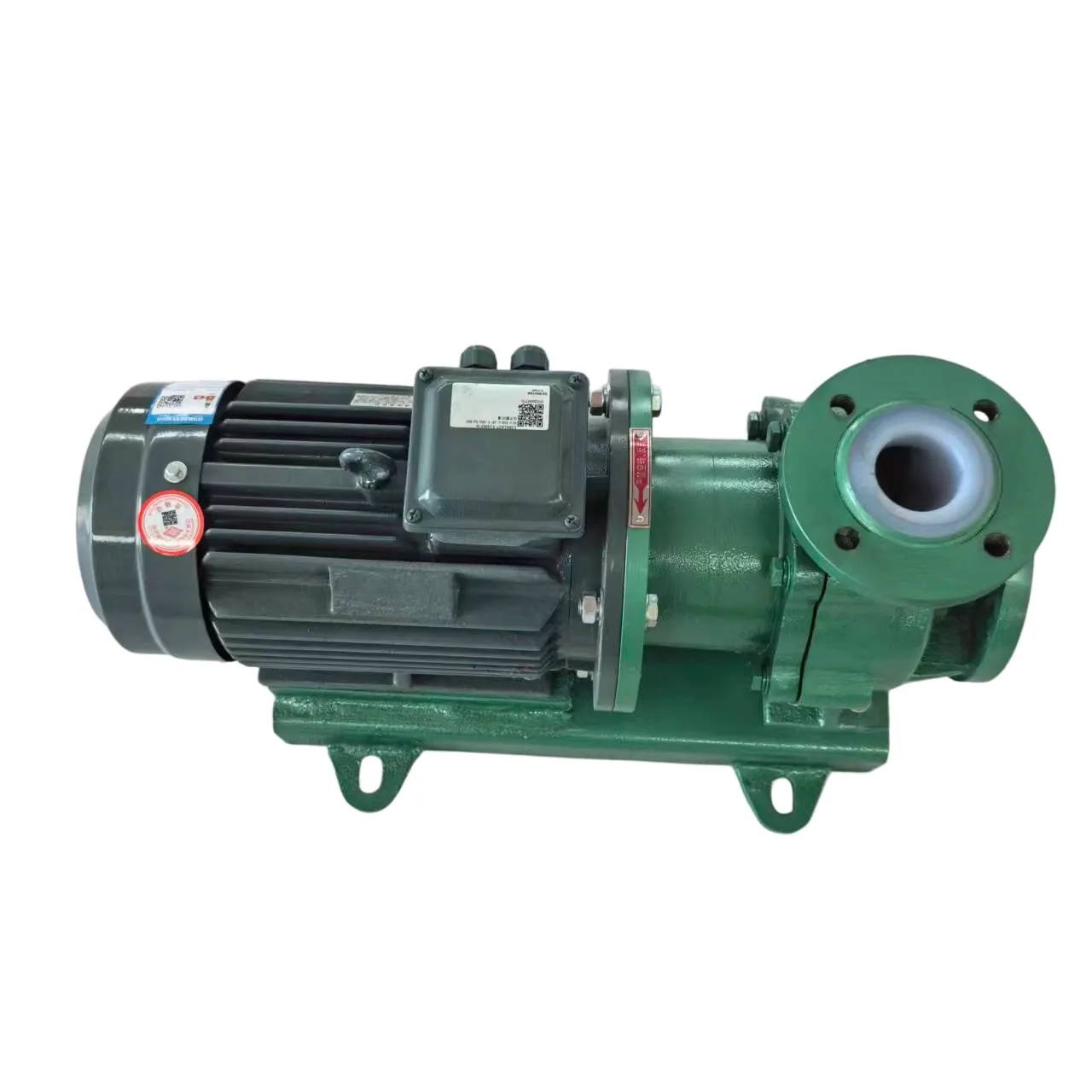
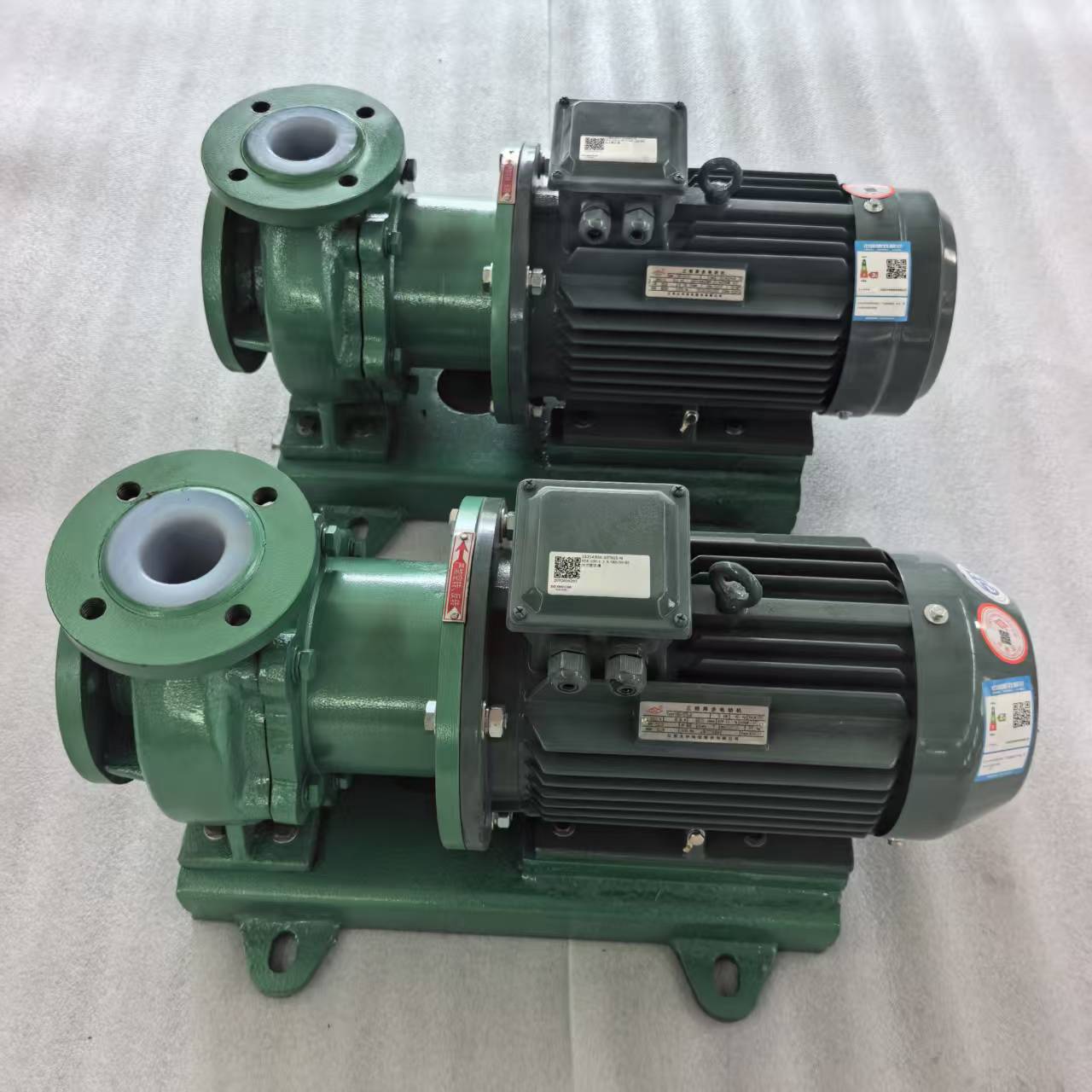
IMC Fluoroplastic-Lined Magnetic Drive Pump
Product Information
Model:
IMC
Flow capacity:
3.6–200 m³/h
Head:
15–80 m
Motor power:
1.1–55 kW
Rotational speed:
2,900 r/min
Required Net Positive Suction Head:
3–5.5 m
Maximum working pressure:
1.0 MPa


The IMC fluoroplastic-lined magnetic drive pump is a sealless centrifugal pump for transferring corrosive and hazardous liquids. Instead of using a conventional shaft seal, it transfers motor power through internal and external magnetic assemblies.
This enclosed structure helps prevent leakage from the rotating shaft area. Therefore, it is suitable for applications where liquid containment, corrosion resistance, and workplace safety are important.
Jingjiang Xiangsu Pump Industry Co., Ltd. supplies IMC magnetic pumps in different hydraulic sizes and material configurations. High-temperature, alkaline-liquid, and special-medium versions can also be reviewed according to the operating data.
IMC Magnetic Drive Pump Performance
The IMC series covers small and medium industrial chemical transfer duties.
| Parameter | Available Range |
| Flow capacity | 3.6–200 m³/h |
| Head | 15–80 m |
| Motor power | 1.1–55 kW |
| Rotational speed | 2,900 r/min |
| Inlet size | 32–125 mm |
| Outlet size | 20–100 mm |
| Required NPSH | 3–5.5 m |
| Maximum inlet pressure | 0.2 MPa |
| Maximum working pressure | 1.0 MPa |
| Pump type | Sealless magnetic-drive centrifugal pump |
Actual performance depends on the pump model, liquid density, viscosity, temperature, suction conditions, and operating point. Final selection should be based on a complete process data sheet.
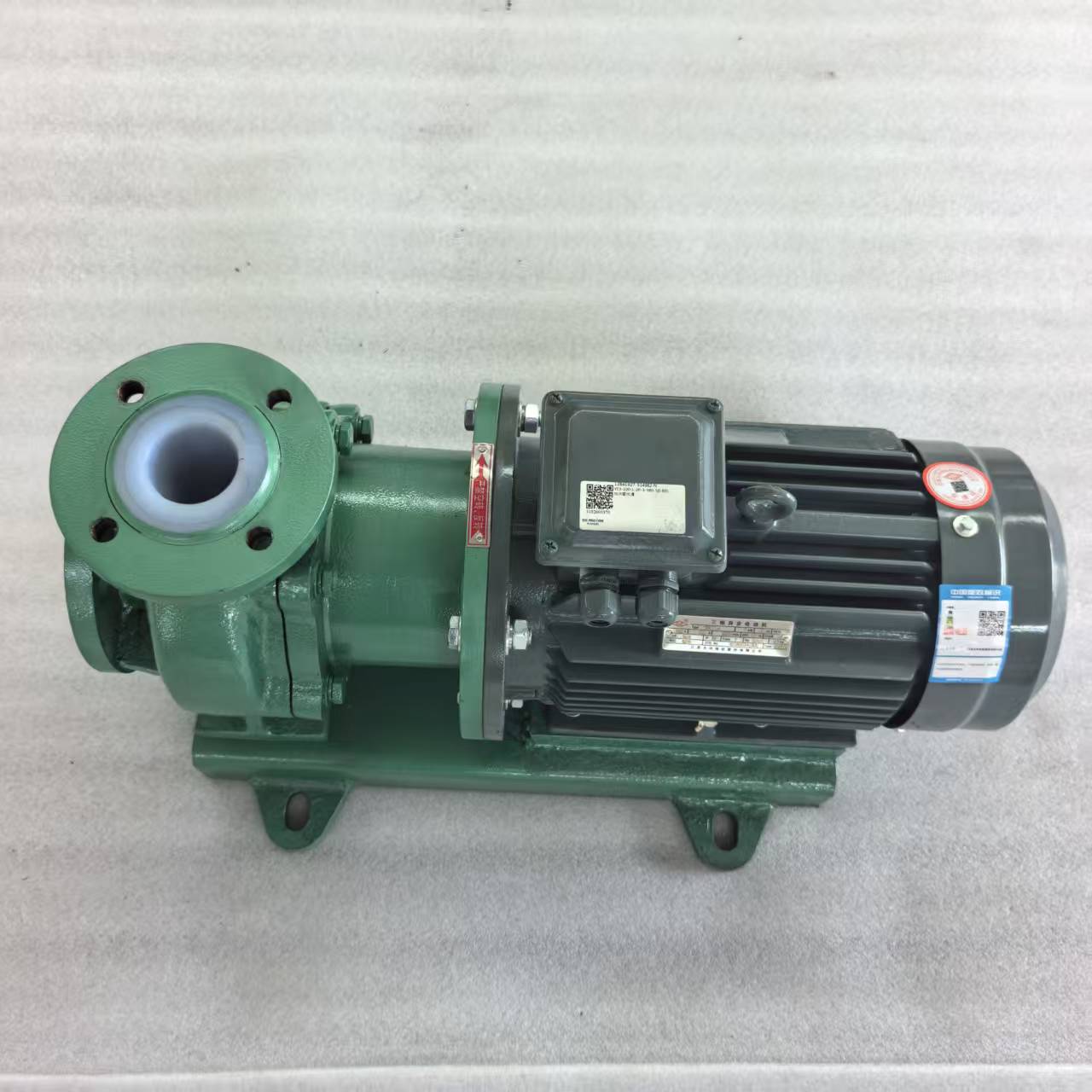
Sealless Magnetic Drive Design
A conventional centrifugal pump transfers power through a shaft that passes through the pump casing. As a result, it requires packing or a mechanical seal around the shaft.
The IMC pump uses a magnetic coupling instead. The motor drives the external magnetic assembly, which transfers torque through the containment shell to the internal rotor and impeller. Therefore, the liquid chamber remains enclosed.
This design offers several advantages:
- No dynamic shaft seal
- Reduced risk of seal-related leakage
- Lower routine seal maintenance
- Better containment of corrosive liquids
- Compact pump and motor arrangement
- Stable power transmission under correct operating conditions
The magnetic components do not normally lose magnetism during standard operation. However, overload, rotor blockage, magnetic decoupling, or excessive temperature can cause demagnetization. Proper operating control is therefore essential.
F46-Lined Corrosion-Resistant Flow Path
The pump casing uses an HT200 metal shell with an F46 fluoroplastic lining. The metal exterior provides mechanical support, while the lining protects the casing from direct contact with the process liquid.
The impeller is integrally molded from fluoroplastic around a steel insert. This structure combines corrosion resistance with mechanical strength.
Main component materials include:
| Component | Standard Material |
| Pump casing | HT200 with F46 lining |
| Impeller | F46 with magnetic insert |
| Main shaft | Silicon carbide |
| Shaft sleeve | Silicon carbide |
| Containment shell assembly | F46 and PEEK |
| Wear components | Filled PTFE or silicon carbide |
| External magnet assembly | HT200 and neodymium magnet |
The final material combination should be selected according to the liquid, concentration, temperature, pressure, electrical conductivity, and operating time.

Low-Eddy-Current Containment Shell
The containment shell separates the process liquid from the external magnetic assembly. It is therefore a critical pressure-bearing and isolation component.
The IMC series uses a high-strength, high-resistance non-metallic reinforcement structure. This design helps reduce magnetic eddy-current losses and unwanted heat generation.
The documented pressure limit of the reinforced containment shell is 1.0 MPa. The actual operating pressure must remain within the limit specified for the selected model.
Silicon Carbide Shaft and Wear Parts
The main shaft and shaft sleeve use silicon carbide, which provides good hardness, wear resistance, and chemical stability.
During operation, process liquid enters the bearing area and forms a lubricating film between the shaft and sleeve. As a result, the pump can operate without external bearing lubrication in the liquid-contact section.
However, the lubricating film depends on a continuous supply of liquid. The pump must never run dry. Dry operation can rapidly damage the silicon carbide components and other internal parts.
For special liquids, different wear combinations may be required. For example, hydrofluoric acid may require pressureless-sintered silicon carbide, while nitric acid applications may use ceramic or silicon carbide components after technical review.
Suitable Chemical Applications
With the correct material configuration, the IMC magnetic drive pump can be used in:
- Chlor-alkali production
- Fluorochemical processing
- Benzene and solvent transfer
- Alcohol processing
- Formed-foil production
- Metal pickling lines
- Pesticide manufacturing
- Seawater desalination
- Pharmaceutical processing
- Acid and alkali transfer
- Chemical storage and dosing systems
It is suitable for many strong acids, strong alkalis, solvents, and other corrosive liquids. However, chemical compatibility must be confirmed using the exact composition and operating temperature.
Important Operating Limits
The standard IMC pump is intended for clean liquids without ferromagnetic or hard particles.
Ferromagnetic material can be attracted to the internal magnets and damage the rotating components. Therefore, a magnetic filter should be installed when fine iron particles may be present. A standard inlet filter should also be considered for other foreign matter.
Additional operating limits include:
- Do not operate below 30% of the rated flow.
- Do not exceed an inlet pressure of 0.2 MPa.
- Do not exceed the specified working pressure.
- Do not start or operate the pump without liquid.
- Confirm material suitability before transferring special chemicals.
- Check the motor rotation before continuous operation.
If the liquid density exceeds 1,400 kg/m³, the manufacturer must review and redesign the magnetic coupling. Higher density increases the required torque and may cause magnetic decoupling if a standard coupling is used.
Protection for Low-Conductivity Liquids
Liquids with very low electrical conductivity may generate static electricity inside the pump. Examples include ultrapure water and some fluorinated inert liquids.
Static discharge can damage fluoroplastic components. Therefore, grounding, static dissipation, or another suitable protective method should be included in the system design.
The required solution should be reviewed according to the liquid conductivity, flow velocity, piping material, and site conditions.
Installation and Startup
The pump should be installed on a firm and level foundation. Meanwhile, the inlet and outlet pipes must have independent supports so that pipeline weight is not transferred to the pump casing.
The inlet filter area should generally be two to three times the pipe cross-sectional area. In addition, a non-return valve should be installed on high-head discharge lines where reverse flow could occur after shutdown.
Before startup:
- Fill the pump chamber completely with liquid.
- Remove air from the suction pipe.
- Confirm that the rotor turns freely.
- Check the motor rotation direction.
- Start with the discharge valve closed.
- Observe the pump for 5–10 minutes during trial operation.
When stopping the pump, close the discharge valve first and then disconnect the power.
Manufacturer Selection Support
Jingjiang Xiangsu Pump Industry Co., Ltd. can assist with hydraulic selection, lining compatibility, wear-material matching, motor sizing, magnetic coupling design, and installation planning.
For an accurate proposal, please provide:
- Required flow and head
- Liquid name and chemical composition
- Concentration and temperature
- Density and viscosity
- Electrical conductivity
- Suction pressure or available NPSH
- Presence of particles or crystals
- Motor voltage and frequency
- Indoor or outdoor installation conditions
- Hazardous-area requirements
Complete process information helps prevent unsuitable materials, magnetic overload, cavitation, and premature internal wear.
Frequently Asked Questions
Does the IMC pump use a mechanical seal?
No. It uses magnetic coupling to transfer power through an enclosed containment shell.
Can it handle strong acids and alkalis?
Yes, when the F46 lining and internal materials are compatible with the exact liquid, concentration, and temperature.
Can the pump run dry?
No. Dry running can damage the shaft, sleeve, bearings, and fluoroplastic components.
Can it transfer liquids containing iron particles?
Ferromagnetic impurities are not allowed in the standard pump. A magnetic filter is required when such contamination is possible.
What if the liquid density exceeds 1,400 kg/m³?
The manufacturer should redesign or verify the magnetic coupling for the higher torque requirement.