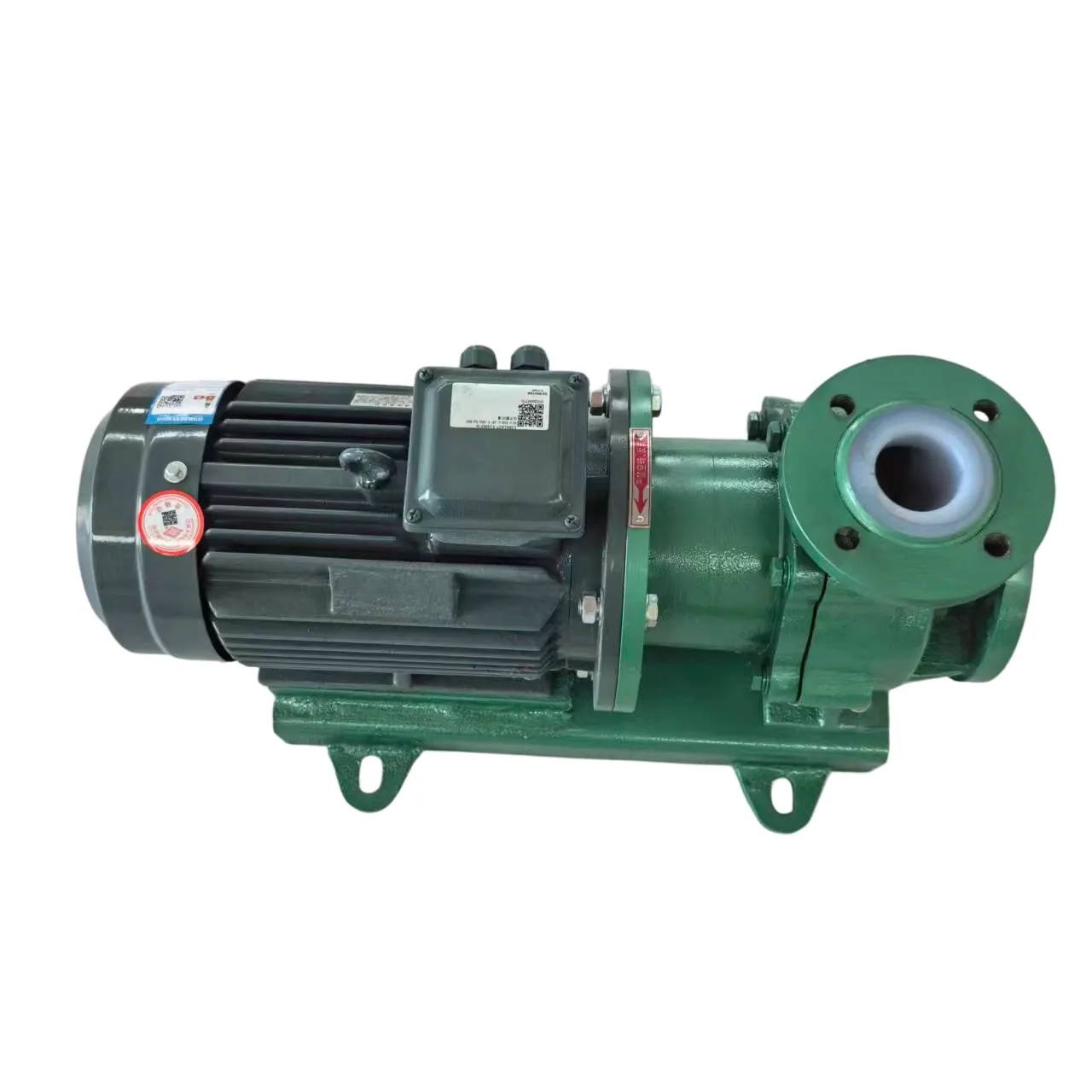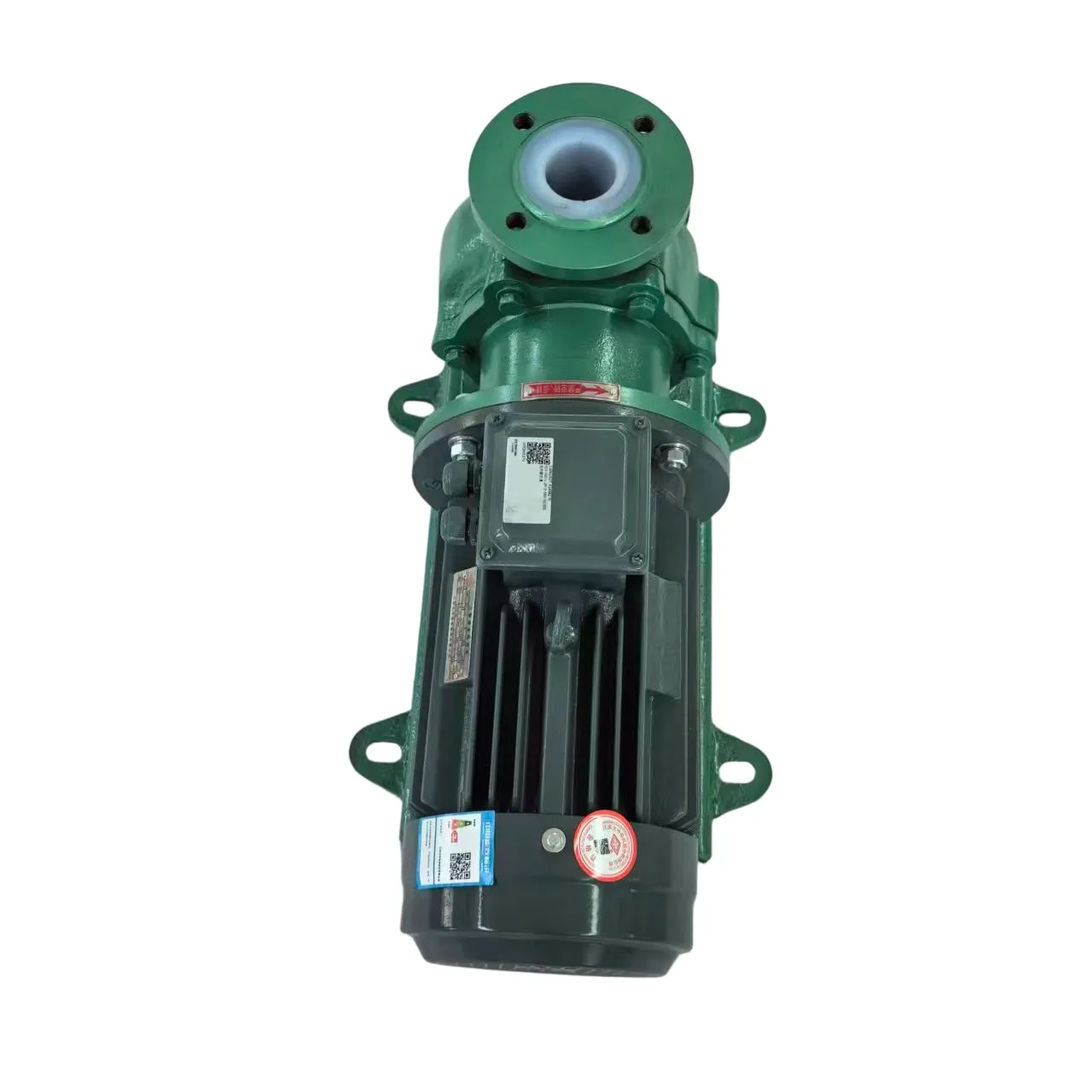
Magnetic Drive Pump for Corrosive Chemical Transfer
Product Information
Flow rate:
0.8–100 m³/h
Extended flow range:
Up to 200 m³/h
Head:
3.2–50 m
Extended head range:
Up to 80 m
Motor power:
0.18–30 kW
Speed:
1,450 or 2,900 rpm


The magnetic drive pump is a sealless centrifugal pump for transferring corrosive, toxic, volatile, and valuable liquids. It uses a magnetic coupling to transfer power from the motor to the impeller. Therefore, the pump does not need a conventional rotating shaft seal.
This enclosed structure helps prevent leakage from the shaft area. As a result, it is suitable for chemical plants, pharmaceutical production, metal treatment, water treatment, and other processes that require safe liquid containment.
As a magnetic drive pump manufacturer, we provide hydraulic selection, material matching, motor configuration, production, testing, and spare-parts support. Moreover, each pump can be adapted to the liquid and site conditions.
Magnetic Drive Pump Technical Specifications
| Parameter | Typical Series Range |
| Pump design | Horizontal, single-stage centrifugal pump |
| Drive type | Sealless magnetic coupling |
| Flow rate | 0.8–100 m³/h |
| Extended flow range | Up to 200 m³/h |
| Head | 3.2–50 m |
| Extended head range | Up to 80 m |
| Motor power | 0.18–30 kW |
| Extended motor range | Up to 90 kW |
| Inlet size | DN15–DN100 |
| Speed | 1,450 or 2,900 rpm |
| Required NPSH | About 3.5–6 m |
| Standard lining | Fluoroplastic, PTFE, or F46 |
| Installation | Horizontal direct-coupled unit |
| Motor | Standard or explosion-proof |
| Connections | Flanged inlet and outlet |
These figures cover several pump sizes. However, actual output depends on the impeller, speed, liquid density, viscosity, temperature, suction pressure, and system resistance.
How the Magnetic Coupling Works
The motor turns an external magnetic assembly. At the same time, magnetic force passes through the containment shell and drives the internal magnet and impeller.
Because the motor shaft does not enter the liquid chamber, there is no dynamic shaft seal. Consequently, common mechanical-seal leakage points are removed.
The main internal parts include:
- Pump casing
- Fluoroplastic lining
- Impeller
- Inner magnetic rotor
- Outer magnetic rotor
- Containment shell
- Pump shaft
- Sliding bearings
- Thrust rings
- Electric motor
This compact arrangement also reduces alignment work because the pump and motor are connected as one unit.
Fluoroplastic-Lined Flow Path
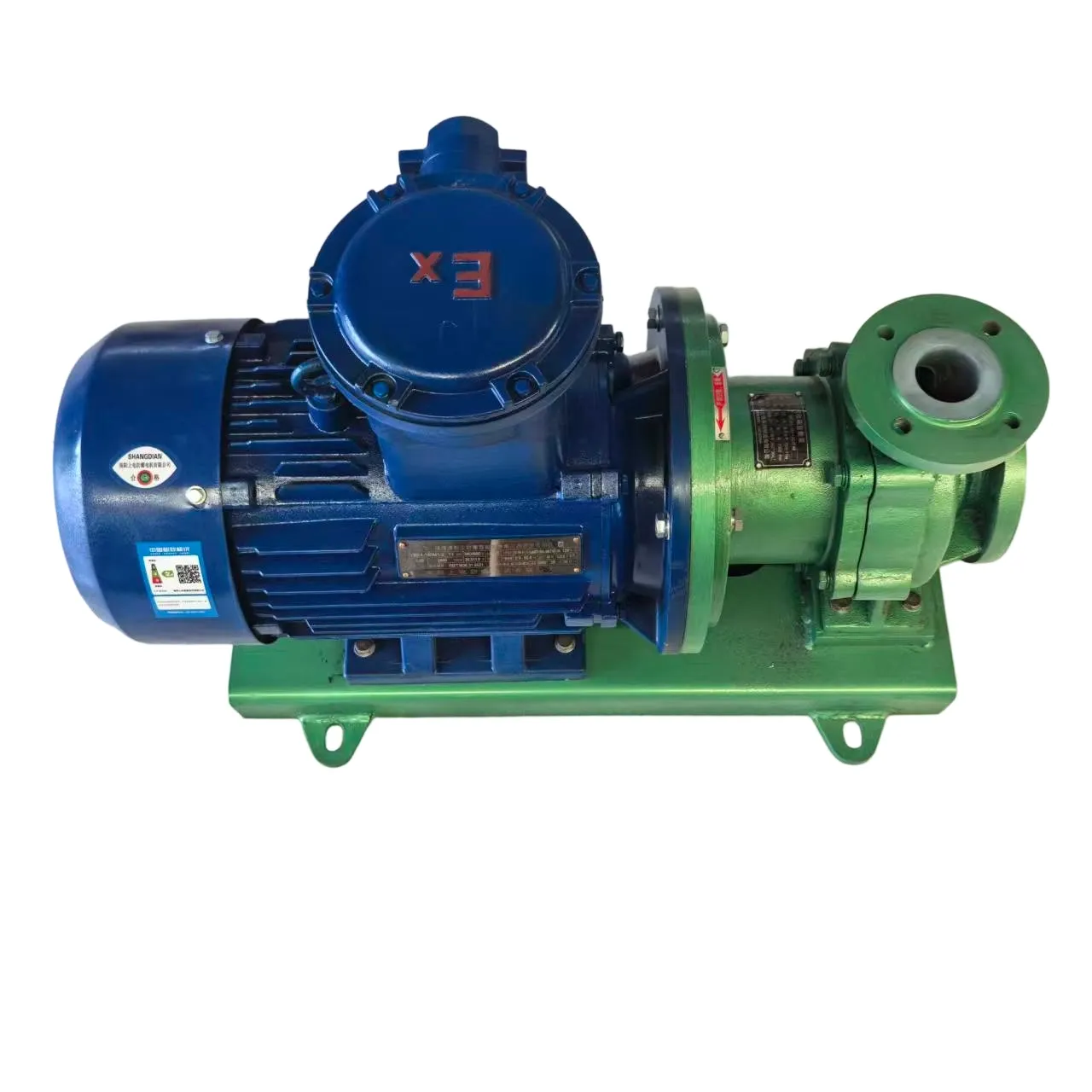
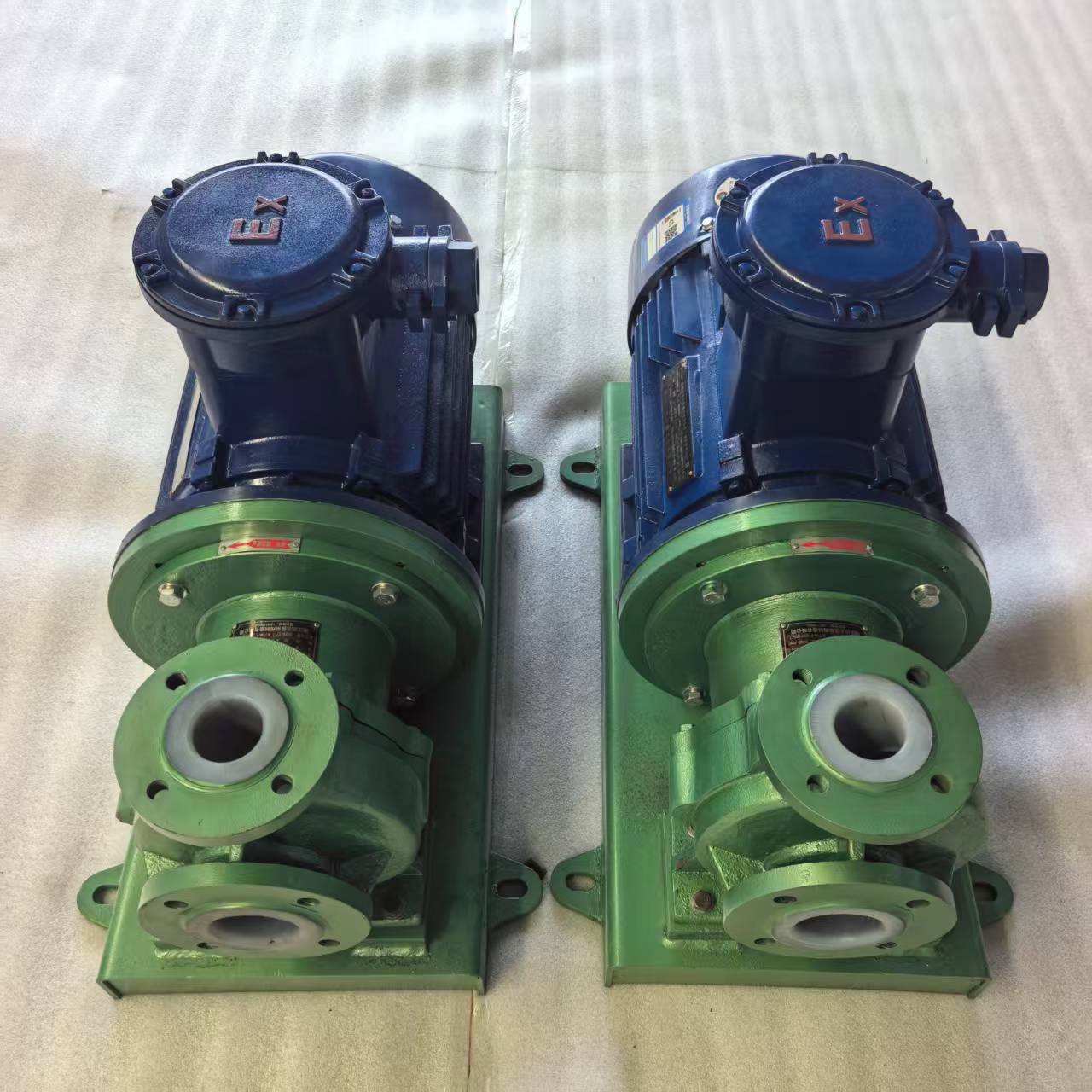
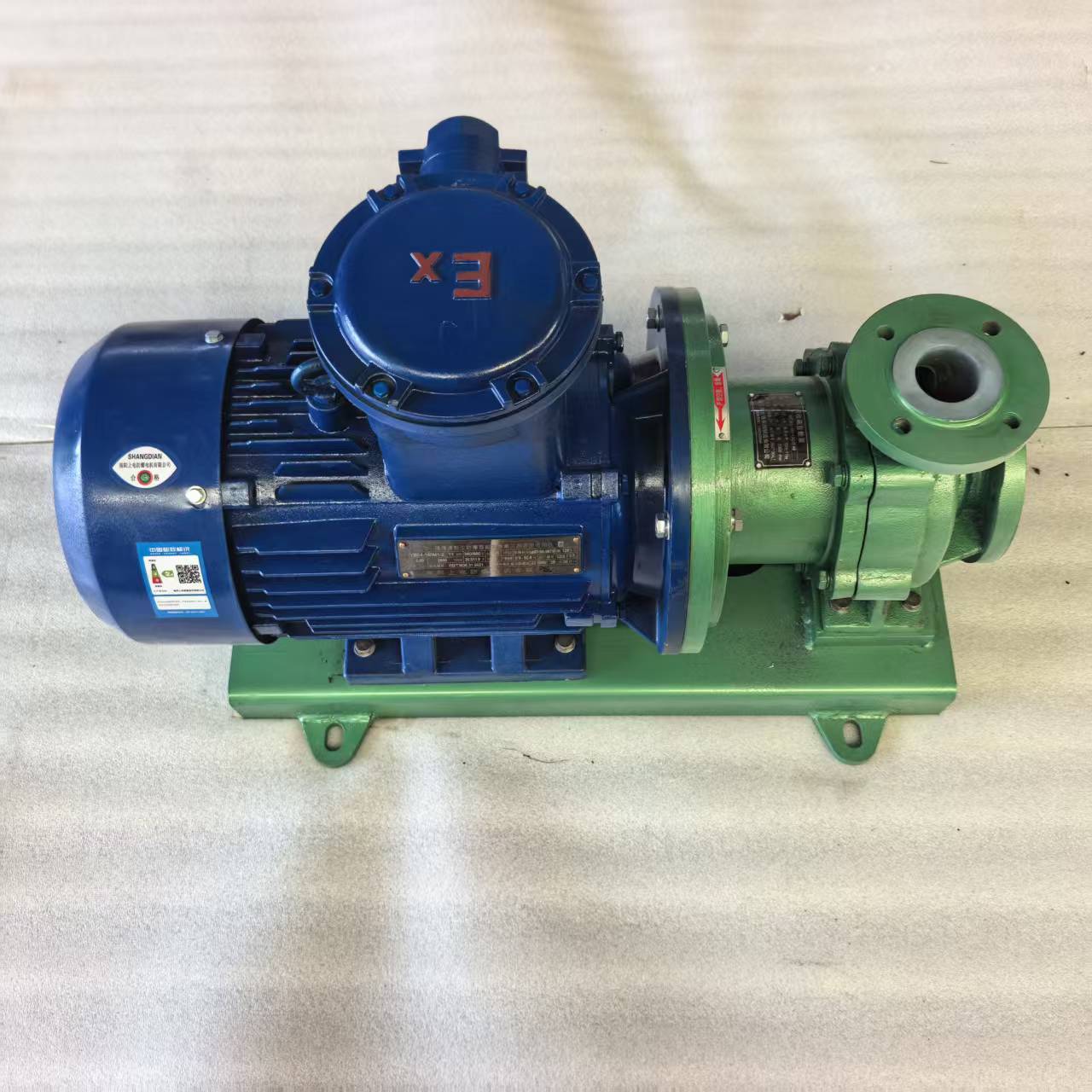
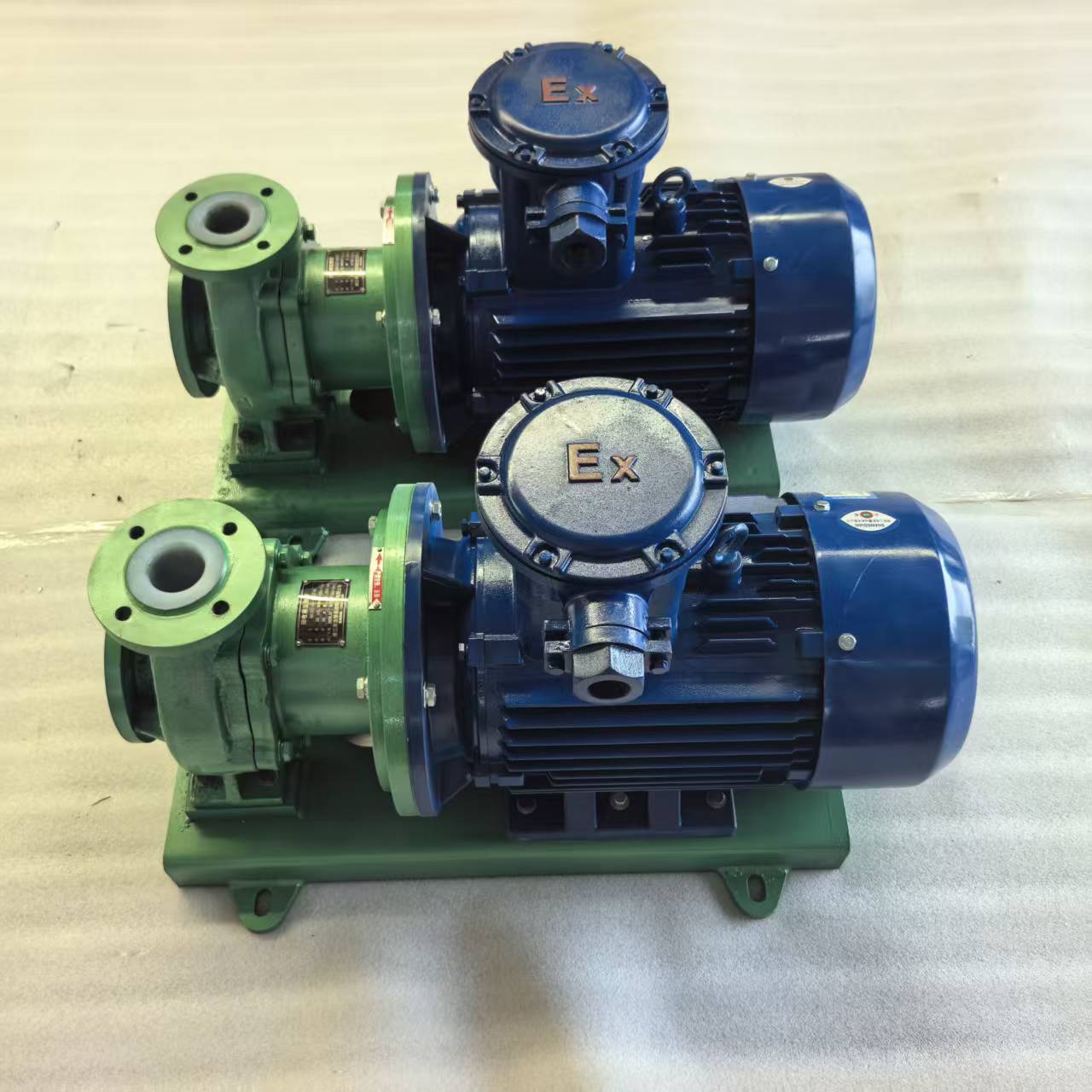
The pumps shown use a strong metal outer casing with a light-colored fluoroplastic flow path. The metal shell provides support, while the internal lining protects the pump from direct contact with aggressive liquid.
Depending on the chemical, available wetted materials may include:
- F46 fluoroplastic
- PTFE
- PFA
- PVDF
- Silicon carbide
- Carbon graphite
- Engineering ceramics
- Stainless steel
Material selection must consider the full liquid composition. In addition, concentration, temperature, pressure, and contamination can change chemical compatibility.
Main Product Advantages
- No conventional rotating shaft seal
- Reduced risk of chemical leakage
- Strong resistance to acids and alkalis
- Compact direct-coupled construction
- Fewer seal parts to maintain
- Smooth power transfer
- Standard and explosion-proof motors available
- Wide choice of flow and head ratings
- Custom wetted materials
- Flanged connections for industrial piping
Suitable Chemical Applications
With the correct material configuration, the magnetic drive pump can transfer:
- Hydrochloric acid
- Sulfuric acid
- Nitric acid
- Phosphoric acid
- Caustic solutions
- Salt solutions
- Organic solvents
- Plating chemicals
- Pharmaceutical liquids
- High-purity chemicals
- Wastewater treatment chemicals
- Valuable or hazardous liquids
Typical industries include chemical processing, petroleum refining, pharmaceuticals, electroplating, electronics, rare-earth processing, metal finishing, pesticide production, and environmental engineering.
Important Operating Limits
A standard magnetic drive pump is designed mainly for clean liquids. Hard particles, crystals, fibers, and ferromagnetic material can damage the bearings, containment shell, or magnetic rotor. Therefore, an inlet filter may be required.
The pump must not run dry. Process liquid cools and lubricates the internal bearing surfaces. Without enough liquid, the pump can overheat and suffer rapid wear.
Operators should also avoid:
- Long operation below the minimum flow
- Running against a closed discharge valve
- Starting an empty pump
- Excessive inlet pressure
- Operating outside the tested curve
- Pumping an unapproved chemical
- Using an undersized motor for dense liquids
Liquids with high density or viscosity require a separate power and magnetic-coupling check.
Explosion-Proof Motor Option
The product photos show pumps fitted with explosion-proof motors. This option is useful where flammable vapor or gas may be present.
However, the required motor protection class and hazardous-area approval depend on the installation site. Therefore, customers should provide the gas group, temperature class, zone classification, voltage, frequency, and local certification requirements.
Installation and Startup
Install the pump on a firm, level base. Meanwhile, support the pipes separately so their weight does not load the pump casing.
Before startup, fill the pump chamber and suction line with liquid. Then, check the motor direction by briefly starting the unit. Open the inlet valve fully and start the pump with the discharge valve partly closed.
After startup, slowly adjust the discharge valve. Also, monitor the flow, pressure, motor current, vibration, and temperature. Stop the pump at once if it runs without liquid or produces unusual noise.
Manufacturer Testing and Custom Service
We support customers from model selection through delivery. Our manufacturing services include:
- Hydraulic model selection
- Chemical compatibility review
- Impeller and motor matching
- Custom voltage and frequency
- Explosion-proof motor selection
- Flange standard customization
- Base frame and coating options
- Pressure and sealing inspection
- Flow and head testing
- Spare-parts supply
- Export packing and documents
For accurate selection, please provide the liquid name, chemical concentration, temperature, density, viscosity, required flow, total head, inlet pressure, particle content, motor voltage, and hazardous-area classification.
Frequently Asked Questions
Does the magnetic drive pump use a mechanical seal?
No. It uses a magnetic coupling and enclosed containment shell instead of a conventional rotating shaft seal.
Can the pump run dry?
No. Dry running can damage the internal bearings, shaft, impeller, and containment shell.
Can it transfer acids and alkalis?
Yes, provided that the selected lining and internal materials are compatible with the exact chemical and temperature.
Can it handle solid particles?
The standard pump is intended for clean liquids. A special design or another pump type is required for slurry and abrasive solids.
Request a Magnetic Drive Pump Quotation
Send us your operating data for a suitable magnetic drive pump selection. Our technical team will recommend the pump size, lining material, motor, magnetic coupling, and connection standard for your chemical transfer system.