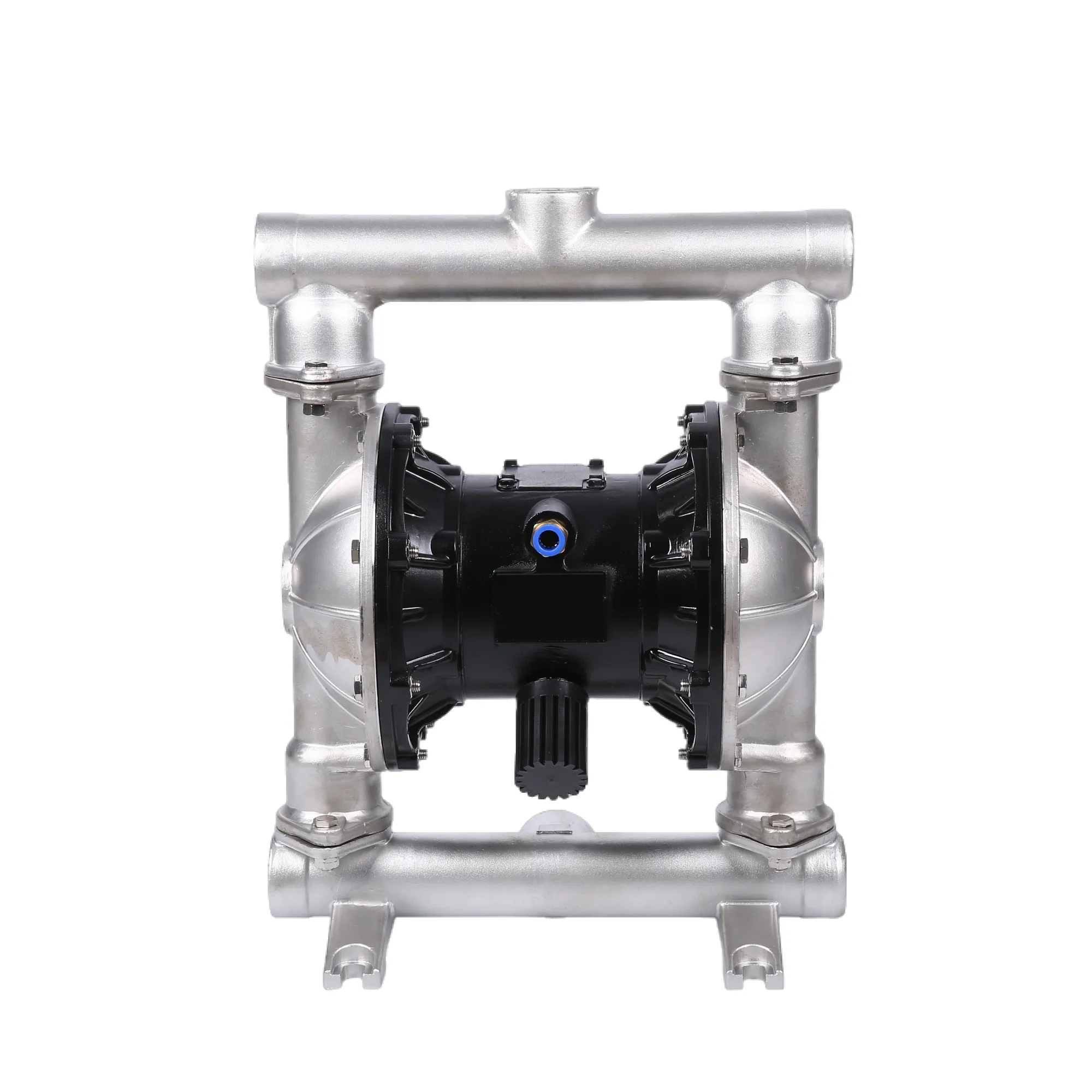
QBY Pneumatic Diaphragm Pump for Industrial Fluid Transfer
Product Information
Pump type:
Air-operated double-diaphragm pump
Maximum flow:
18.9–1,041 L/min
Maximum head:
70–84 m
Maximum discharge pressure:
7–8.4 kgf/cm²
Fluid port size:
DN10–DN150


The QBY3 Pneumatic Diaphragm Pump is an air-operated positive-displacement pump for moving difficult industrial fluids. Compressed air drives two diaphragms in a repeated back-and-forth motion. As one chamber fills, the other chamber discharges. Ball valves then control the direction of the liquid.
Because the pump has no electric motor or rotating shaft seal, it is well suited to corrosive, viscous, abrasive, volatile and particle-laden fluids. Moreover, its flow can be adjusted through the air supply. The pump can also self-prime and operate at low speed without losing pressure.
As a pneumatic diaphragm pump manufacturer, we offer different port sizes, body materials, diaphragm materials, valve balls and valve seats. Therefore, each pump can be matched to the actual liquid and working environment.
Main Features
- Powered by compressed air
- Double-diaphragm positive-displacement design
- Self-priming without filling the suction pipe
- Adjustable flow and discharge pressure
- Suitable for intermittent or continuous transfer
- Handles viscous liquid, slurry and suspended solids
- Low shear action for sensitive products
- No mechanical shaft seal
- Can stop safely against a closed discharge valve
- Compact structure with few wearing parts
- Multiple wetted-material choices
- Threaded or flanged connections available
- Suitable for mobile and fixed installations
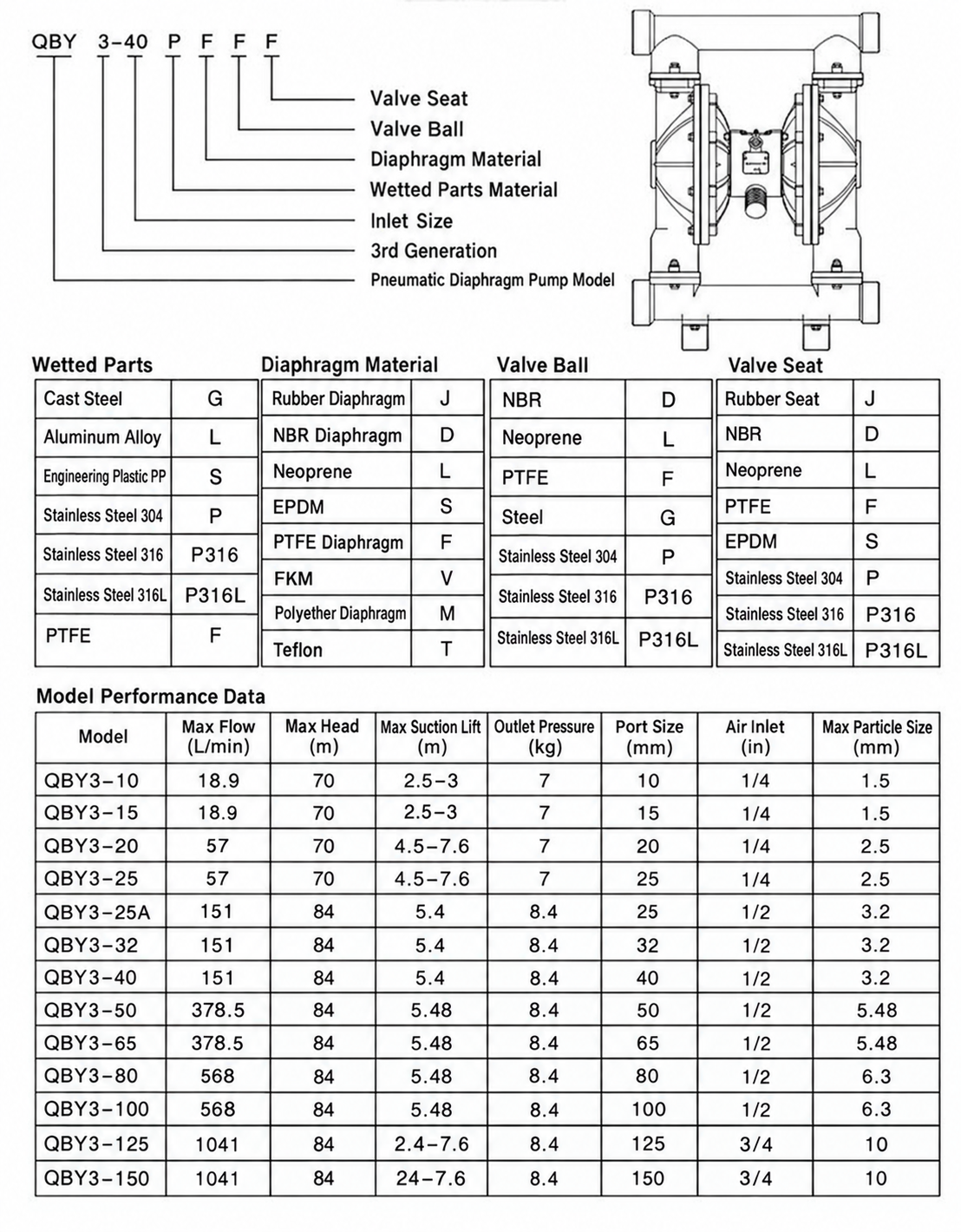
QBY3 Series Technical Specifications
| Parameter | Series Range |
| Pump type | Air-operated double-diaphragm pump |
| Maximum flow | 18.9–1,041 L/min |
| Maximum head | 70–84 m |
| Maximum discharge pressure | 7–8.4 kgf/cm² |
| Maximum suction lift | 2.5–7.6 m |
| Fluid port size | DN10–DN150 |
| Air inlet size | 1/4–3/4 inch |
| Maximum particle size | 1.5–10 mm |
| Flow control | Air inlet valve or fluid outlet valve |
| Drive source | Clean, dry compressed air |
| Standard installation | Floor-mounted or portable |
| Connection | Threaded or flanged, depending on size |
The figures above are maximum series values. They are not always available at the same operating point. Actual capacity decreases as discharge pressure, viscosity or suction lift increases. Therefore, the final model should be selected with a performance curve.
Representative Model Parameters
| Model | Max. Flow | Max. Head | Port Size | Air Inlet | Max. Particle |
| QBY3-10 | 18.9 L/min | 70 m | 10 mm | 1/4 in | 1.5 mm |
| QBY3-25 | 57 L/min | 70 m | 25 mm | 1/4 in | 2.5 mm |
| QBY3-40 | 151 L/min | 84 m | 40 mm | 1/2 in | 3.2 mm |
| QBY3-65 | 378.5 L/min | 84 m | 65 mm | 1/2 in | 5.48 mm |
| QBY3-100 | 568 L/min | 84 m | 100 mm | 1/2 in | 6.3 mm |
| QBY3-150 | 1,041 L/min | 84 m | 150 mm | 3/4 in | 10 mm |
Wetted-Part Material Options
Correct material selection is essential for safe operation and longer service life. Available pump-body and manifold materials include:
- Cast steel
- Aluminum alloy
- Engineering plastic PP
- Stainless steel 304
- Stainless steel 316
- Stainless steel 316L
- PTFE or fluoroplastic-lined options
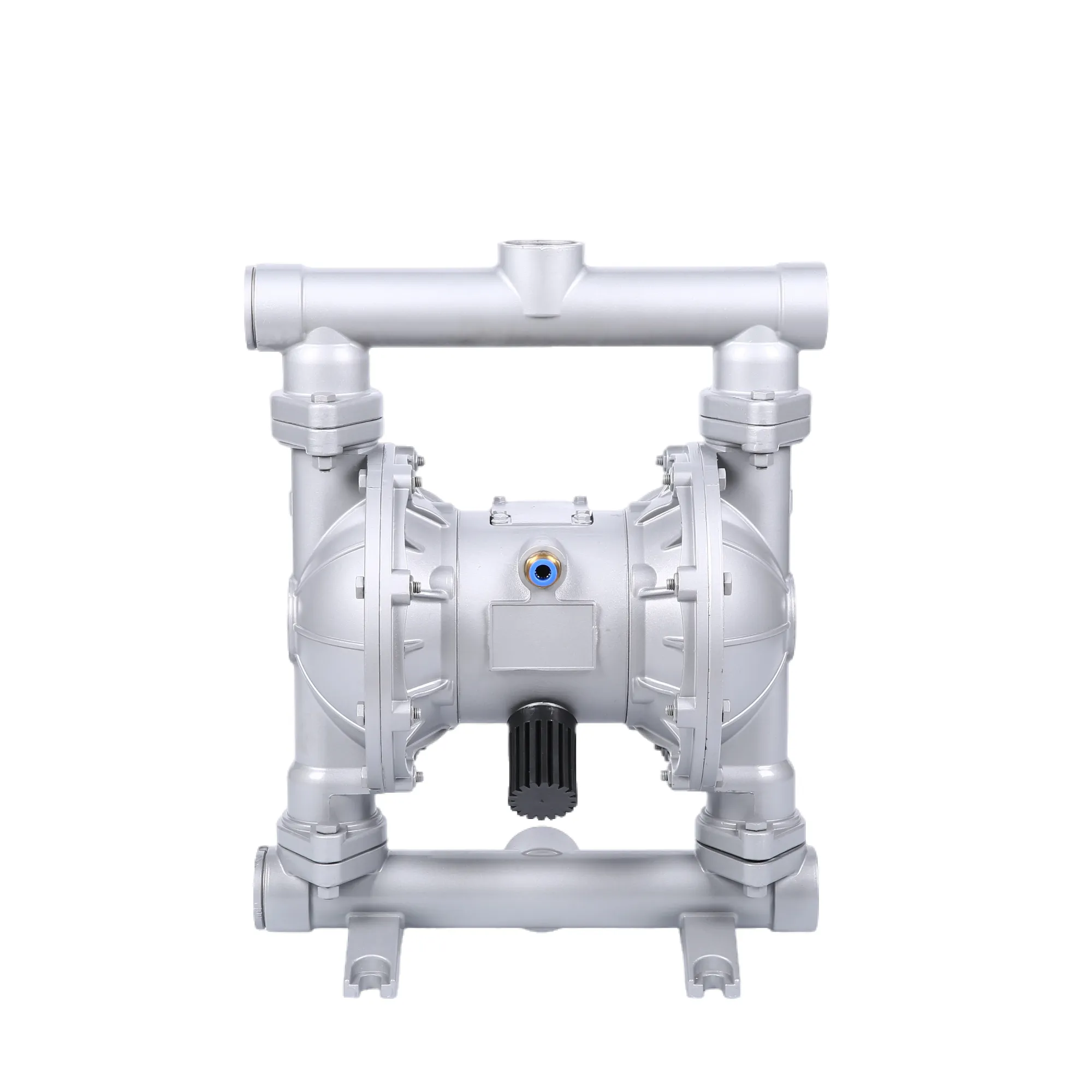
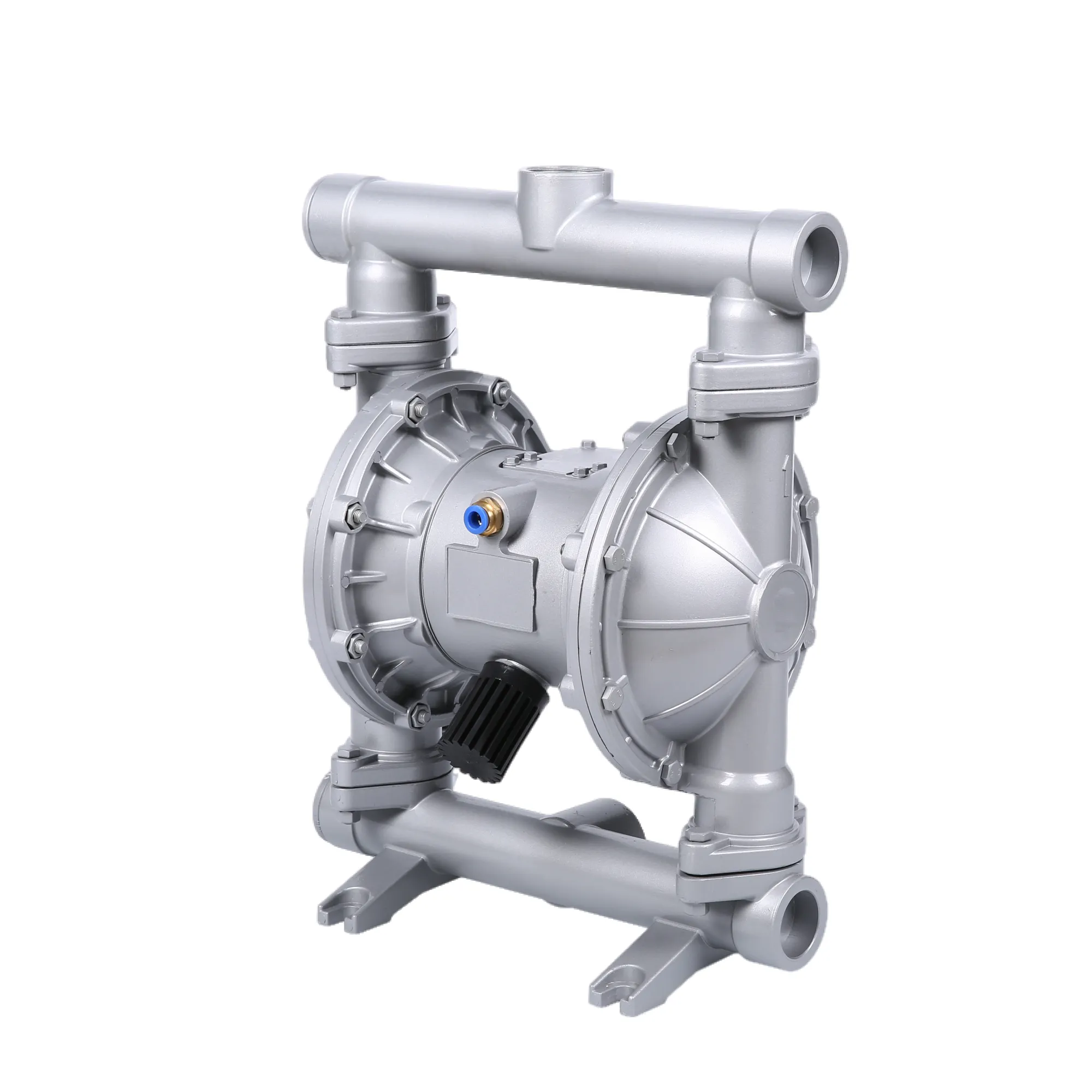
The metallic pump shown in the product images uses a rigid twin-chamber body, upper and lower manifolds, a central air valve and bolted diaphragm covers. Stainless steel is suitable for many chemical, food, coating and wastewater duties. However, chemical compatibility must always be confirmed before ordering.
Diaphragm, Ball and Seat Options
Diaphragm choices include NBR, neoprene, EPDM, FKM and PTFE. Valve balls and seats can also be selected from rubber, PTFE, steel or stainless steel.
NBR is commonly used for oil and general industrial fluids. EPDM is often selected for water-based chemicals and many alkaline liquids. FKM offers better resistance to oils, solvents and higher temperatures. Meanwhile, PTFE provides broad chemical resistance.
No single material suits every liquid. Consequently, the liquid name, concentration, temperature and cleaning method should be checked before the material combination is confirmed.
Benefits of Air-Operated Pumping
A pneumatic diaphragm pump does not require an electric motor at the pump body. This makes installation practical in wet, remote or frequently washed areas. It also reduces electrical equipment close to the liquid.
In addition, the pump can slow down or stop when the discharge line is closed. Once the valve opens, pumping resumes. This stall-safe action helps protect the system from pressure buildup. However, a pressure regulator and relief arrangement should still be used according to the system design.
The diaphragm separates the pumped liquid from the air mechanism. As a result, the fluid does not contact the central air valve. This design also removes the need for a rotating shaft seal, which is a common leakage point on other pump types.
Typical Applications
The QBY3 Pneumatic Diaphragm Pump is suitable for:
- Paint, ink and coating transfer
- Adhesives, glue and resin
- Chemical acids and alkaline liquids
- Solvents and volatile fluids
- Ceramic glaze and mineral slurry
- Wastewater and sludge
- Lubricating oil and waste oil
- Tank unloading and drum transfer
- Food paste, syrup and fruit pulp
- Detergents and cleaning chemicals
- Filter press feeding
- Paper pulp and printing chemicals
- Marine bilge and tank-cleaning duties
For flammable or explosive environments, the complete system must be properly grounded. The air supply, hoses, valves and installation must also meet the applicable site safety requirements.
Installation and Operating Guidance
Install the pump on a stable surface and support the inlet and outlet pipes independently. Flexible connectors can reduce pipe stress and vibration.
Use clean, dry compressed air. In addition, install an air filter and pressure regulator before the pump. Start at low air pressure, then raise it slowly until the required flow is reached.
Keep the suction pipe short and airtight. Its diameter should not be smaller than the pump inlet. For thick fluids, use a larger suction pipe and reduce the pumping speed.
Some configurations can run dry for limited periods. However, long dry operation may shorten diaphragm and valve life. Therefore, dry running should only be used when the selected material and operating conditions allow it.
Manufacturer Supply and Custom Options
We supply pneumatic diaphragm pumps for distributors, engineering companies, equipment builders and industrial users. Each order can be configured according to the medium and project requirements.
Available services include:
- OEM nameplates and packaging
- Custom body and diaphragm materials
- Threaded or flanged connections
- Air filter and pressure regulator sets
- Pulsation dampers
- Suction hoses and discharge hoses
- Spare diaphragms, balls and valve seats
- Pump testing and inspection records
- Installation drawings and operating manuals
- Batch production for distributor orders
Before shipment, the pump can be checked for assembly quality, air-valve action, leakage, suction and discharge performance.
Information Required for Selection
Please provide:
- Fluid name and concentration
- Required flow and discharge pressure
- Temperature and viscosity
- Solid content and maximum particle size
- Suction height
- Available air pressure and air volume
- Preferred body material
- Required diaphragm, ball and seat materials
- Connection size and standard
- Installation and hazardous-area conditions
Frequently Asked Questions
Is the pneumatic diaphragm pump self-priming?
Yes. The pump can create suction without first filling the suction pipe. Actual lift depends on the model, liquid and pipe arrangement.
Can it pump viscous liquid?
Yes. However, flow falls as viscosity increases. A larger pump, larger suction pipe and lower cycle speed may be required.
Can the pump handle solids?
Yes. QBY3 models can pass particles from about 1.5 to 10 mm, depending on the port and valve size.
Does it need electricity?
The pump itself uses compressed air. However, the air compressor and control equipment may still require electrical power.
Can the material be customized?
Yes. Pump bodies, diaphragms, balls and seats can be selected according to chemical compatibility and temperature.
Request a Pneumatic Diaphragm Pump Quote
Send us your fluid data and required operating point. Our technical team will recommend a suitable QBY3 Pneumatic Diaphragm Pump, material combination and connection size for your application.
Recommended products
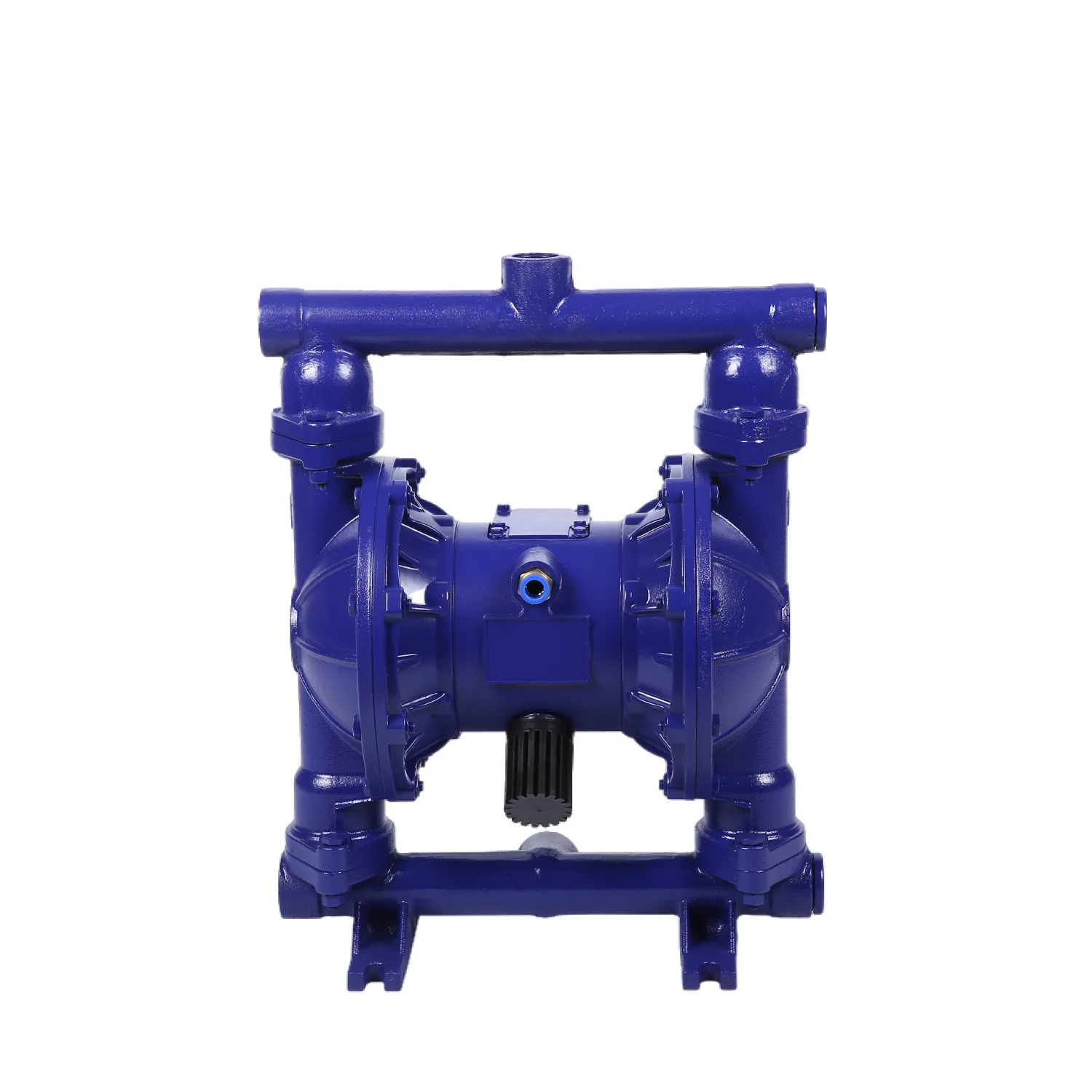
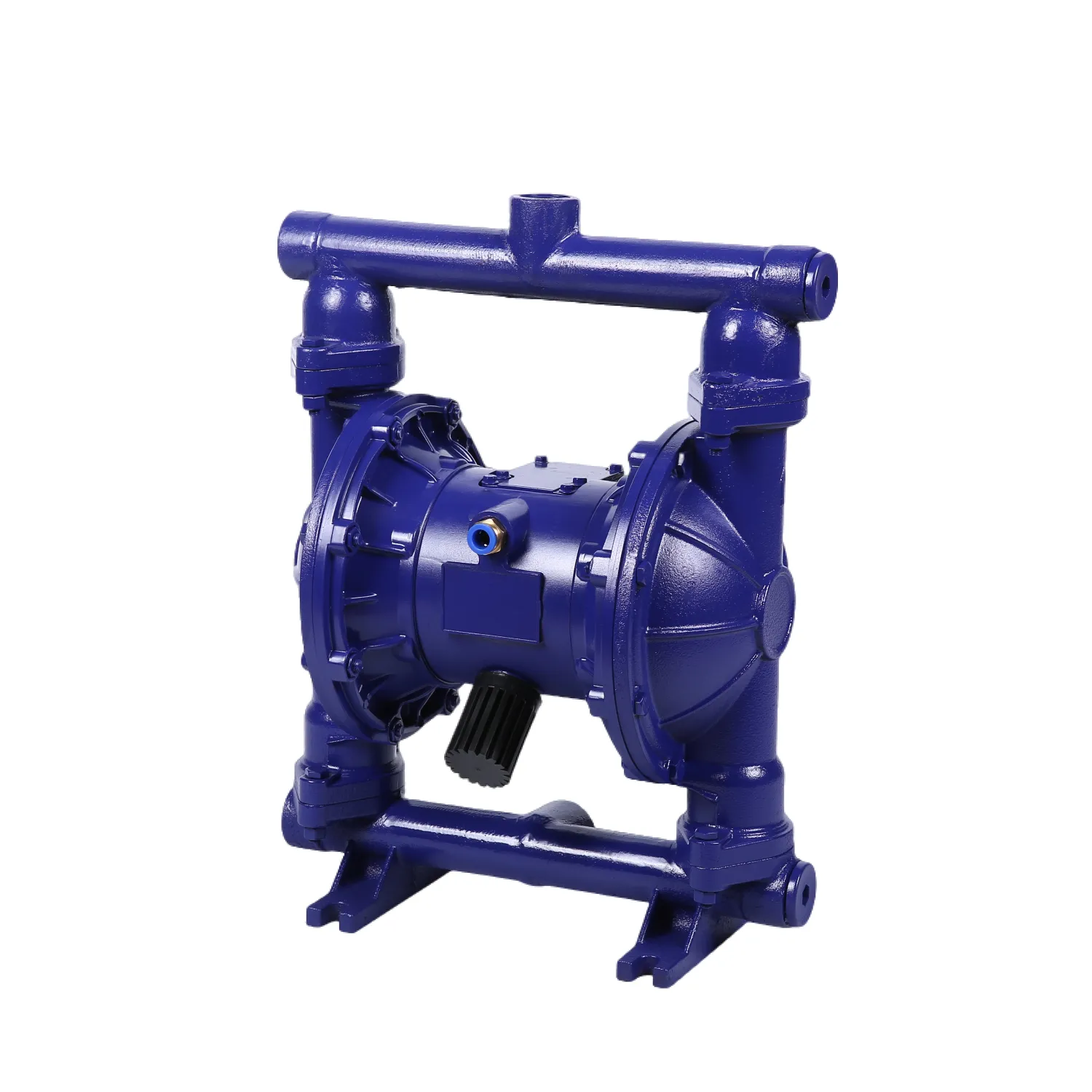
Cast Iron Air-Operated Diaphragm Pump
XSU Cast Iron Pneumatic Diaphragm Pumps XSU cast iron air operated double diaphragm pumps provide reliable air-powered transfer for oil, coatings, wastewater, sludge, and viscous industrial fluids.
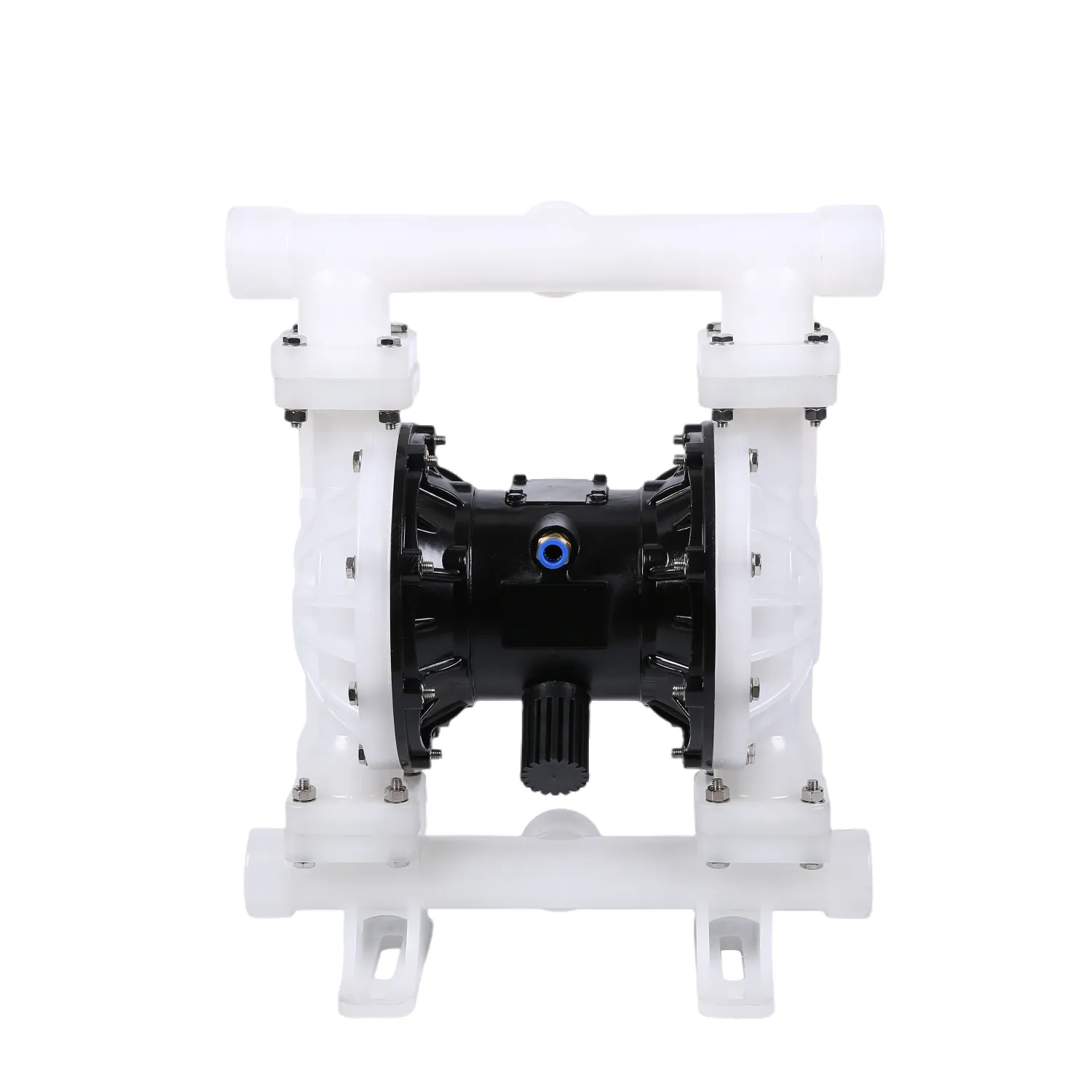
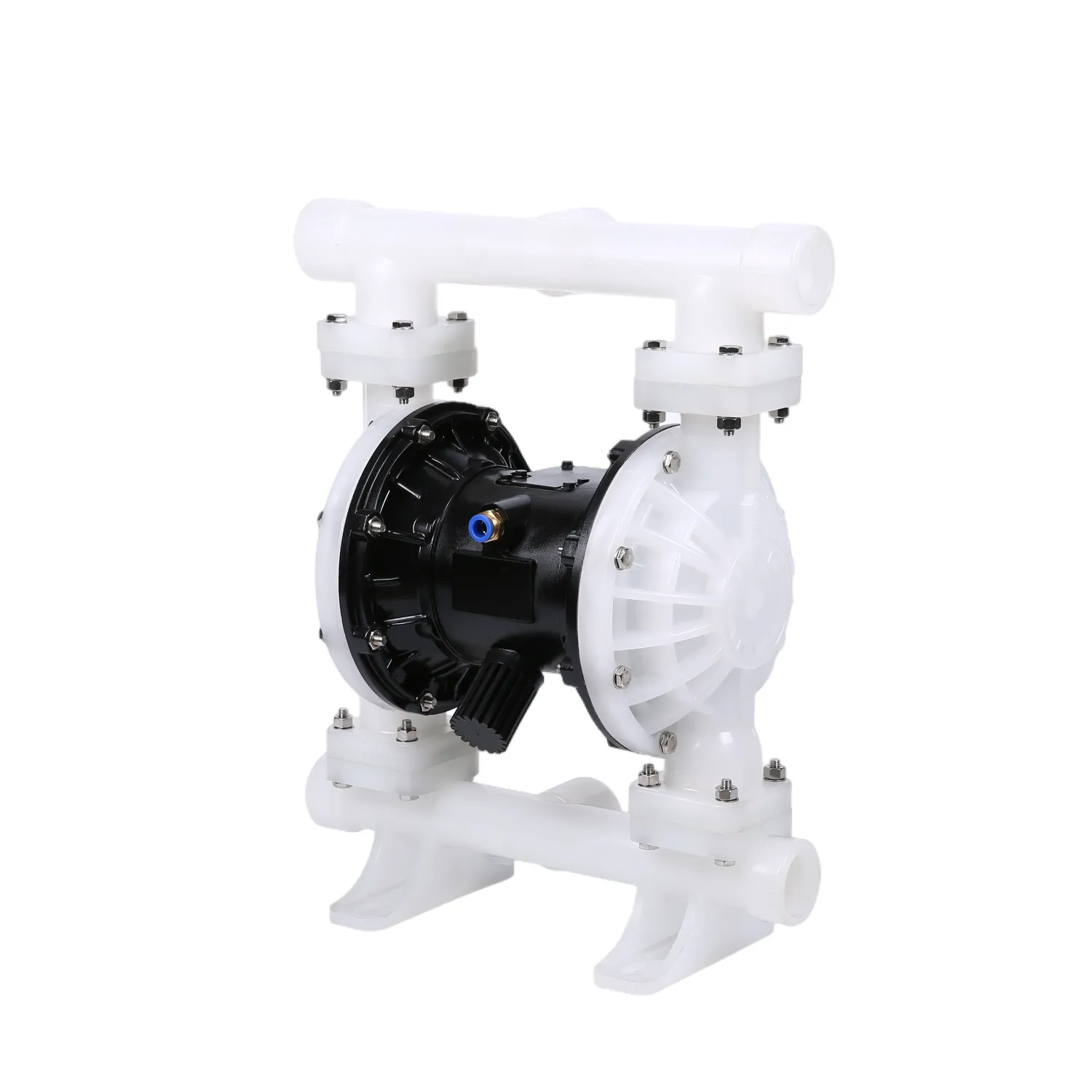
Plastic Pneumatic Diaphragm Pump
Meta Description: The XSU series pneumatic diaphragm pumps are specifically designed to handle various corrosive, high-viscosity, and particle-laden fluids. They offer flexible options in PP, PVDF, and PTFE materials to meet the requirements of different working conditions.
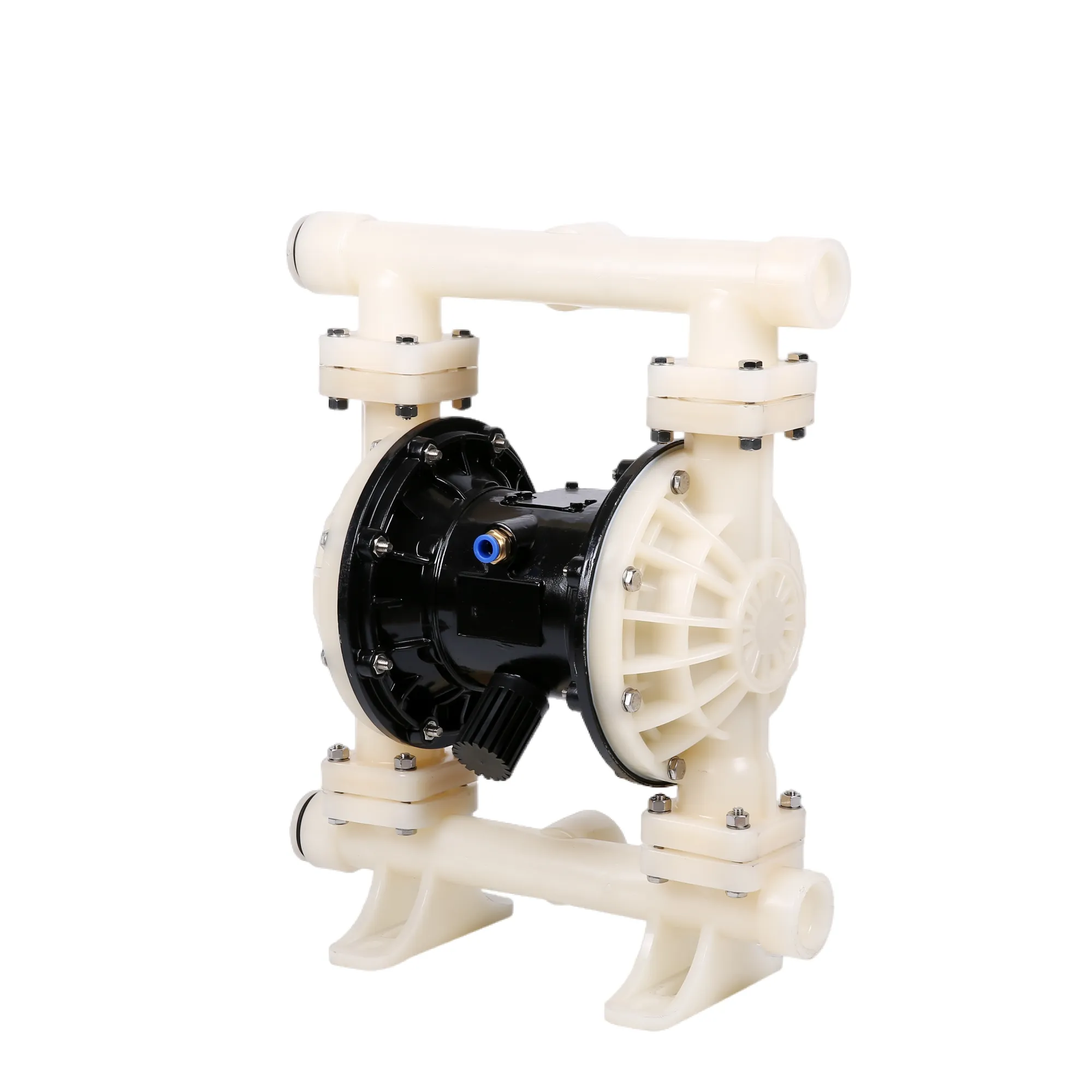
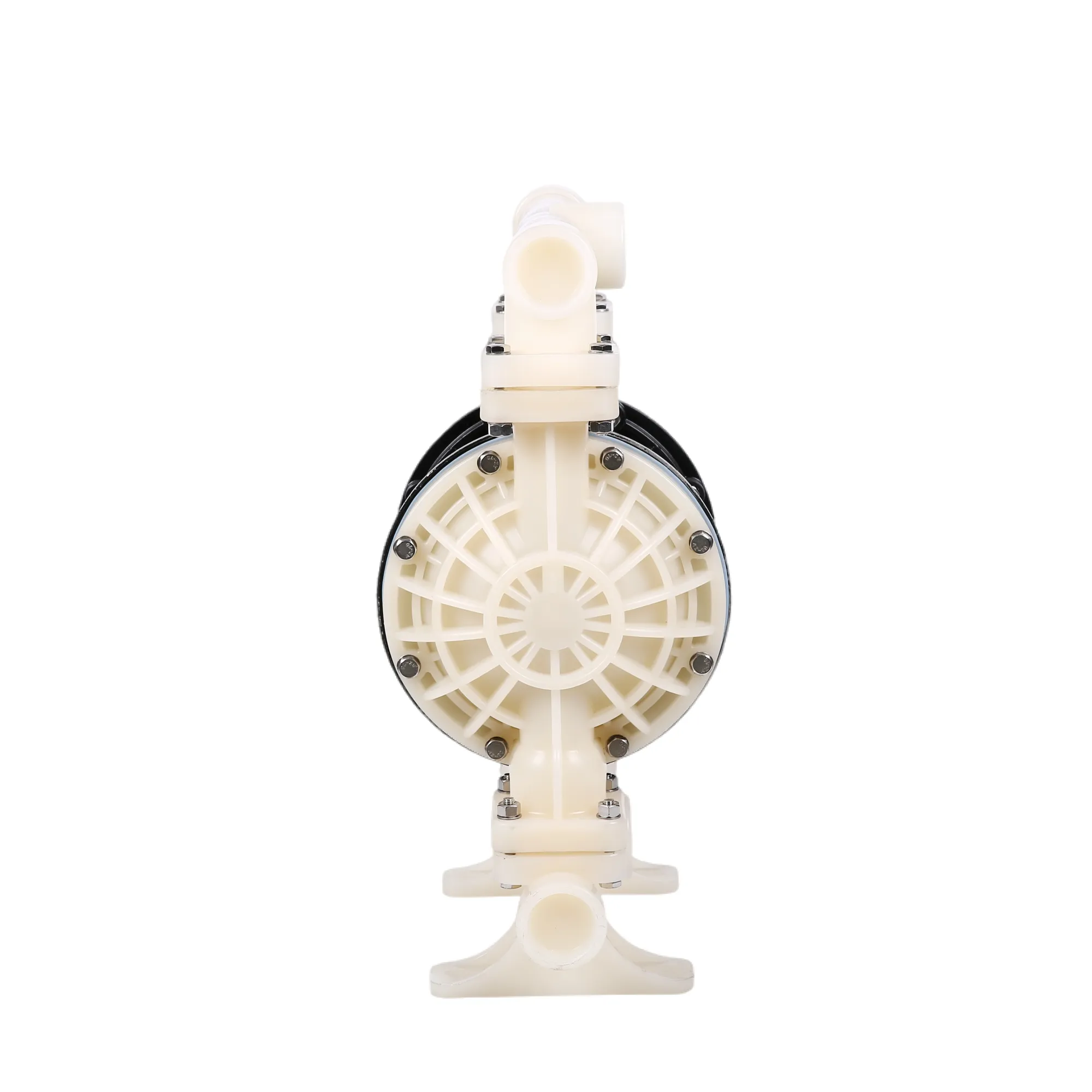
PTFE Pneumatic Diaphragm Pumps for Industrial Fluid Handling
Explore XSU Pump's industrial liquid-handling pump systems engineered for reliability. Trusted for chemical transfer, wastewater, and viscous fluid applications.
Aluminum Alloy Pneumatic Diaphragm Pump
Meta Description: XSU aluminum alloy pneumatic diaphragm pump offers light weight, self-priming air operation, flexible flow control, and reliable industrial fluid transfer.


