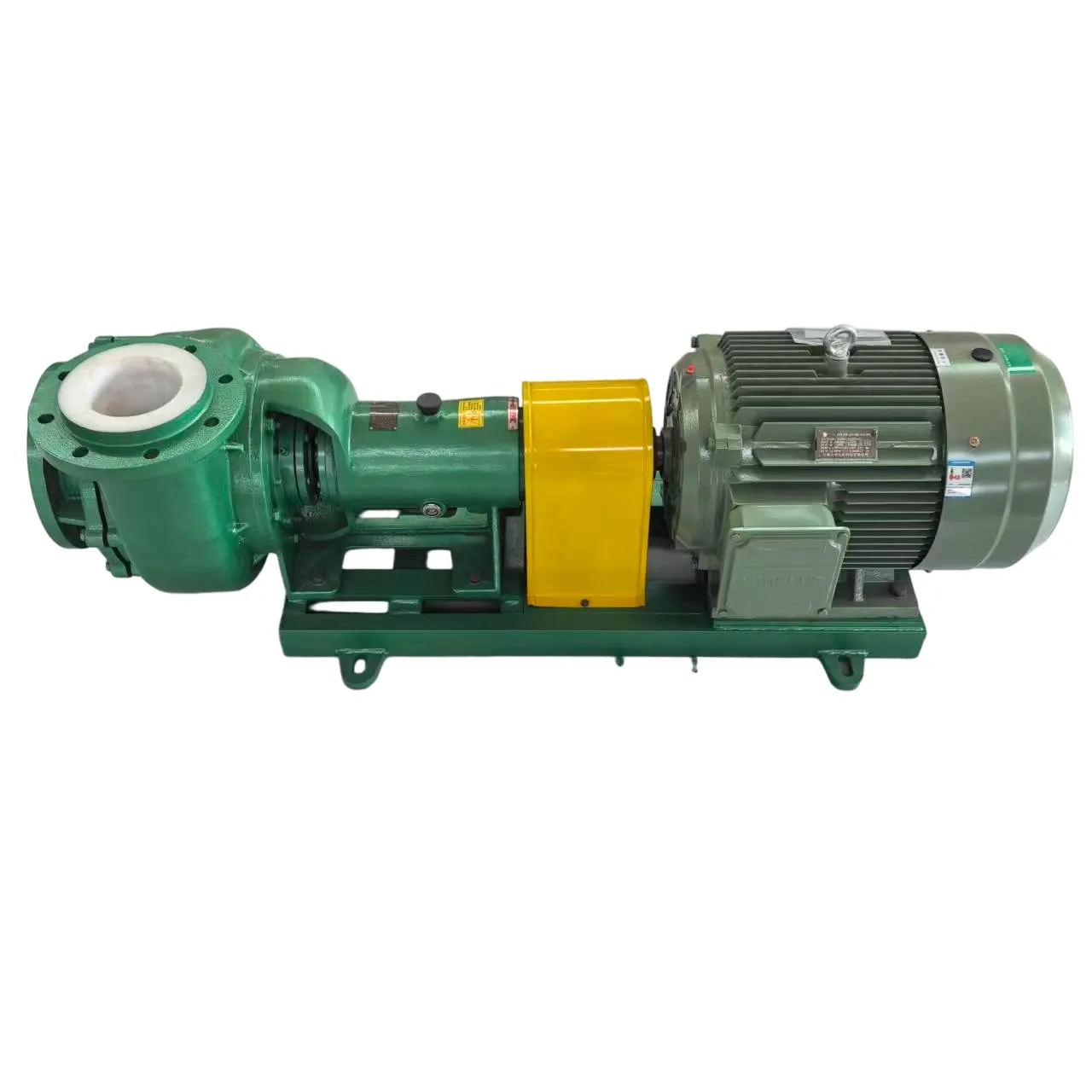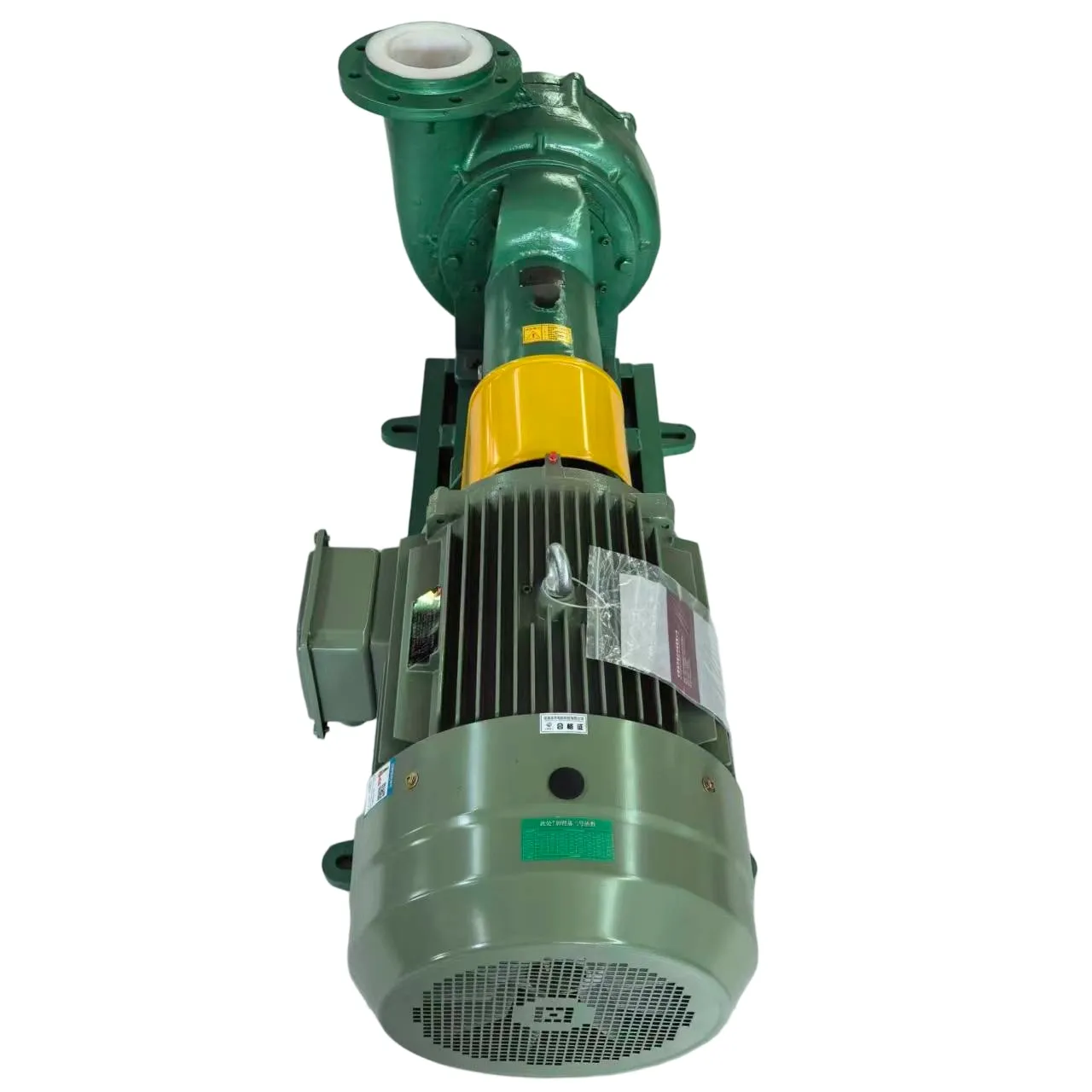
Water Tank Mortar Pump for Corrosive Slurry Transfer
Product Information
Typical flow range:
5–600 m³/h
Typical head range:
5–50 m
Motor speed:
1450 or 2900 rpm
Standard liquid temperature:
-20°C to 80°C


Our Water Tank Mortar Pump is a horizontal centrifugal pump made for abrasive and corrosive slurry. It combines a wear-resistant wet end with an integrated clean-water tank. Therefore, the seal system can receive a steady supply of cooling or flushing liquid during operation.
The pump is suitable for chemical slurry, acid and alkali liquid, wastewater, mineral slurry, salt solution, and filter press feed. In this product name, “mortar” means industrial slurry containing fine solids. It does not normally mean cement or concrete mortar.
As a pump manufacturer, we select the lining, impeller, seal, motor, and water-tank arrangement for each operating condition. This helps the pump run longer while keeping service work simple.
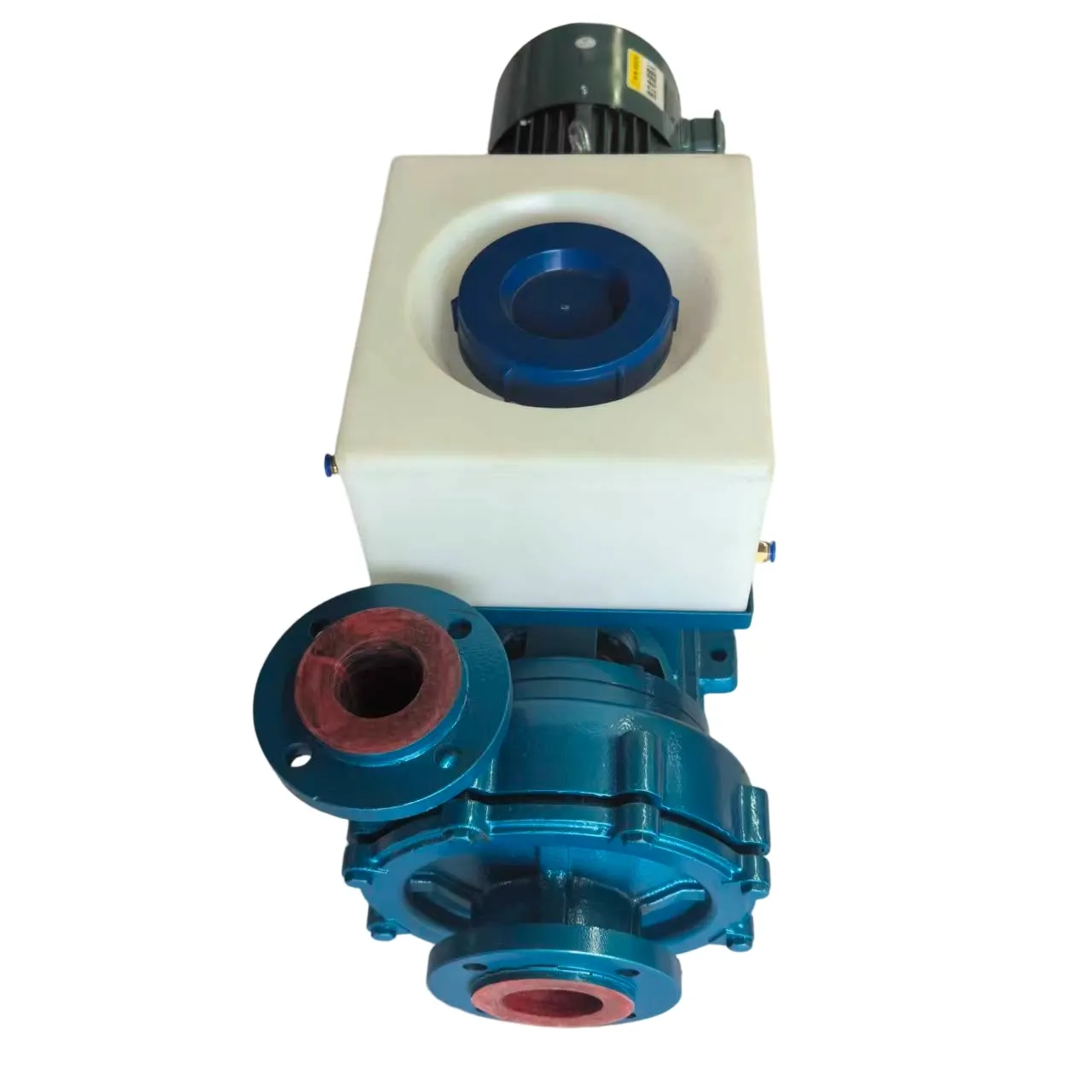
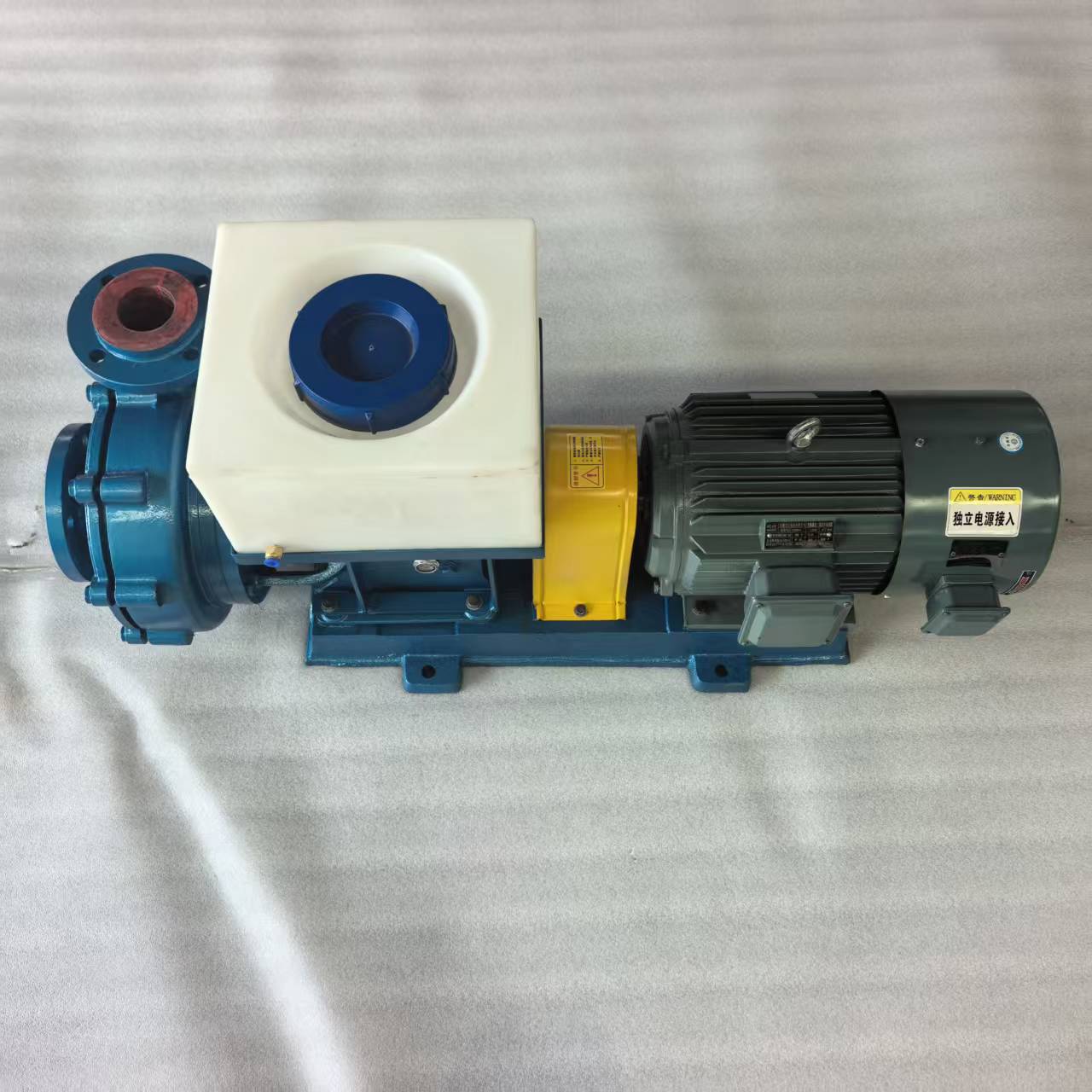
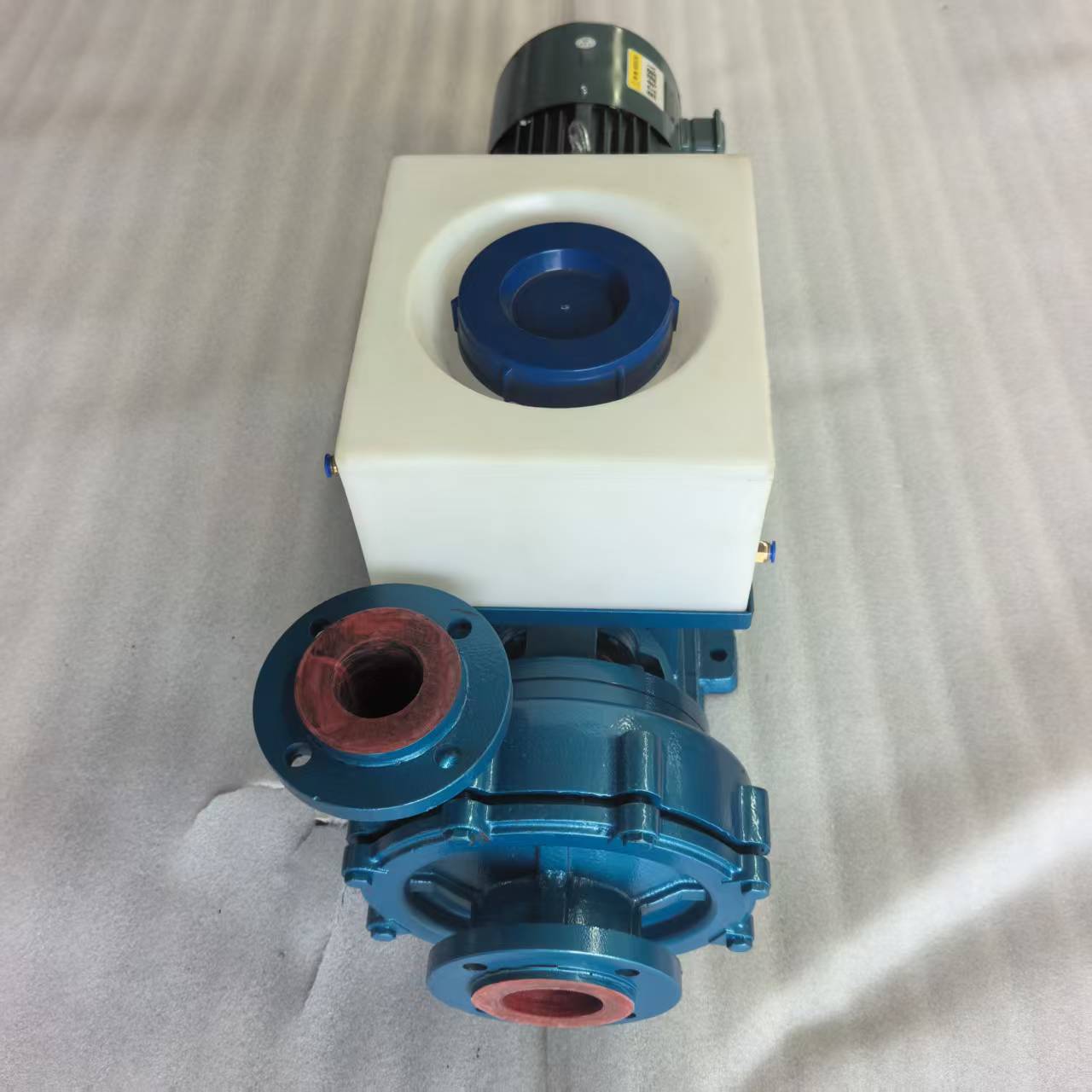
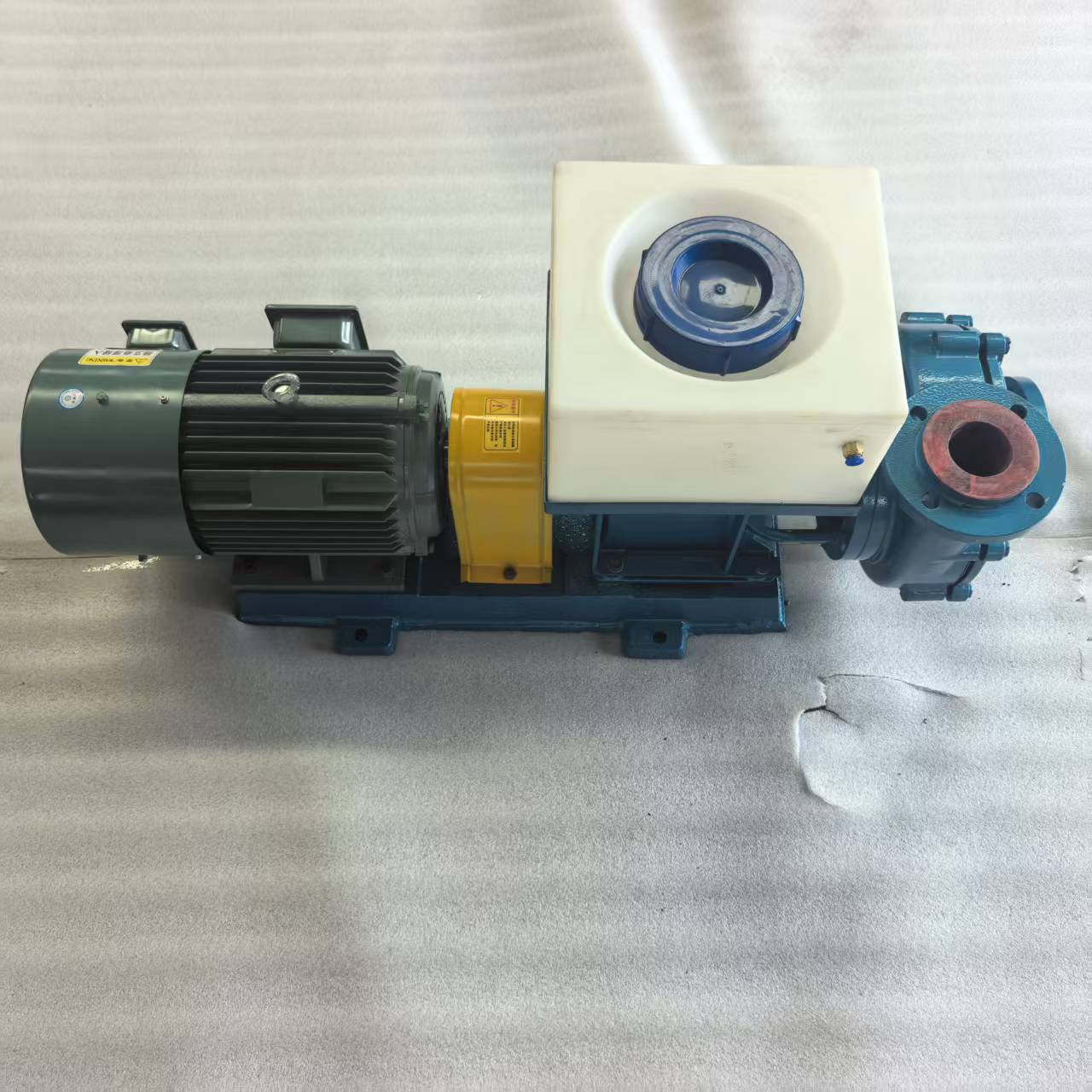
Integrated Seal-Water Tank
The white tank mounted above the pump holds clean water or another compatible flushing liquid. Depending on the selected seal design, the liquid feeds or circulates through the seal chamber.
As a result, the system can:
- Cool and lubricate the mechanical seal
- Reduce dry friction during operation
- Help keep hard particles away from seal faces
- Support stable operation where no fixed clean-water line is available
- Make the water level easy to inspect and refill
The tank is for clean seal liquid. It is not a process hopper and should not be filled with slurry. Moreover, the tank does not make the pump self-priming. The pump casing and suction pipe must be filled before startup.
Typical Technical Parameters
| Item | Standard Configuration |
| Pump type | Horizontal, single-stage, single-suction centrifugal pump |
| Typical flow range | 5–600 m³/h |
| Typical head range | 5–50 m |
| Common connection sizes | DN32–DN250, depending on model |
| Motor speed | 1450 or 2900 rpm |
| Standard liquid temperature | -20°C to 80°C |
| Wetted structure | Steel-backed UHMWPE lining |
| Standard impeller | Semi-open centrifugal impeller |
| Seal options | Dynamic seal, single mechanical seal, or double mechanical seal |
| Drive arrangement | Electric motor with flexible coupling and safety guard |
| Installation | Horizontal base-mounted unit |
| Tank function | Clean seal-water supply or circulation |
| Flange standard | GB, DIN, ANSI, or project-specific option |
These figures describe the available product series. Final flow, head, motor power, temperature limit, and connection size depend on the liquid and required duty point.
Corrosion- and Wear-Resistant Wet End
The standard pump uses a steel outer casing with an ultra-high-molecular-weight polyethylene lining. The steel shell provides strength, while the UHMWPE flow path resists many acids, alkalis, salts, and abrasive particles.
In addition, the semi-open impeller provides a wider passage than many clear-water pump designs. It can therefore handle liquids containing fine crystals or suspended solids more reliably. Material compatibility must still be checked before an order, especially for solvents, strong oxidizers, and hot liquid.
Main Product Advantages
- Integrated tank supplies clean liquid to the seal area
- UHMWPE lining provides both corrosion and wear resistance
- Semi-open impeller is suitable for slurry containing fine solids
- Strong metal casing supports industrial service
- Back-pull-out style construction can simplify inspection
- Flexible coupling helps reduce shock between the pump and motor
- Coupling guard improves operating safety
- Flanged inlet and outlet make pipe connection secure
- Several seal and motor options are available
- Replaceable wet-end parts help lower long-term service costs
Applications
The Water Tank Mortar Pump can be configured for:
- Chemical plant wastewater and process slurry
- Acid and alkali transfer
- Phosphate fertilizer production
- Mining and mineral processing
- Metal smelting and pickling systems
- Flue-gas desulfurization
- Filter press feeding
- Salt and crystal-bearing liquid
- Ceramic and pigment slurry
- Industrial wastewater treatment
Because every slurry behaves differently, particle size, hardness, concentration, and settling rate should be reviewed during pump selection.
Seal and Impeller Options
A single mechanical seal is suitable for many general duties. However, a double mechanical seal can provide more protection for difficult, toxic, or highly abrasive media. A dynamic seal may also be selected for suitable operating conditions.
The standard semi-open impeller is a practical choice for slurry service. Still, the impeller diameter and passage size can be adjusted to meet the required flow and head. The manufacturer can also review special seal materials, shaft sleeves, gaskets, and flush piping.
Installation and Operation
Install the pump on a firm, level base. Also, keep the suction pipe short and direct. The pipe must not place extra force on the pump flanges.
Before startup:
- Fill the seal-water tank with clean, compatible liquid.
- Check that the seal-water line is open.
- Fill the pump casing and suction line with process liquid.
- Turn the coupling by hand to confirm free movement.
- Open the inlet valve.
- Start the motor and slowly adjust the discharge valve.
- Check pressure, flow, vibration, noise, seal condition, and tank level.
Never run the pump dry or in reverse. In addition, do not operate for a long time against a closed discharge valve. After handling liquid that can settle or crystallize, flush the pump before shutdown.
Manufacturer Supply and Quality Control
We supply complete pump sets with the pump, motor, base, coupling, guard, water tank, seal piping, and selected accessories. Before shipment, key dimensions, rotation, assembly, sealing, and operating condition are checked.
Available factory options include:
- Different motor voltage and frequency
- Explosion-proof or high-efficiency motors
- Custom flange standards
- Special seal-face and elastomer materials
- Larger or smaller seal-water tanks
- Pressure gauges and level switches
- Drain and flushing connections
- Spare impellers, seals, liners, and shaft sleeves
Information Required for Pump Selection
For an accurate quotation, please provide:
- Required flow and discharge head
- Liquid name and chemical concentration
- Operating and maximum temperature
- Slurry concentration and density
- Maximum particle size and particle hardness
- Suction condition and installation height
- Motor voltage, frequency, and hazardous-area requirement
- Preferred flange standard
- Required seal type and available flush-water conditions
With this information, our engineering team can select a Water Tank Mortar Pump that fits the actual process and operating environment.
Frequently Asked Questions
Is this pump self-priming?
No. It is normally a standard centrifugal slurry pump. The casing and suction pipe must be filled before startup.
What liquid should be placed in the tank?
Use clean water or another seal liquid that is compatible with the process and seal materials. Do not place abrasive slurry in the tank.
Can the pump transfer cement mortar?
The standard product is intended for chemical mortar and industrial slurry. Cement or construction grout requires a separate review of particle size, viscosity, and settling behavior.
Can the pump be customized?
Yes. Flow, head, lining, seal, motor, tank size, flange standard, and accessories can be selected for the project.
Request a Water Tank Mortar Pump Quote
Send us your operating data and installation needs. Our factory will review the medium, select a suitable pump model, and provide technical details, dimensions, spare parts, and a commercial quotation.