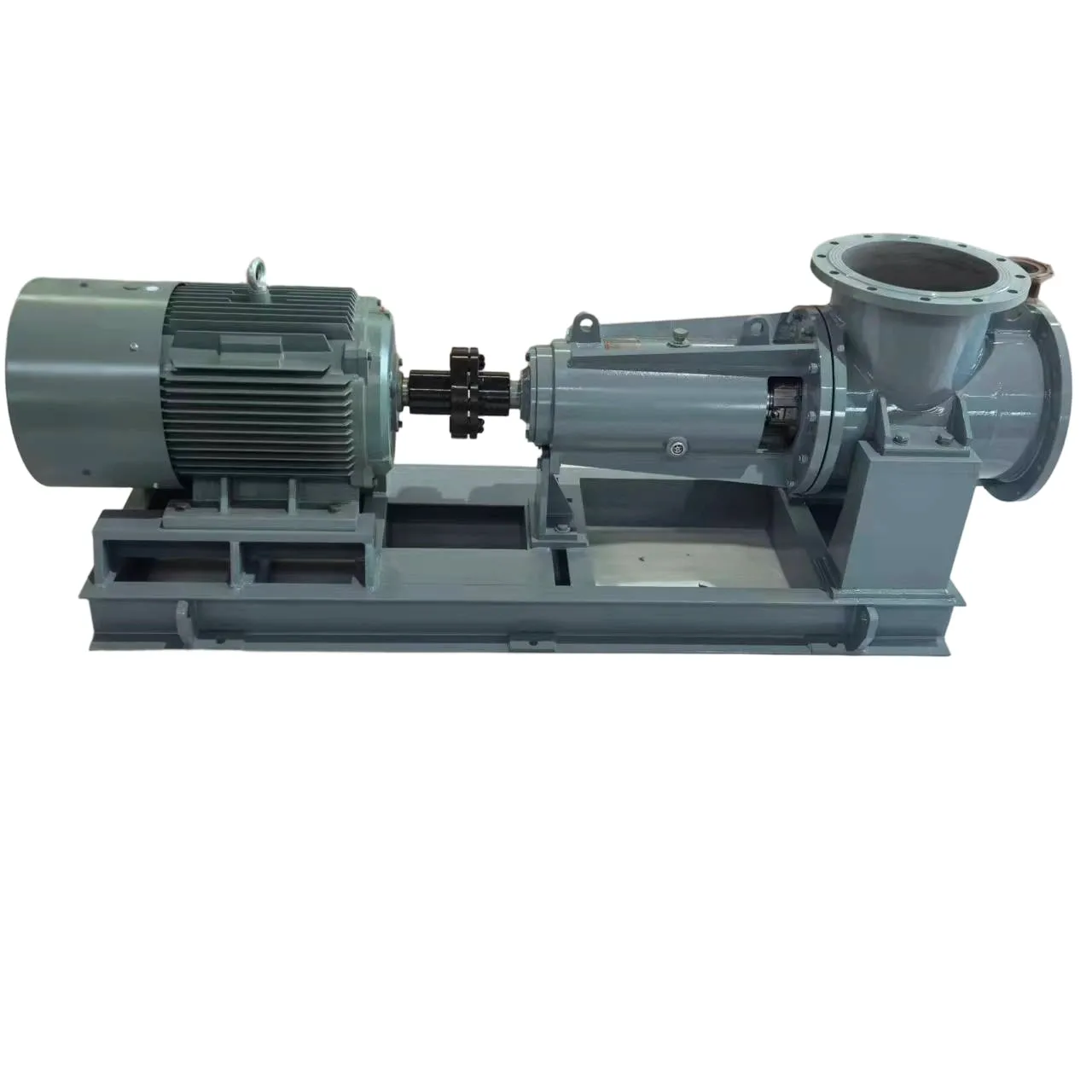
FJX Evaporator Forced-Circulation Axial Flow Pump
Product Information
Model:
FJX
Flow capacity:
300–12,000 m³/h
Head:
2–4 m
Maximum working pressure:
1 MPa·G
Maximum working temperature:
170°C
Pump type:
Horizontal axial flow pump


The FJX evaporator forced-circulation pump is a large-flow, low-head axial flow pump. It is designed to maintain continuous liquid circulation through evaporators, crystallizers, reactors, and related process equipment.
Unlike a standard centrifugal pump, the FJX pump moves a high volume of liquid at a relatively low head. Therefore, it is well suited to process loops where stable circulation, heat transfer, concentration control, and crystal suspension are more important than high discharge pressure.
Jingjiang Xinagsu Pumps Co., Ltd. supplies FJX pumps with different impeller sizes, blade angles, materials, sealing systems, drives, and installation arrangements. Each unit can be selected according to the process liquid and operating conditions.
FJX Circulation Pump Performance Range
The FJX series covers a broad range of evaporator and crystallizer circulation duties.
| Parameter | Available Range |
| Flow capacity | 300–12,000 m³/h |
| Head | 2–4 m |
| Maximum working pressure | 1 MPa·G |
| Maximum working temperature | 170°C |
| Pump type | Horizontal axial flow pump |
| Main duty | Forced liquid circulation |
| Installation | Horizontal cantilever structure |
| Seal configuration | Quick-install double mechanical seal |
| Drive options | Coupling or belt drive |
| Flow adjustment | Blade-angle or speed adjustment |
The exact pump model, motor power, rotational speed, and blade angle depend on the required flow, system resistance, liquid density, solids content, and impeller tip-speed limit.
Large Flow for Evaporation Systems
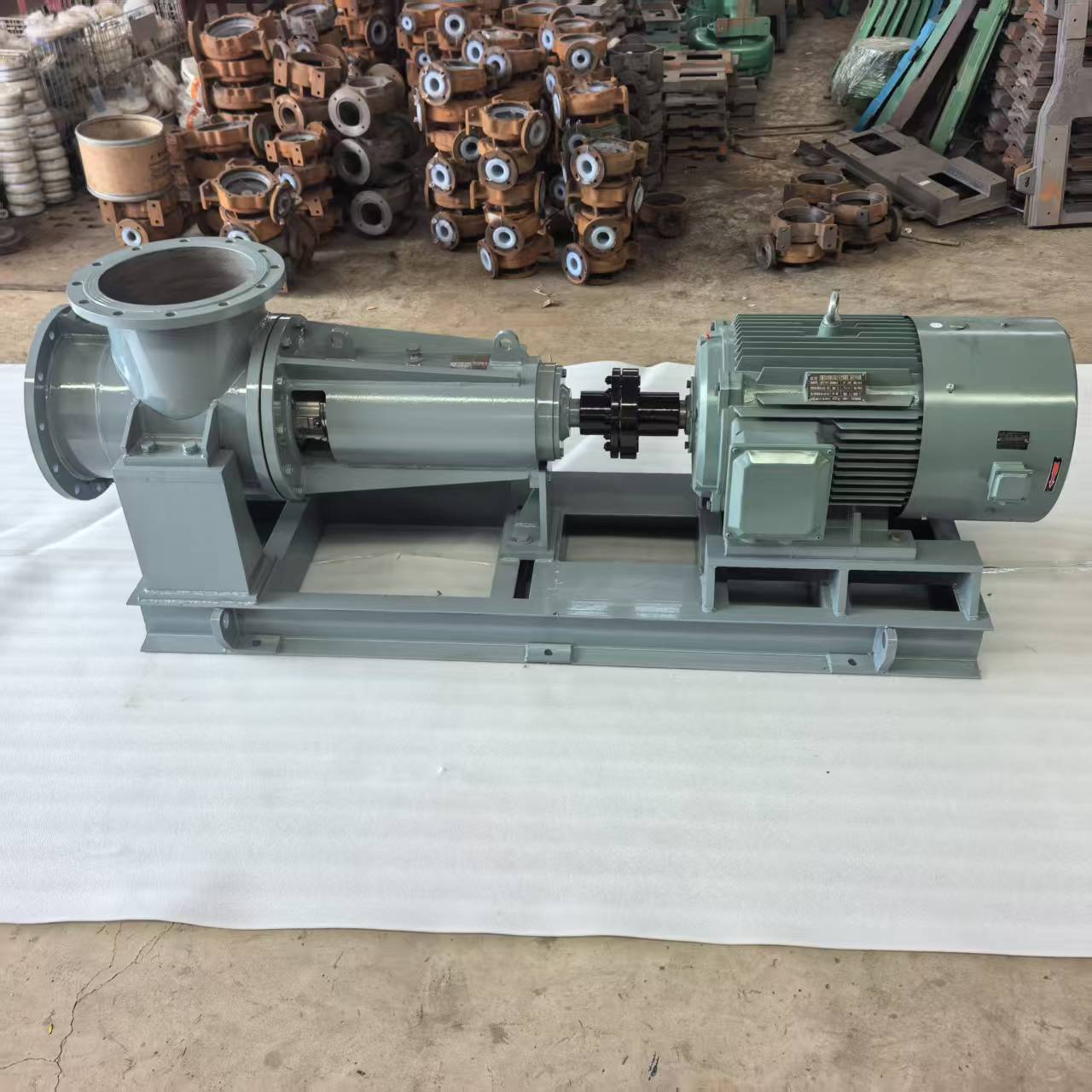
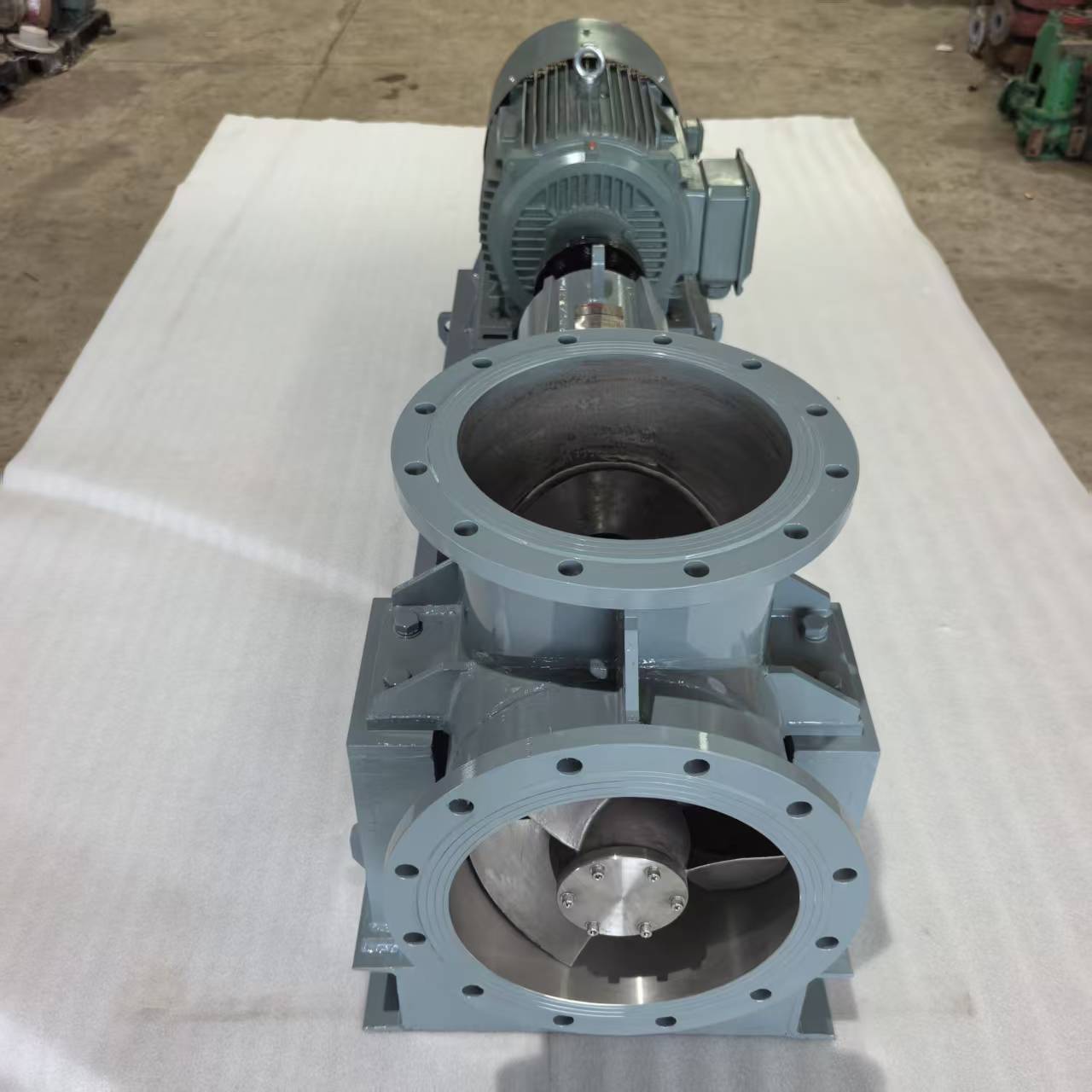
The FJX pump uses an axial flow impeller and a large flow passage. This structure moves liquid mainly along the direction of the pump shaft. As a result, it can produce high circulation rates without generating unnecessary pressure.
Strong circulation improves liquid movement through heating tubes and process loops. It can also support more stable heat transfer and reduce local concentration differences inside an evaporator.
Typical duties include:
- Forced circulation through external heaters
- Evaporator liquid circulation
- Crystallizer circulation
- Reactor circulation
- Concentrated solution transfer
- Suspension and slurry circulation
- Process liquid mixing
The pump should be selected together with the complete circulation loop because actual flow is determined by both the pump curve and system resistance.
Adjustable Blade Angle and Speed
The installation angle of the impeller blades can be adjusted to match different flow requirements. In addition, belt-driven configurations allow the operating speed to be changed by replacing the pulley.
These adjustment methods help the pump adapt to changes in process capacity, liquid density, solids concentration, and circulation resistance.
However, an increase in speed also increases shaft power. Therefore, the motor rating and impeller tip speed must be reviewed before changing the operating point.
Hydraulic Efficiency and Cavitation Performance
The slow-speed design meets the operating needs of crystallization processes and supports stable circulation. Selected FJX models can achieve hydraulic efficiency above 70%, depending on pump size and duty point.
The broad efficient operating range helps reduce unnecessary energy use. Meanwhile, the axial flow hydraulic design provides good cavitation performance for circulation systems with limited available suction head.
Correct liquid level remains essential. The pump should not be started when the evaporator level is too low because insufficient submergence can introduce vapor, increase vibration, and overload the equipment.
Quick-Install Double Mechanical Seal
Crystals and concentrated liquids can create difficult conditions around the shaft seal. For this reason, the FJX evaporator circulation pump uses a quick-install double mechanical seal.
A labyrinth-style internal isolation chamber improves the seal’s working environment. In addition, internal flushing and sealing liquid help prevent crystals from entering the sealing faces.
This configuration provides:
- Better control of process leakage
- Protection against crystal deposits
- Easier seal inspection and replacement
- Longer seal service life
- Support for continuous process operation
The internal flushing liquid should normally be maintained 0.03–0.05 MPa above the system pressure. The exact flushing plan should be confirmed according to the medium.
Heavy-Duty Bearing Structure
A guide chamber is arranged near the cantilevered end of the shaft to help reduce shaft deflection. Meanwhile, the bearing housing uses water-cooling jackets around both bearing positions.
Heavy-duty bearings and oil lubrication provide stable support during continuous operation. A constant-level oiler can also maintain a suitable oil level.
The documented cooling-water inlet pressure is 0.2 MPa. During operation, users should regularly monitor oil condition, bearing temperature, vibration, and noise.
Corrosion-Resistant Material Options
The main wetted parts include the pump casing, impeller, back cover, seal chamber, shaft sleeve, shaft protection sleeve, throttling ring, and impeller cover.
Material options may include:
- 1Cr18Ni9Ti
- 0Cr19Ni9
- 1Cr18Ni12Mo2Ti
- 316 stainless steel
- 316L stainless steel
- 20Cb3
- CD4MCu duplex alloy
- Other compatible alloys after technical review
Material selection should consider the liquid composition, concentration, temperature, pH, chloride content, solids, and corrosion rate. Therefore, customers should provide complete medium data before production.
Special Installation Configurations
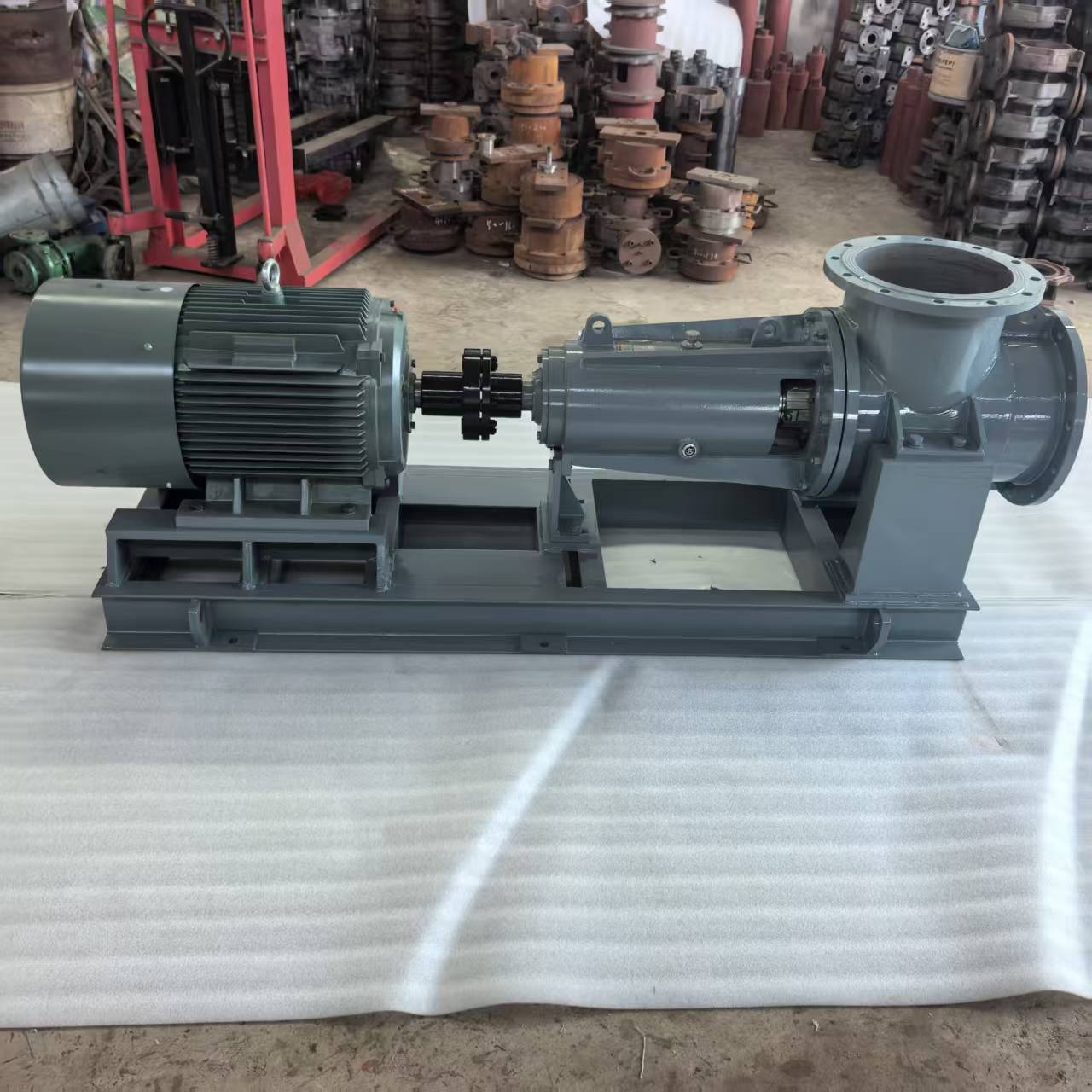
The FJX series is available in several installation forms.
Suspended configuration: The pump is suspended below the evaporator circulation pipe and moves with the thermal expansion of the equipment. This arrangement may remove the need for a large corrugated expansion joint and can reduce the required floor area.
Spring-base configuration: Adjustable spring boxes are installed below the pump base. They help absorb thermal movement and may also remove the need for an evaporator expansion joint.
Built-in configuration: The pump is supplied without a separate external casing for installation inside an internal-circulation evaporator or crystallizer.
Rigid baseplates and spring-supported baseplates can be selected according to the project design.
Industrial Applications
The FJX forced-circulation axial flow pump is commonly used in:
- Phosphate fertilizer production
- Phosphoric acid processing
- Vacuum salt production
- Alumina processing
- Caustic soda production
- Chemical concentration systems
- Crystallization plants
- Light industrial processing
- Evaporator circulation systems
- Reactor circulation loops
It can handle process liquids and suspensions when the materials, seal, speed, and blade clearance are selected correctly.
Manufacturer Selection Support
Jingjiang Xiangsu Pumps Co., Ltd. can provide hydraulic selection, blade-angle matching, material selection, seal configuration, drive design, motor matching, base fabrication, and flange customization.
For an accurate pump proposal, please provide:
- Required circulation flow
- System resistance or required head
- Liquid name and concentration
- Operating temperature and pressure
- Density and viscosity
- Solid concentration and particle size
- Evaporator or crystallizer structure
- Available installation space
- Motor voltage and frequency
- Required flange standard
With complete process data, the pump can be configured for stable circulation, efficient operation, and easier maintenance.
Frequently Asked Questions
Is the FJX pump a centrifugal pump?
It is an axial flow pump designed to produce a high flow rate at a low head.
Can it handle liquids containing crystals?
Yes. It is commonly used in crystallization systems. However, crystal size, concentration, hardness, and settling behavior must be reviewed.
Can the flow be adjusted?
Yes. Flow can be adjusted through the impeller blade angle or pump speed.
What is the maximum operating temperature?
The documented maximum working temperature is 170°C.
Which installation types are available?
Horizontal rigid-base, spring-base, suspended, and built-in configurations can be considered according to the process equipment.
Recommended products
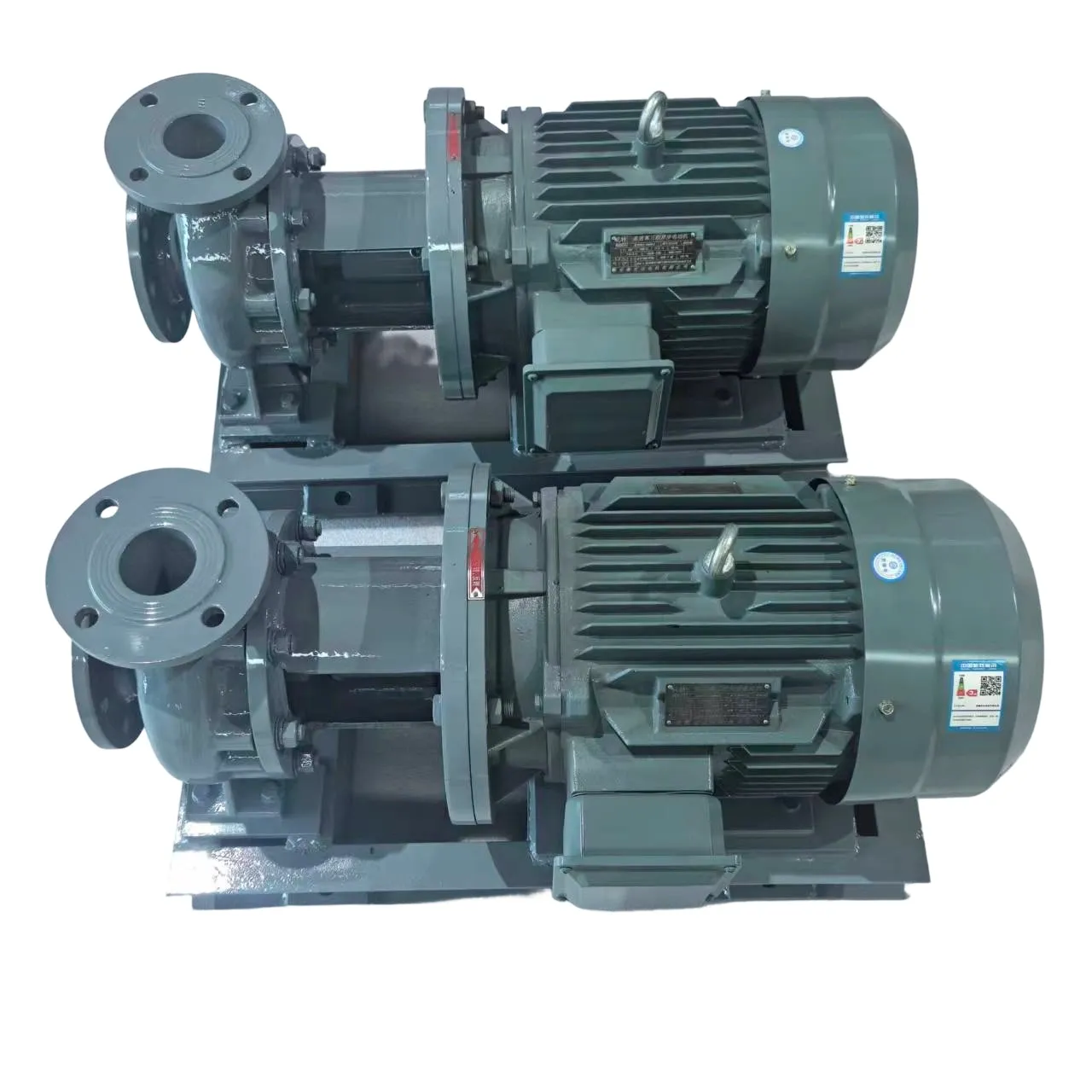
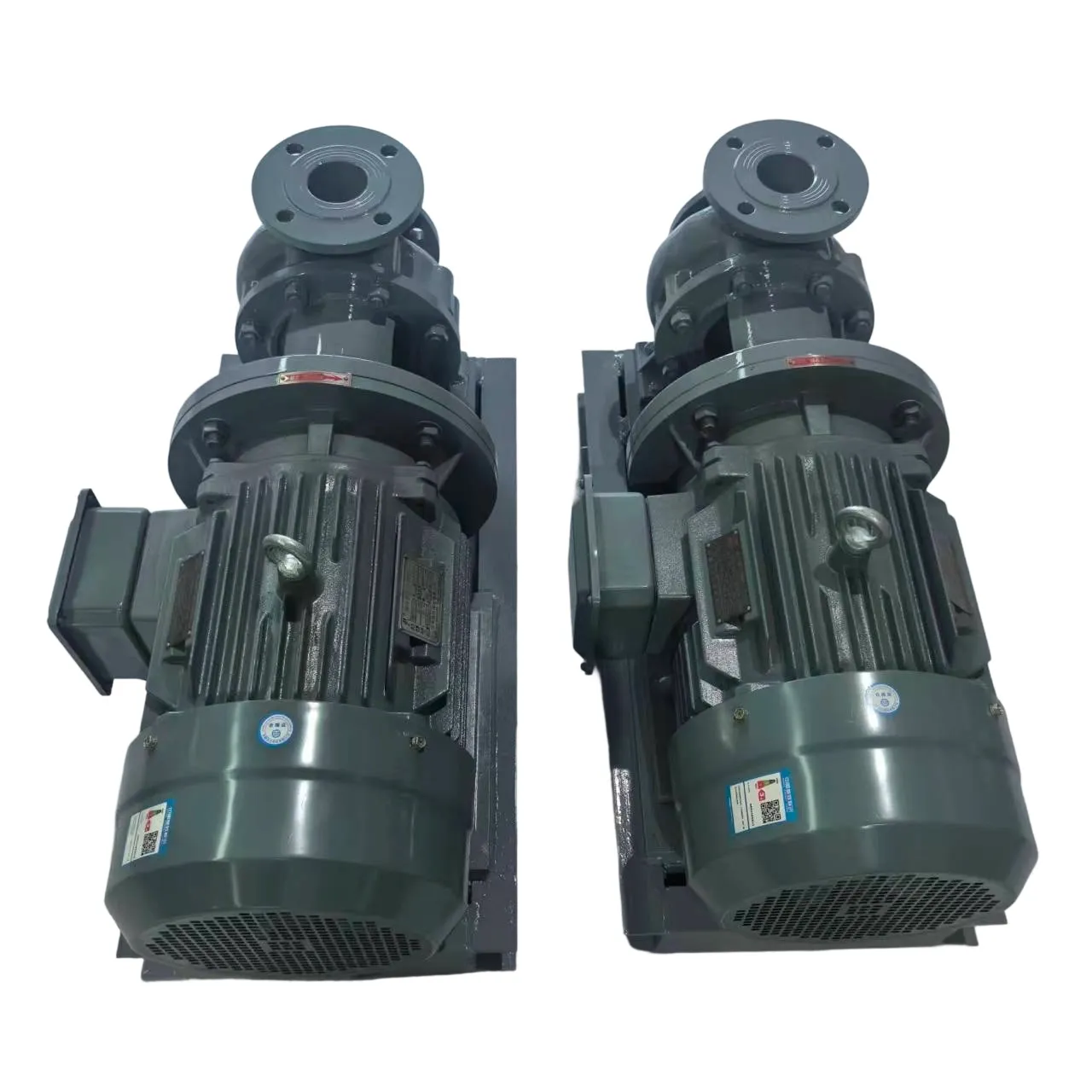
Horizontal Direct-Connect Centrifugal Chemical Pump
Compact horizontal direct-connect centrifugal chemical pump for corrosive liquids, with custom stainless steel materials, seals, motors, and hydraulic sizes.
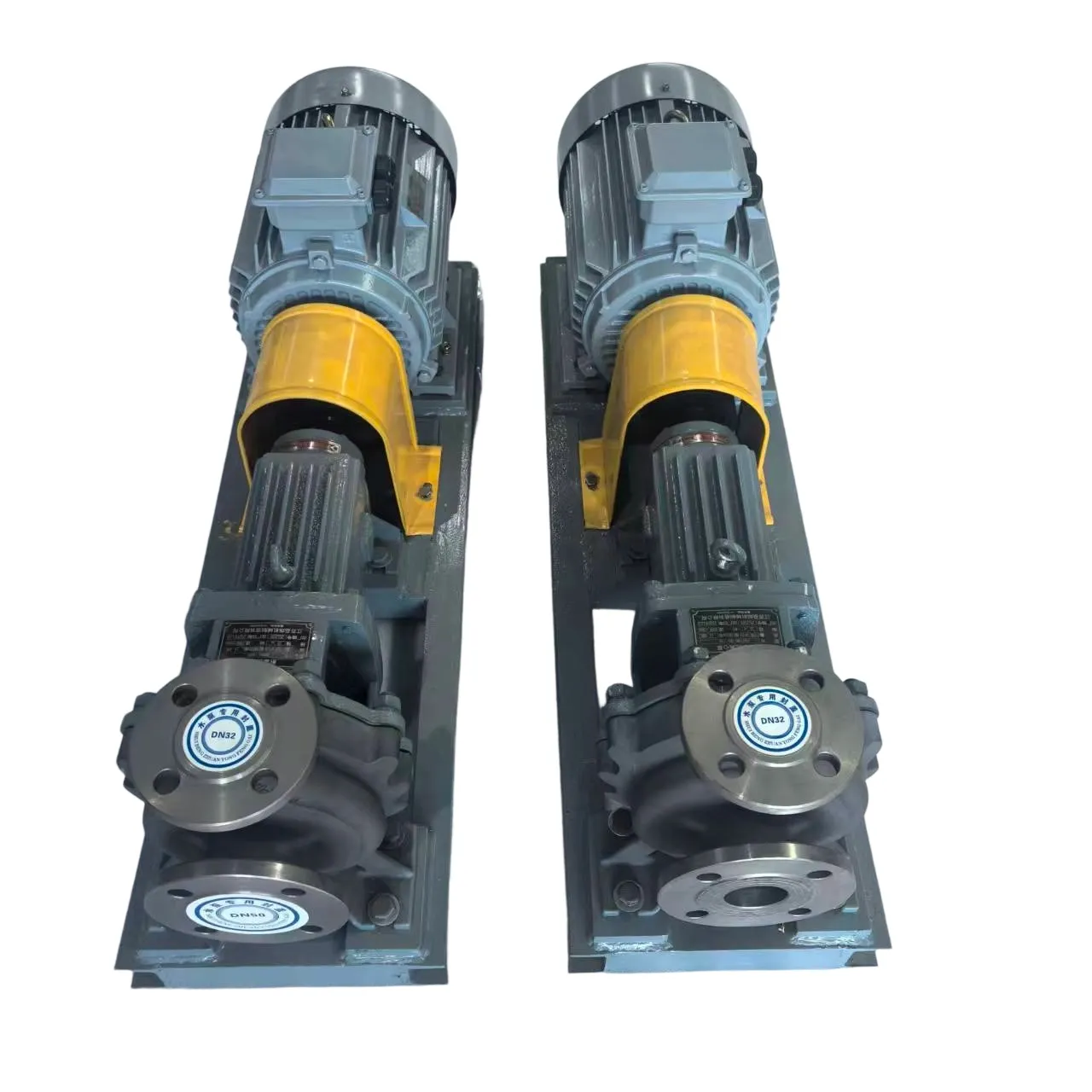
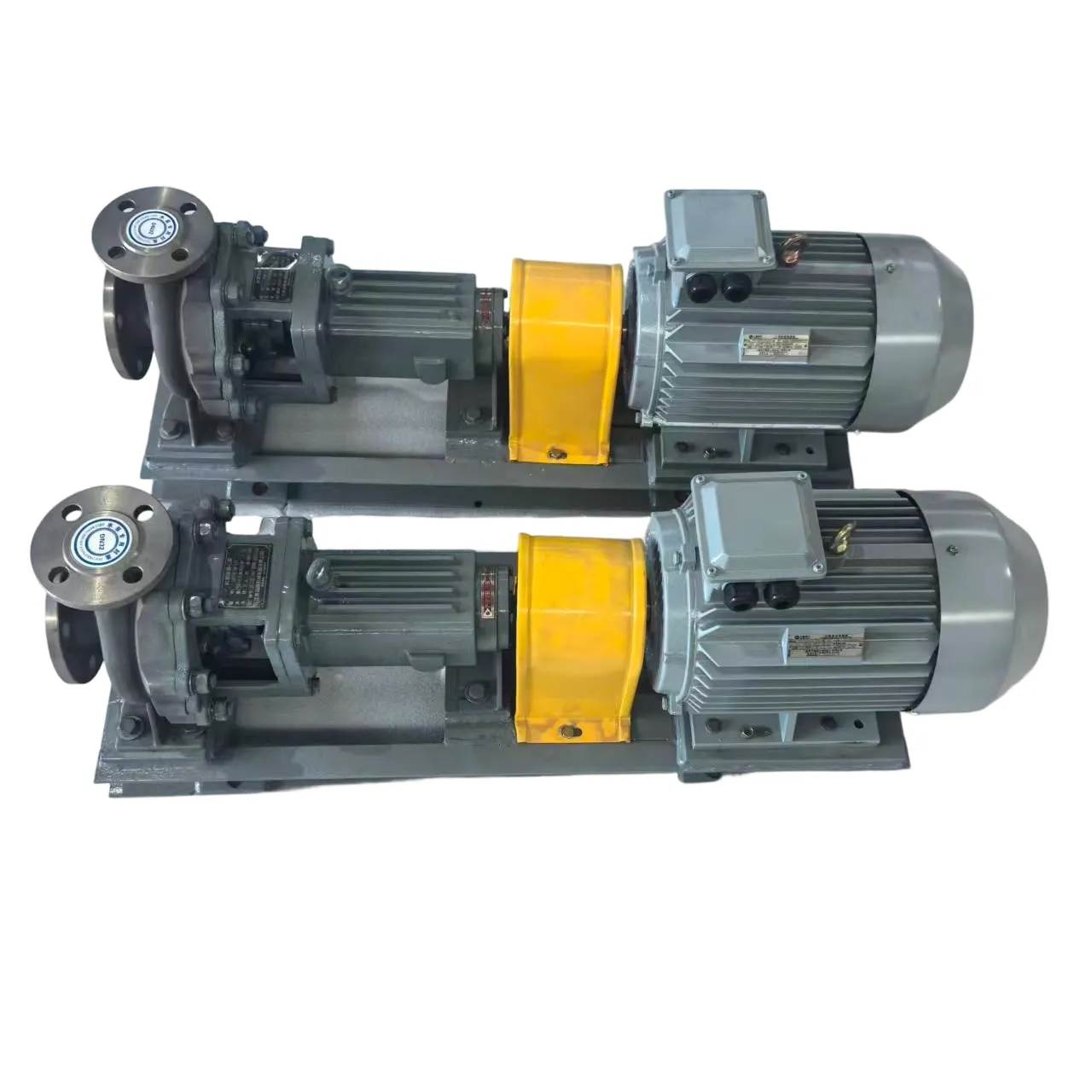
IH Centrifugal Chemical Pumps
IH centrifugal chemical pumps for acids, alkalis, solvents, and industrial process liquids. Available with custom materials, seals, motors, and sizes.
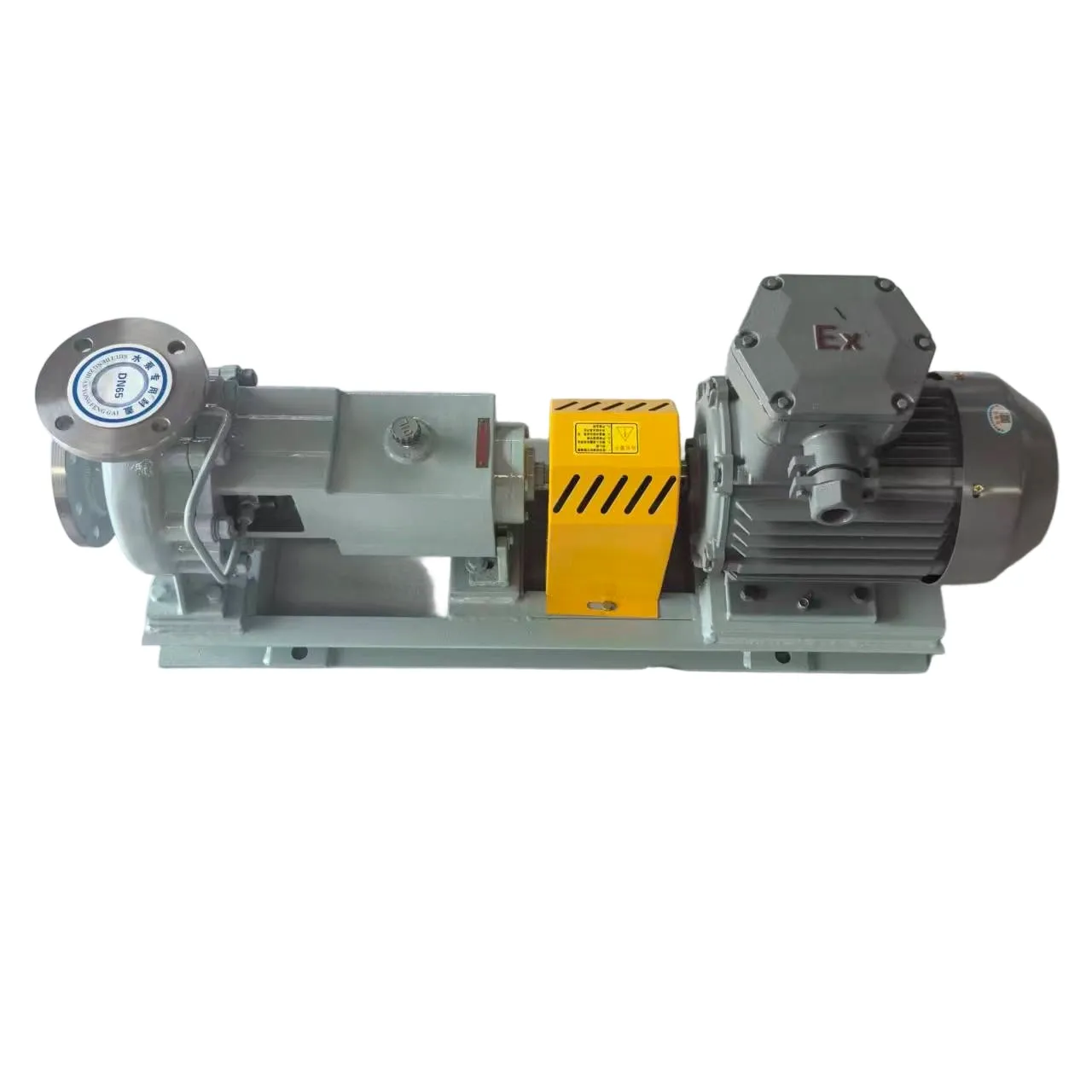
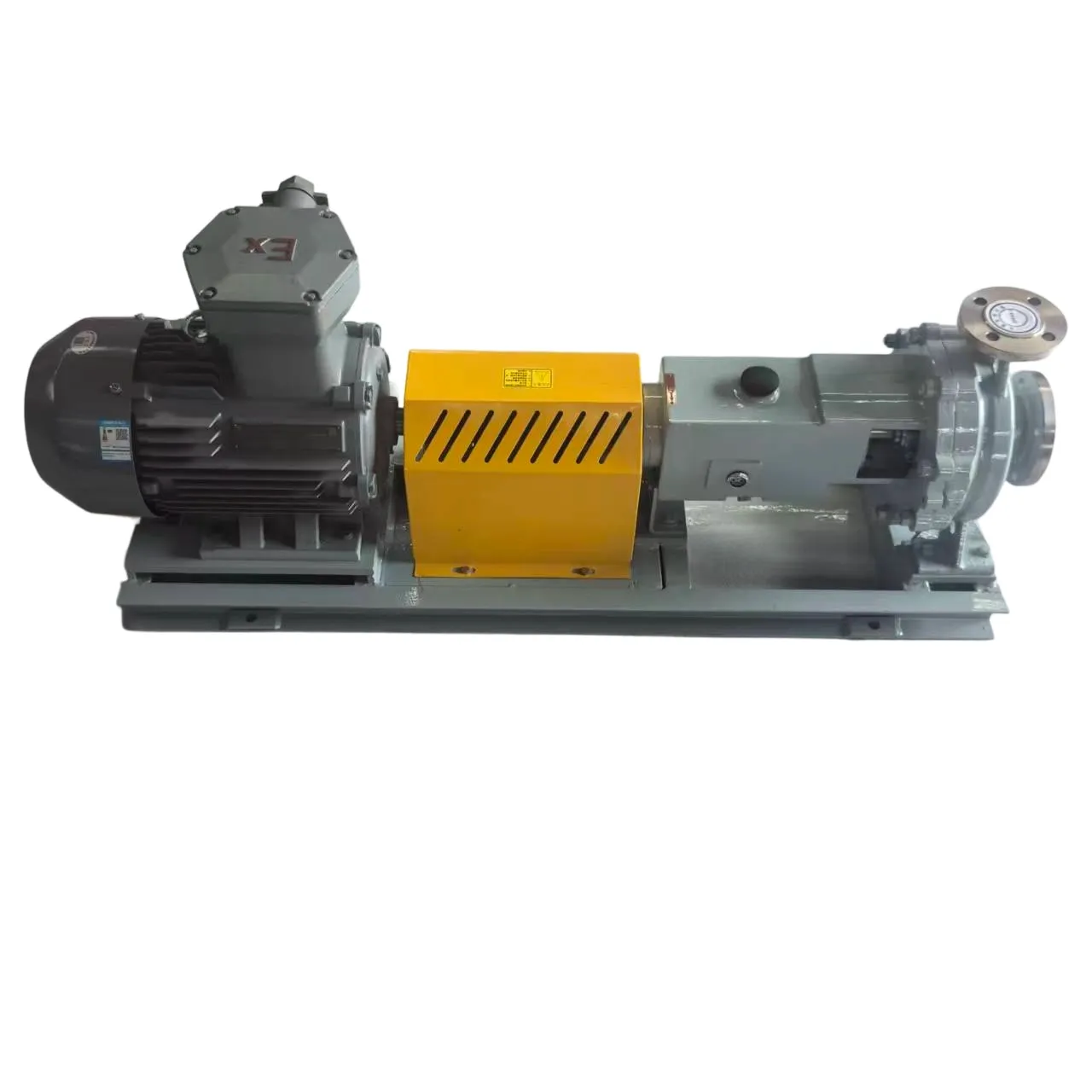
HJ Centrifugal Chemical Pump
HJ centrifugal chemical pump for corrosive, toxic, flammable, and particle-containing liquids. Custom materials, seals, motors, and performance.
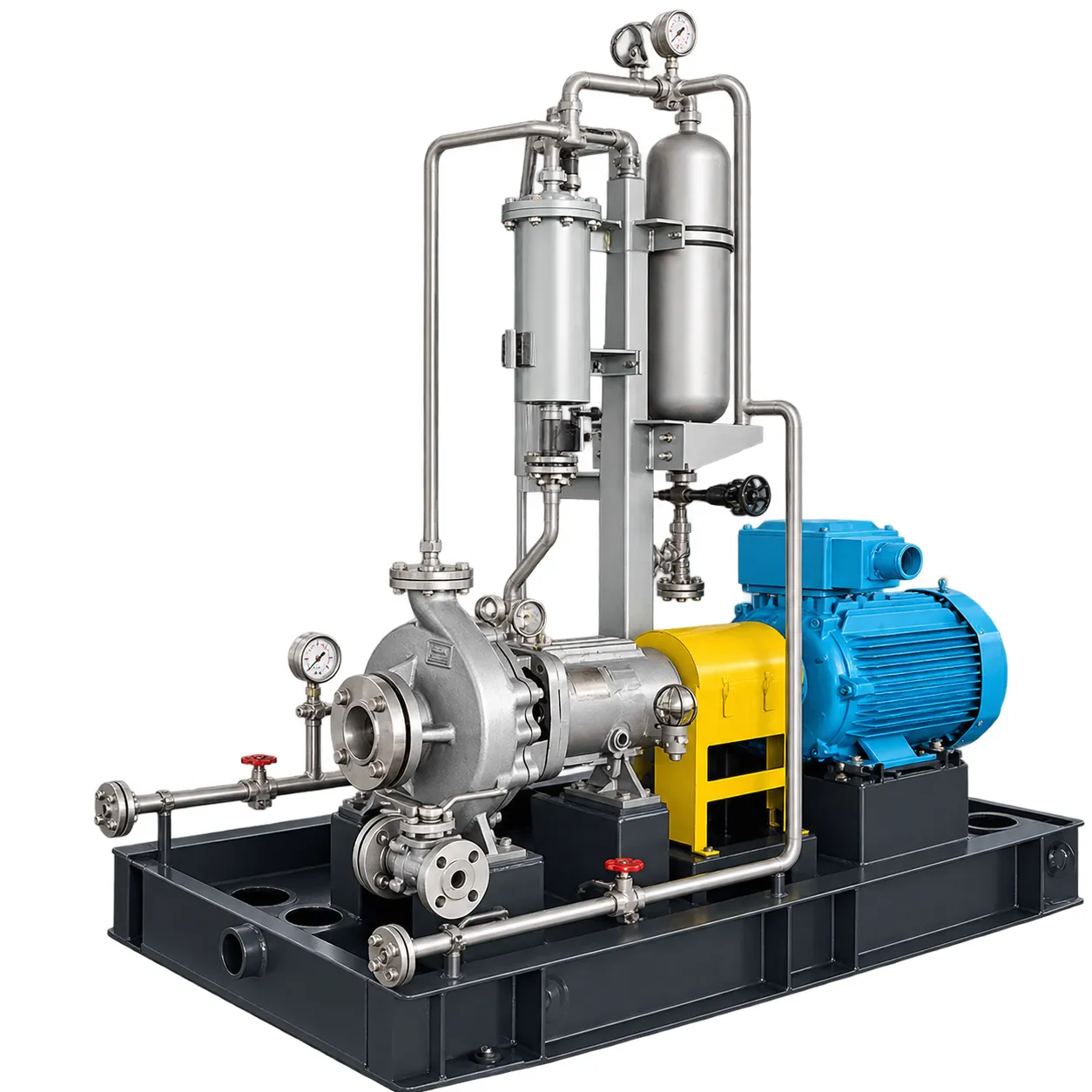
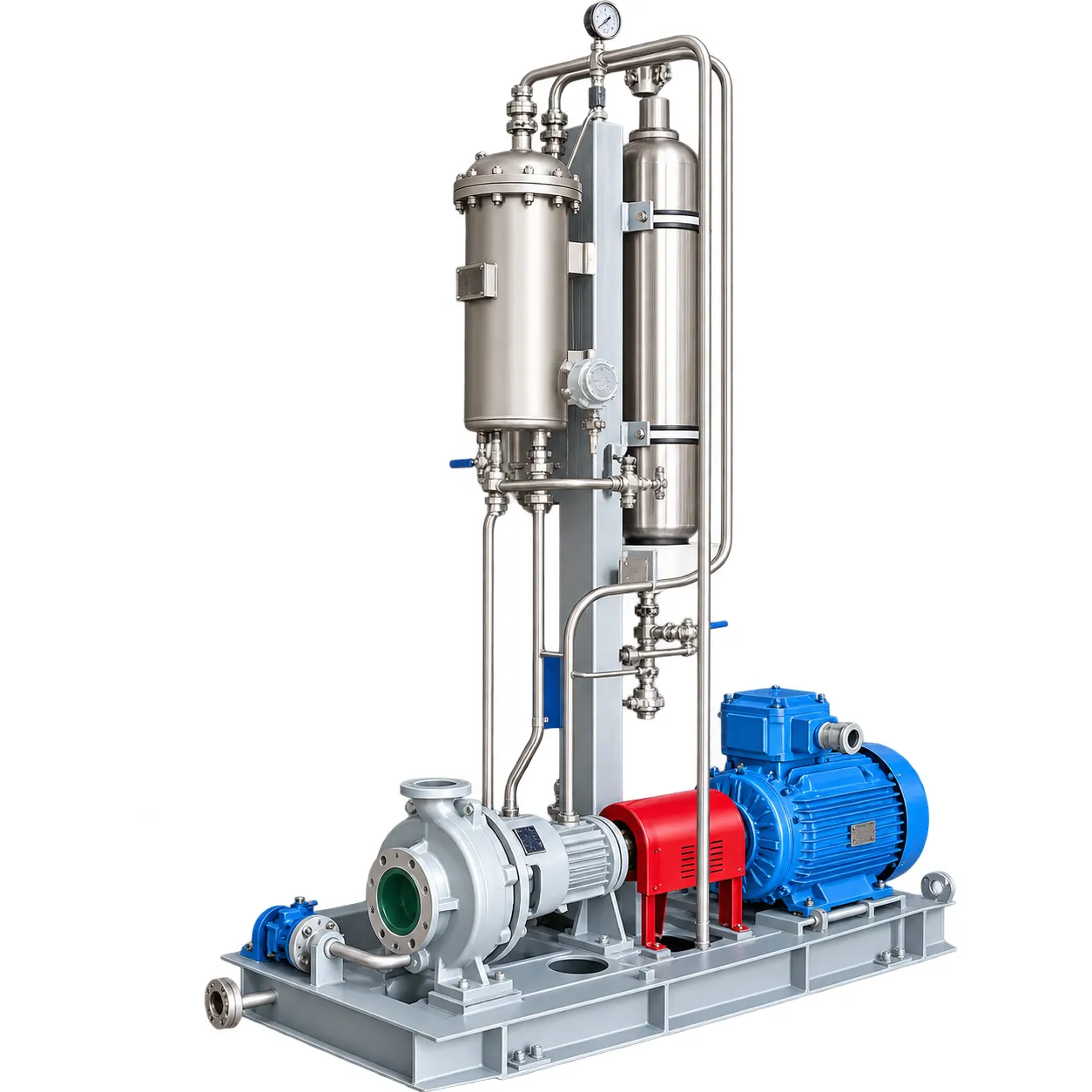
API 682 Plan 53A and 53B Chemical Pump System
API 682 Plan 53A and 53B seal support systems for ZA, ZE, and IH chemical pumps handling toxic, flammable, and corrosive liquids.


